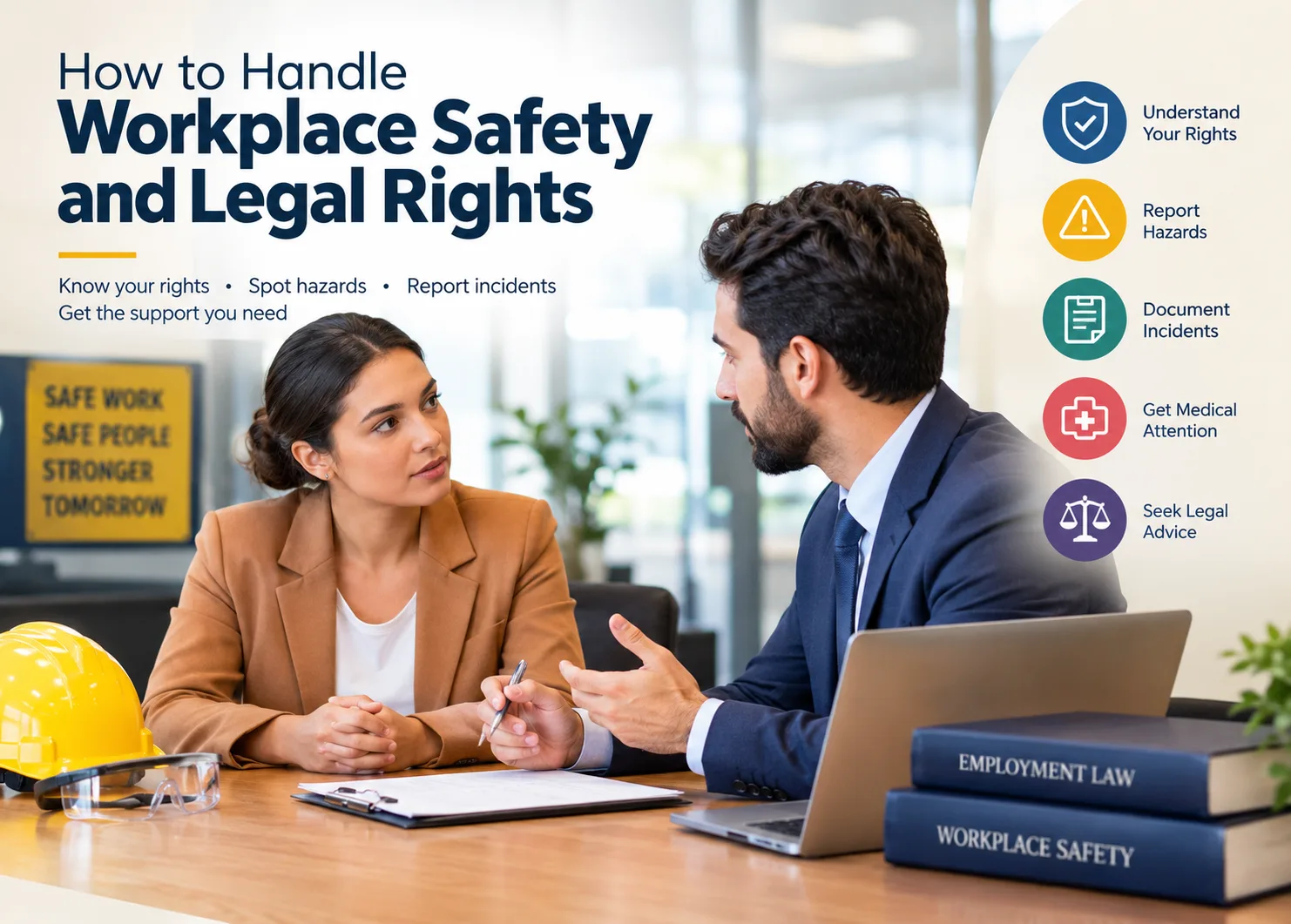
Even though going to work may not be smooth sailing for everybody, truth be told, it also shouldn’t be a place where you’ll feel unsafe, and that’s going to put your life at risk in any way. It doesn’t matter whether you work in a healthcare industry, warehouse, retail, construction site, etc.; your employer must do everything that’s in their power to protect you.
And yet, it’s your duty, as an employee, to follow every safety procedure, to keep an eye on your colleagues, and to report any hazard. That’s the only way you’ll be capable of contributing to a safe workplace.
Sadly, even when you take all the steps above, an accident may still happen, and in those moments, it’s essential to take specific steps to help you navigate the situation. If you want to know what’s supposed to be done, then stay tuned because this guide is about to further delve into this topic!
Are You Familiar With Your Rights?
While the exact legal rights you have depend entirely on where you live and work, employment laws generally exist to protect you when it comes to health and safety, fair pay, discrimination, harassment, and overall working conditions.
One of the smartest things you can do is figure out the exact rules that apply to your specific workplace before things ever go sideways. Your employer almost certainly has an employee handbook, safety manual, or formal company policies that outline how to blow the whistle or flag a problem.
It is 100% worth sitting down and going through these documents before a serious issue pops up. Knowing exactly who is in charge of workplace safety, how to file a formal report, and where you can safely address your concerns will save you a ton of stress and valuable time later down the road.
Legal Advice Is At Times Mandatory
Workplace accidents can vary, meaning that not all of them require legal assistance. If you have some concerns regarding safety, then you can simply talk to a supervisor or learn the ways you can report a procedure.
In specific circumstances, when serious injuries are involved, then legal advice becomes basically mandatory. Why is that? According to the team at Moore Law, a knowledgeable and seasoned attorney will explain to you how a particular law applies to your current circumstances and will tell you all about the options that are at your disposal. If you think that legal advice is crucial, then be sure to bring all the necessary documentation with you.
This mostly refers to copies of important communications, a timeline of events, medical records, workplace records, and so on. All of these things can support your case the right way.
Workplace Hazards Are No Joke!
Workplace hazards aren't always dramatic, movie-style emergencies. Sure, some red flags are pretty obvious- think exposed electrical wiring, unstable equipment, blocked fire exits, missing safety gear, or broken machinery.
But others are silent troublemakers that sneak up on you gradually over time. Things like poor lighting, repetitive motions, stuffy ventilation, constant loud noise, an unergonomic desk setup, or an impossibly heavy workload can quietly take a massive toll on your physical and mental health. Employees should also understand how workplace harassment can be reported and why documenting incidents and following the appropriate complaint procedures matter.
If you spot a potential hazard, never assume someone else has already opened their mouth about it. Take the initiative. Depending on how your shop or office is structured, flag it right away to a supervisor, manager, or your designated health and safety rep.
At the end of the day, the faster a real hazard gets called out, the easier it is to fix it before someone actually gets hurt. Understanding common workplace health and safety risks can help employees recognize hazards early and take appropriate steps to prevent accidents.
Do You Know How To Report An Accident?
If you, or someone you know (who works for the same business), is injured, then one of the most pivotal things that you must do is to report an accident. This applies to any type of injury, even the one that, at first glance, seems benign.
If you want to seek compensation, then your employer will ask you to complete an incident report or talk to a supervisor about a particular timeframe. You need to mention every detail, regardless of how irrelevant it may appear to be.
You need to say everything that occurred, how and where it happened, who participated in it, and so on. Speak only about the things you’re sure of. Having good documentation is of huge importance, especially if the injury is more severe than you initially thought.
Medical Attention Is A Must!
If you’re ever injured on the job, your health needs to take absolute priority over paperwork. If it’s a serious injury, get yourself to a doctor or the emergency room as soon as possible. Even minor bumps, scrapes, or strains that feel manageable at first can quietly spiral into much bigger complications down the road.
A medical professional is the only one who can properly assess the damage and map out a safe treatment and recovery plan. As you navigate the aftermath, treat your paperwork like gold: keep copies of every single medical record, discharge instruction, hospital bill, and prescription receipt.
When you’re speaking with the doctor or nurse, explicitly tell them that this happened at work and double-check that they record those exact circumstances in your file. Having the proper medical documentation is absolutely crucial when it comes to navigating workplace injury procedures or sorting out insurance claims later on.
Document Everything!
Good records can make a huge difference when somebody is dealing with any legal problems or workplace safety issues. Therefore, it would be advisable if you jotted down everything that happened and made sure to include every relevant detail, such as date, time, place, people who are involved, etc.
If, by any chance, there’s a physical hazard, then you should take pictures of it because that’s going to help you document its condition the right way. Don’t forget to keep copies of important emails, incident reports, emails, workplace communications, and medical documentation.
These sorts of situations can truly be nerve-wracking and overwhelming; however, if you follow all the advice that was given here today, you’ll ensure you get the best possible outcome if you decide to take things to court.
Read More Blogs On: