Table of Content
- Jessica Robinson
- Aug 13,2026
Financial firms handle millions in client funds daily, making operational accuracy critical for long-term survival. Managing consumer assets requires constant oversight to prevent unexpected accounting errors or regulatory penalties. Finding hidden vulnerabilities early protects client capital and maintains trust across payment networks. Proactive reviews keep operations running smoothly without costly interruptions or regulatory friction.
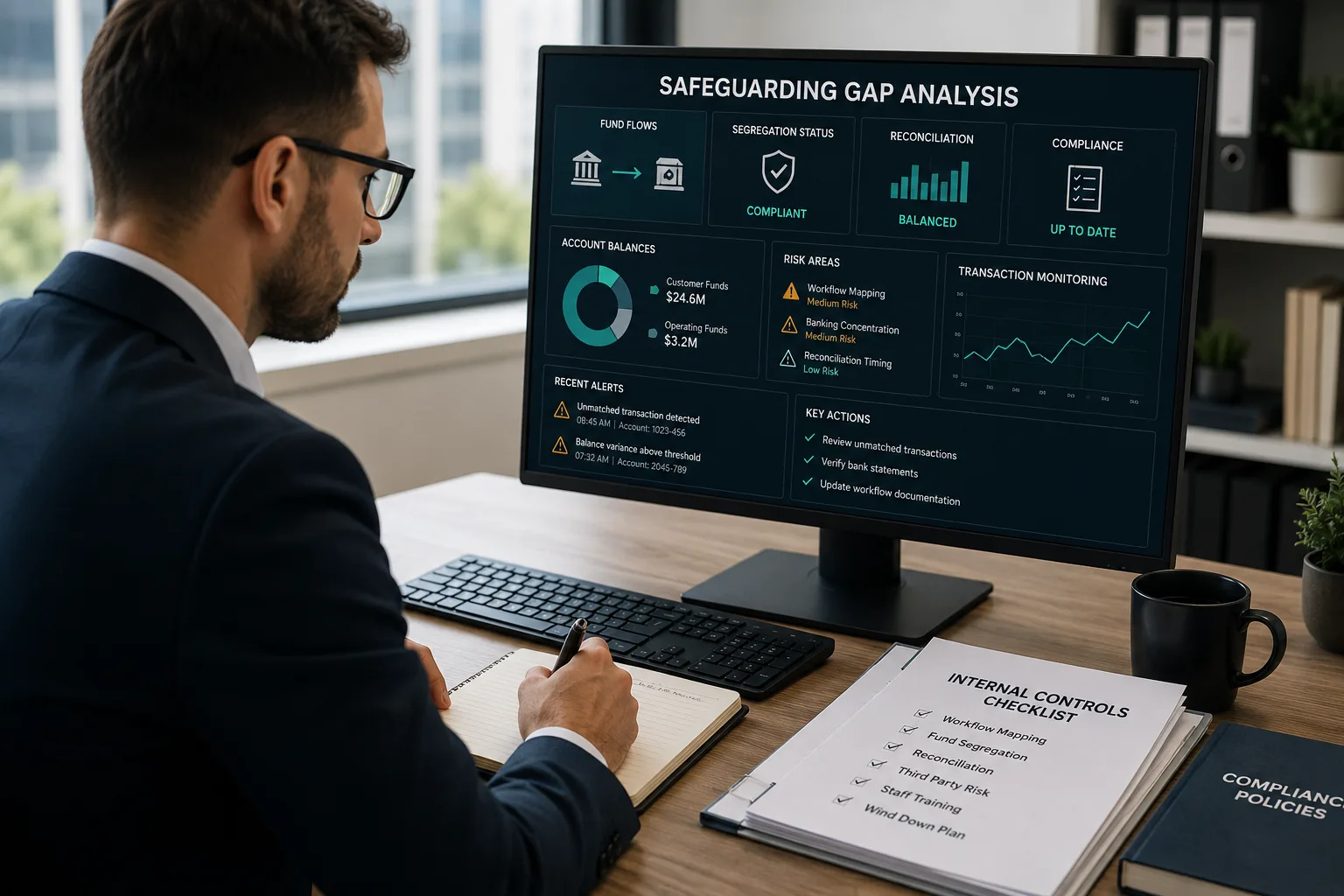
Financial firms process complex transactions across multiple platforms every single day. Conducting a thorough Safeguarding Gap Analysis highlights potential vulnerabilities before regulator reviews take place. Operational teams can track asset flows directly to prevent systemic tracking failures.
Documenting every step in the payment lifecycle prevents untracked balances from creating accounting discrepancies. Staff members need clear visual maps showing where client funds move from deposit to final settlement. Regular updates to workflow diagrams protect payment providers from unexpected operational bottlenecks.
Clear documentation allows external auditors to verify internal controls with minimal friction. Systems that automatically flag irregular transfers assist managers in identifying operational flaws quickly. Establishing clear operational paths keeps client funds structured correctly throughout daily operations.
Segregation of funds forms the core foundation of modern payment regulation. Official regulatory updates state that customer funds must remain strictly separate from corporate operational cash to guarantee full returns if a business collapses. Maintaining distinct accounts protects consumers during unexpected insolvency events.
Mixing corporate funds with client deposits creates legal liabilities and regulatory penalties for financial providers. Specialized safeguarding accounts must hold client balances without exceptions or temporary transfers. Dedicated banking partners need clear legal agreements acknowledging the protected status of customer funds.
Clear account naming conventions assist bank partners in identifying protected customer reserves instantly. Operations teams must monitor incoming receipts continuously to segregate new balances immediately. Strict segregation policies give clients confidence that their deposits remain secure under all circumstances.
Daily balance checks confirm that internal records match bank account totals accurately. Reconciliation procedures must catch discrepancies immediately before small discrepancies expand into major financial deficits. Discrepancies require immediate investigation to determine whether technical glitches or manual errors caused the mismatch.
Automation reduces human error during balance matching processes across high-volume accounts. Digital reconciliation tools compare transaction ledgers with partner bank statements every single hour. Immediate alerts allow compliance officers to resolve mismatched balances prior to end-of-day reporting deadlines.
Robust internal control systems rely on structured daily routines to maintain accounting accuracy. Implementing regular operational reviews helps risk teams maintain strict control over payment pipelines:
Financial authorities continue updating requirements to protect client money. Recent policy statements outline structural changes designed to reduce shortfalls in client assets and accelerate returns when a firm defaults. Payment institutions must adjust internal controls to satisfy these updated regulatory requirements.
Staying informed on regulatory policy shifts prevents compliance breaches and operational surprises. Regulatory bodies regularly issue updated guidelines that redefine how institutions manage liquidity reserves. Compliance departments must incorporate new rules into daily operating manuals immediately after release.
Regular policy reviews help institutions align their risk models with official industry expectations. Management teams must schedule periodic updates with compliance officers to review pending statutory changes. Proactive compliance updates prevent emergency restructuring when regulatory deadlines take effect.
Payment providers depend heavily on commercial banks to hold segregated client balances safely. Evaluating bank credit ratings and financial stability protects client funds from institutional contagion. Risk officers must establish strict criteria before selecting commercial banking partners for deposit safeguarding.
Diversifying customer deposits across multiple credit institutions reduces concentration risk significantly. Spreading balances prevents single bank failures from threatening entire client fund pools at once. Periodic review of partner banking relationships ensures continuous alignment with safety standards.
Formal agreements with bank partners must state clearly that segregated funds cannot cover corporate debts. Bank administrators need written acknowledgments confirming client funds remain exempt from set-off rights. Clear contractual boundaries preserve client assets regardless of external corporate liabilities.
Employee awareness forms a powerful defense against internal operational mistakes and accounting failures. Staff members managing transaction flows require thorough training on regulatory expectations and internal rules. Regular workshops update operational teams on proper handling procedures for segregated funds.
Clear escalation pathways allow employees to report potential accounting mismatches without delay. Staff members must know who to contact when automated checks flag unusual account balances. Fast internal communication reduces the time needed to fix operational errors.
Interactive training modules test employee knowledge on client asset segregation rules regularly. Management should monitor completion rates and compliance test scores across all operations teams. Continuous education creates a strong compliance culture focused on asset protection.
Wind down plans outline specific steps needed to return client funds safely during business closure. Financial regulators require payment firms to maintain realistic wind down strategies that account for severe stress scenarios. Having clear procedures minimizes disruption for customers during difficult corporate transitions.
Planning for orderly closure requires detailed calculations of operational costs during wind down periods. Risk teams must verify that administrative fees will not drain client assets during liquidation. Regular testing of wind down strategies identifies practical flaws before real crises happen.
Updating wind down documents annually keeps financial projections accurate as business volume grows. Legal advisors must review these plans to verify compliance with national insolvency regulations. Orderly plan execution protects client capital and maintains market stability during firm failure.
Maintaining robust internal controls protects client funds and strengthens financial institution stability. Proactive gap assessments, clear segregation policies, and regular staff training keep operations secure. Financial firms that prioritize rigorous compliance routines protect customer trust while navigating changing regulations effortlessly. Regular audit updates and strong banking relationships ensure long-term business resilience.
A safeguarding gap analysis is a structured review of a financial firm's processes, controls, and policies to identify weaknesses that could put customer funds at risk or lead to regulatory breaches.
Keeping customer funds separate from operational capital helps protect clients if the business experiences financial difficulties and reduces the risk of legal and regulatory penalties.
Financial firms should perform regular, often daily, reconciliations to ensure internal records match bank balances and to identify discrepancies before they become significant issues.
Third-party banking partners can introduce credit, concentration, and contractual risks. Firms should assess their financial stability, diversify deposits where appropriate, and maintain clear safeguarding agreements.
Staff training helps employees follow safeguarding procedures and report issues quickly, while wind-down plans provide a structured process for returning client funds safely if the firm closes or experiences severe financial stress.

Understanding poetry becomes easier when you move beyond the surface meaning and pay attention to how every word, sound, and structural choice works together. This guide explains practical ways to read between the lines, from annotating unfamiliar phrases and researching historical context to reading poems aloud and examining rhythm, line breaks, metaphors, and imagery. Whether you are studying poetry for class or reading for personal enjoyment, these techniques can help you recognize deeper meanings, understand the poet’s choices, and develop stronger literary analysis skills.
Read More
Finding the right HRMS software in India can simplify payroll, attendance, employee management, performance, compliance, and HR automation. This guide compares five leading HRMS solutions—Keka, greytHR, Zoho People, Darwinbox, and HROne, across core features, pricing, security, scalability, employee self-service, and AI capabilities. Whether you run a startup, SME, or large enterprise, explore these human resource management systems to identify the best HR software in India for your workforce, budget, and long-term HR management needs.
Read More
Drug testing plays an important role in creating safer, more responsible workplaces, particularly in industries where impairment can lead to serious accidents. A well-structured testing program can help prevent incidents, support employee accountability, meet regulatory requirements, and encourage a healthier workplace culture. From pre-employment screening to post-accident and reasonable suspicion testing, consistent procedures give employers a practical way to address potential risks while protecting employees and the organization. When handled fairly, drug testing can support safety without compromising workplace trust.
Read More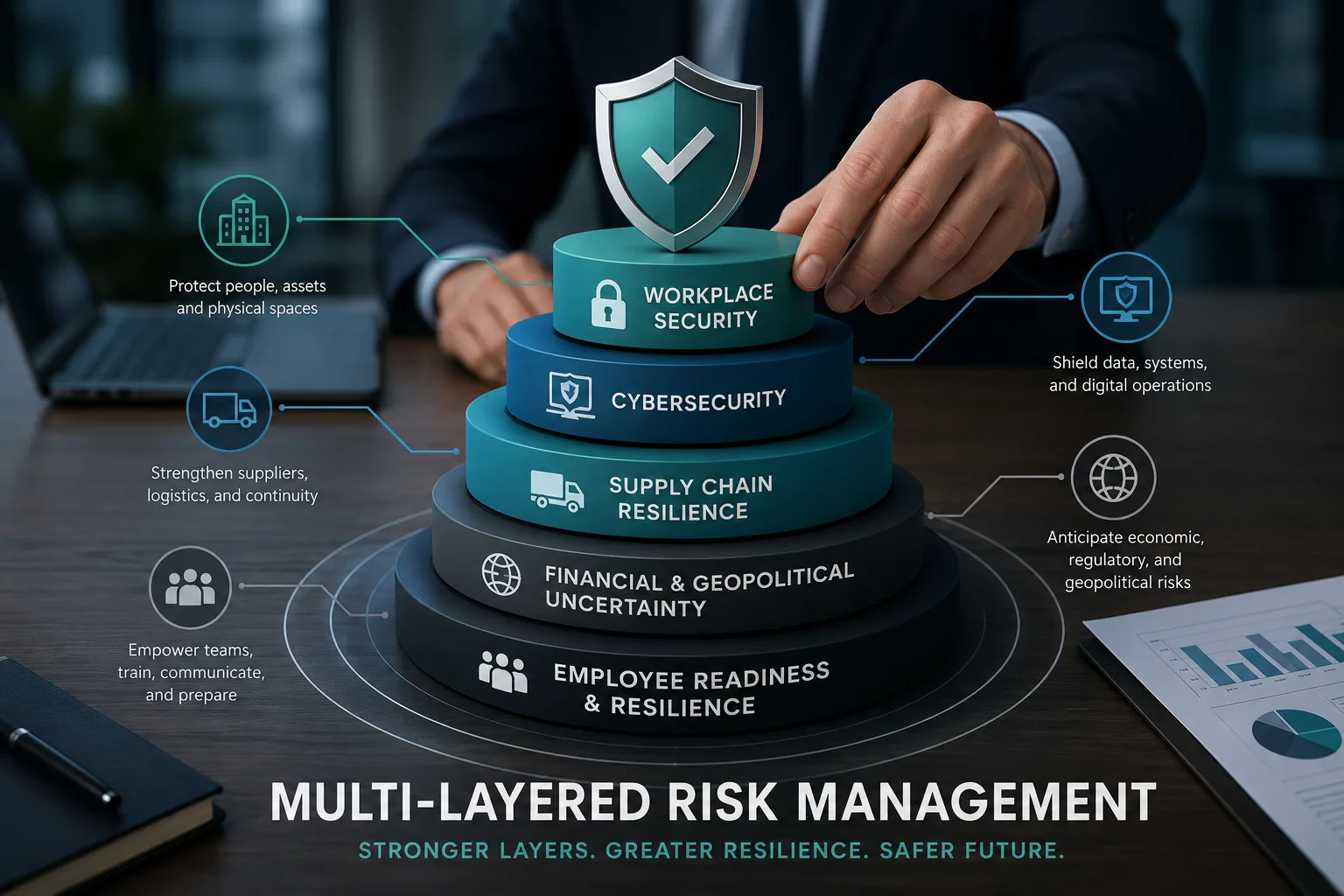
A multi-layered risk management strategy helps businesses prepare for interconnected threats rather than relying on a single line of defense. This guide explores five practical ways to strengthen organizational resilience: improving workplace security, protecting digital assets, building supply chain resilience, preparing for financial and geopolitical uncertainty, and strengthening employee readiness. By combining these layers, businesses can identify vulnerabilities earlier, respond effectively to disruptions, and protect people, operations, finances, and long-term growth.
Read MoreGet into details now? View all posts