Building a successful website takes more than publishing great content. You also need to make sure search engines can discover your pages, understand their relevance, and recognize your website as a trustworthy source. This is where backlinks in SEO play an important role.
So, what are backlinks, and what is a backlink in SEO? A backlink is a link from one website to a page on another website. These links can help search engines discover content, understand relationships between pages, and evaluate the authority and relevance of a website. This is why building backlinks for SEO have remained an important part of search engine optimization and link building.
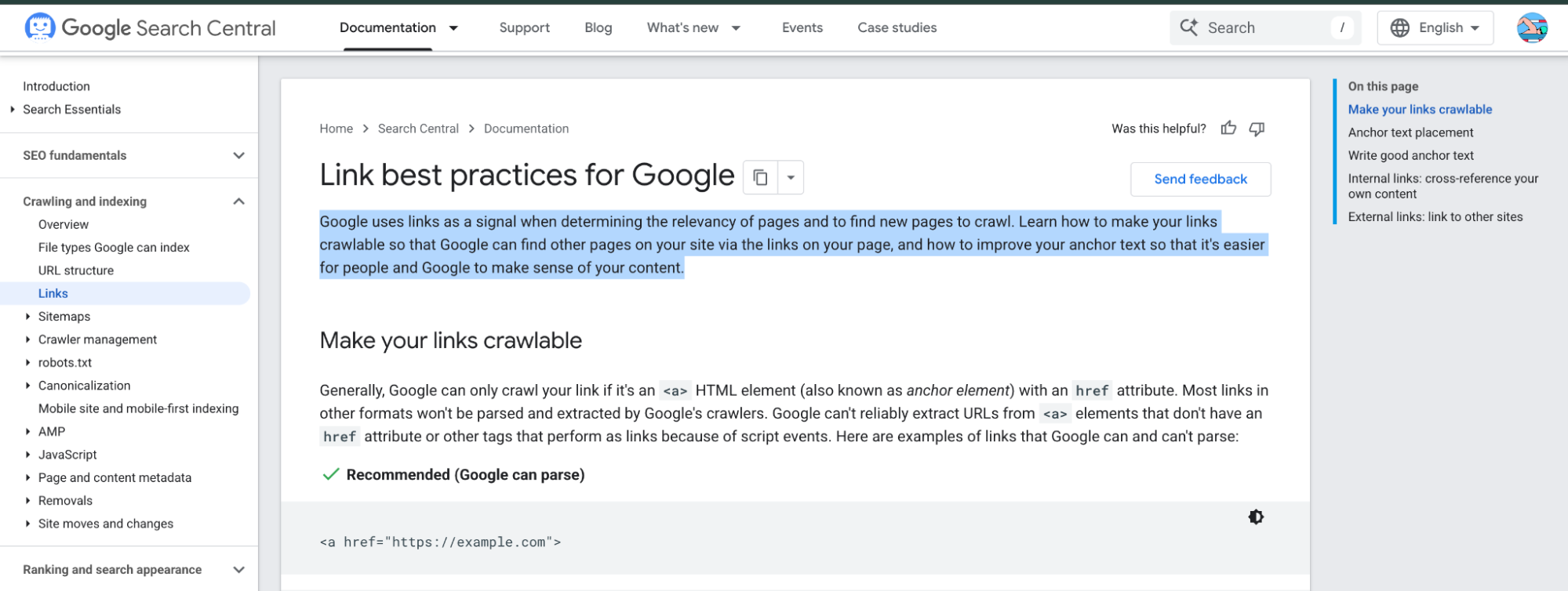
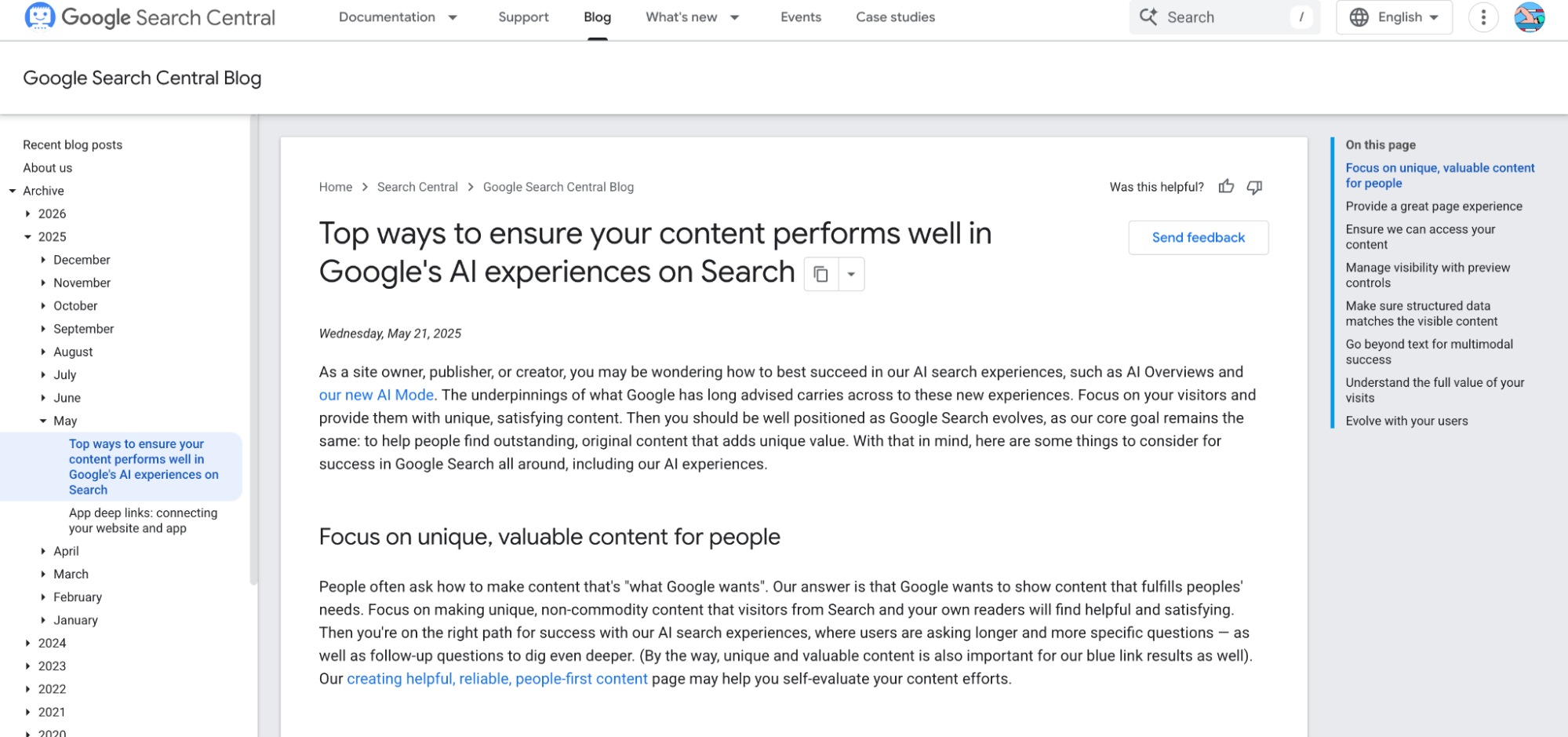
Google's guidance explains that links help its systems discover pages and understand the web, while also emphasizing helpful, reliable, people-first content rather than creating links solely to manipulate rankings.
But backlink SEO is no longer simply about getting as many links as possible. As search evolves with AI-generated answers and AI-powered search experiences, the wider context around a website also matters. Relevant backlinks, brand mentions, digital PR, expert contributions, and third-party discussions can all contribute to how a business is discovered and understood online.
In this guide, you'll learn what backlinks are, how backlinks work in SEO, what makes a good backlink, and what link building in SEO really means. We'll also explore how backlinks are changing in the era of AI and how to build a strong backlink profile that supports both traditional search visibility and emerging AI-driven search experiences.
What are Backlinks ?
A backlink is a hyperlink that points from one website to a page on another website. In simple terms, what is a backlink in SEO? It is a link from one website to another that can help search engines discover and understand web pages. For example, if Website A publishes an article and includes a link to a relevant page on Website B, Website B has earned a backlink from Website A. This is the basic backlinks meaning and is an important part of backlink SEO and SEO link building. Think of backlinks as connections between websites. When a website links to your content, it creates a pathway not only for readers to reach your page but also for search engines to crawl and discover your content, understand its relevance and relationship to other pages, and use the link as one of many signals when evaluating the web. Backlinks can come from blog posts, news articles, industry resources, directories, or other relevant pages making them an important part of backlinks in SEO and a broader link-building strategy, and as generative AI reshapes digital trust, the sources backing your content matter more than ever.
Good Backlink Example
Below are some of the good examples of backlinks
1. HubSpot
In this example, HubSpot has published an article and included a link to another relevant website within its content. The external website receives a backlink because HubSpot is directing its readers to that website for additional information.
This is a good backlink example because the link is placed naturally within the article and is relevant to the topic being discussed. The external website is not simply mentioned; HubSpot is actually linking to it, giving readers a path to visit the referenced website.
What the screenshot shows:
HubSpot's article → relevant content → external website link → backlink received by the external website.
2. Ahrefs
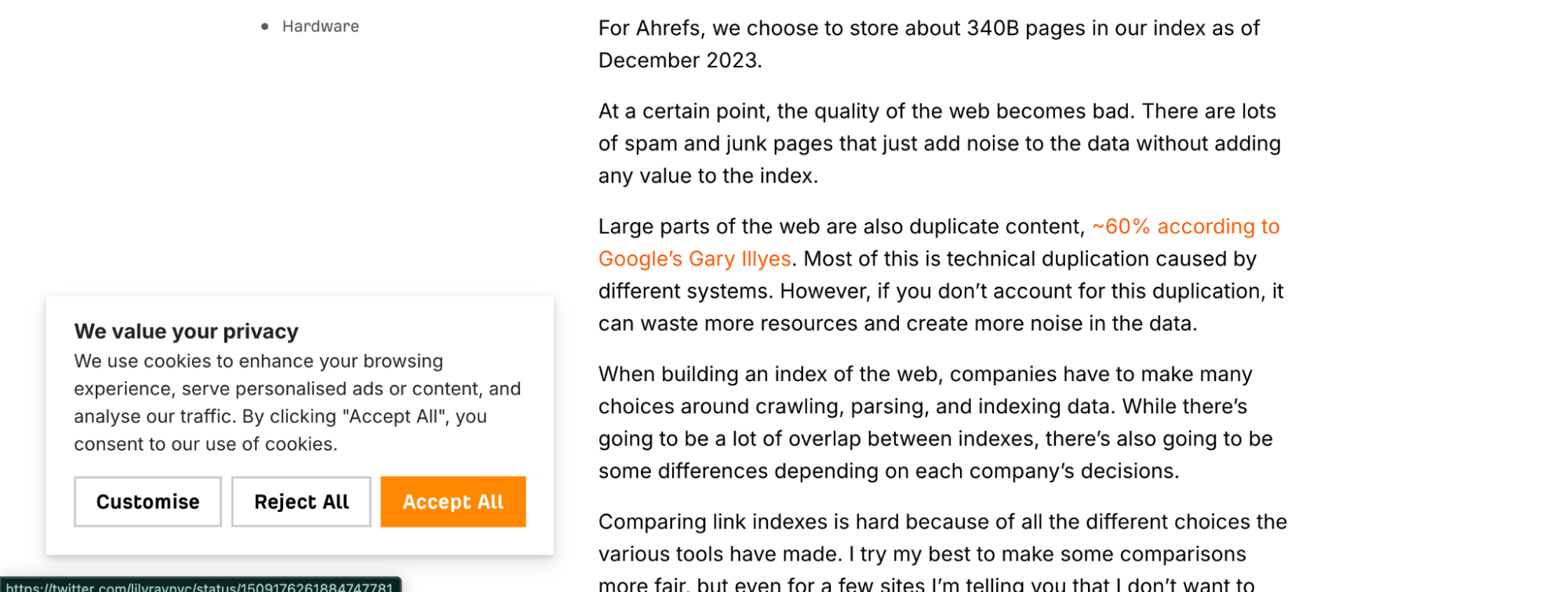
In this example, Ahrefs has published an article comparing backlink data between Ahrefs and Semrush. Within the article, Ahrefs references information from Semrush and links to relevant Semrush resources.
This means Semrush receives a backlink from Ahrefs. The link is relevant because both websites operate in the SEO industry and the Semrush resource provides additional information related to what Ahrefs is discussing.
This is a strong example of a contextual external backlink because the link appears naturally within the article rather than being placed randomly.
What the screenshot shows:
Ahrefs article → discussion about backlink data → reference/link to Semrush → Semrush receives the backlink.
3. Forbes
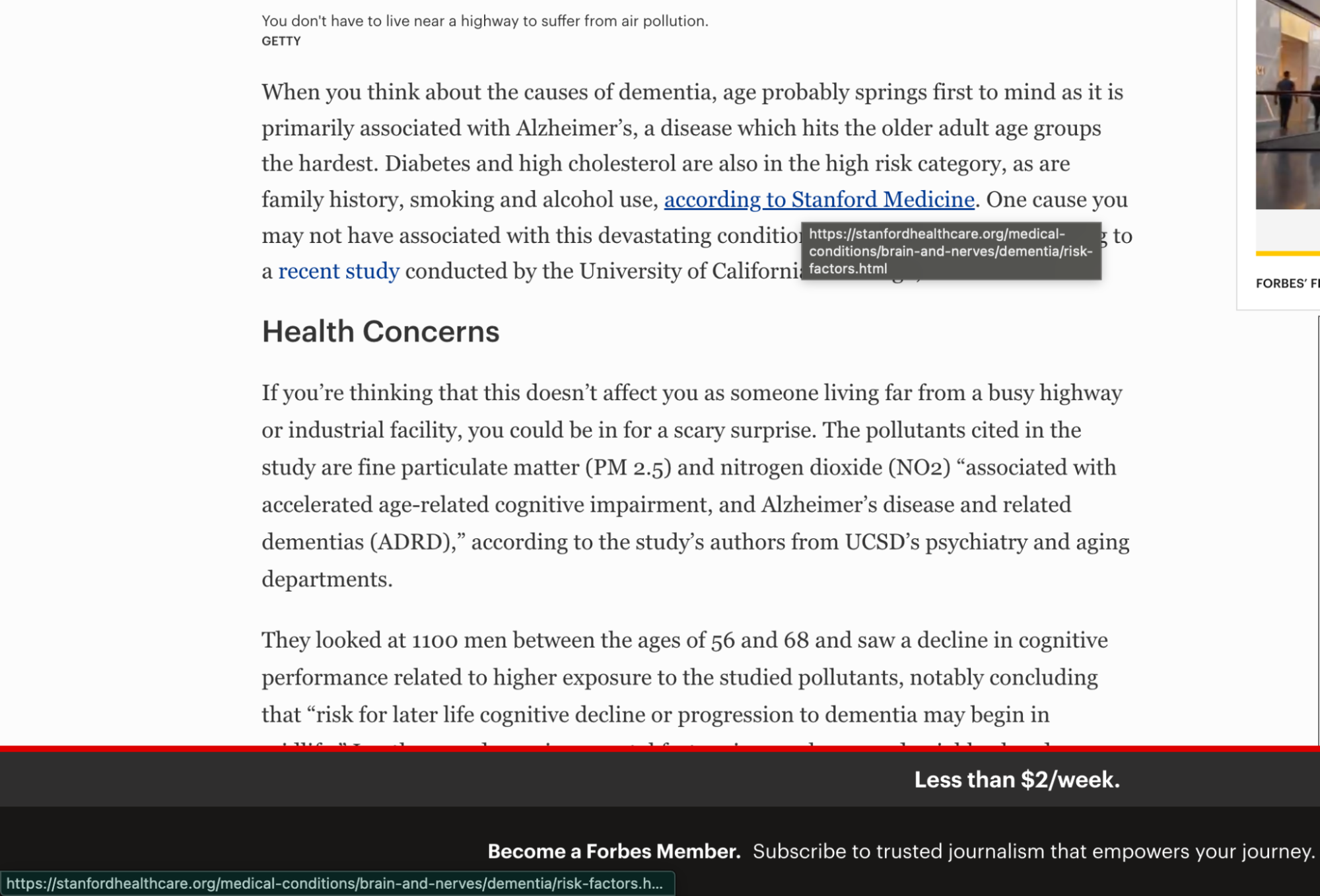
In this example, Forbes published an article discussing research related to dementia and air pollution. Within the article, Forbes links to external medical/research sources such as Stanford Medicine and research associated with the University of California San Diego.
The external organizations receive backlinks because Forbes is linking to their information as supporting sources for the claims being discussed.
This is another good example of a contextual editorial backlink. The link is included because the external source supports the information in the Forbes article, giving readers an opportunity to check the source or learn more.
What the screenshot shows:
Forbes article → research discussion → link to Stanford Medicine / research source → external website receives a backlink.
This is a good backlink because the two websites cover related topics, the link is relevant to the audience, and the linked content provides additional value.
Poor Backlink Example
Now imagine the same fitness website receives a backlink from a website that publishes content about car insurance. The article has no connection to fitness but randomly includes a link to your strength-training guide. This is a poor backlink because the linking website, content, and audience are completely unrelated.
Poor backlinks can also come from purchased links, link exchanges, spammy websites, irrelevant directories, low-quality websites, or links created purely to manipulate search rankings. So, a website having a high authority score does not automatically make every backlink from it valuable. If the link is irrelevant, unnatural, paid solely for SEO purposes, or placed on a low-quality page, it may provide little SEO value and can potentially create risk.
In simple terms: A good backlink is one that makes sense for both the website and its readers, while a bad backlink is one that exists mainly to create a link without providing genuine relevance or value.
Anatomy of a Backlink: Key Components Explained
A backlink consists of several elements that help determine its relevance, context, and potential SEO value. Understanding these components makes it easier to evaluate backlinks in SEO, analyze your backlink profile, and identify good backlinks for SEO. Whether you are earning links naturally or working on a link-building strategy, looking at the complete structure of a backlink is more useful than focusing on the link alone.
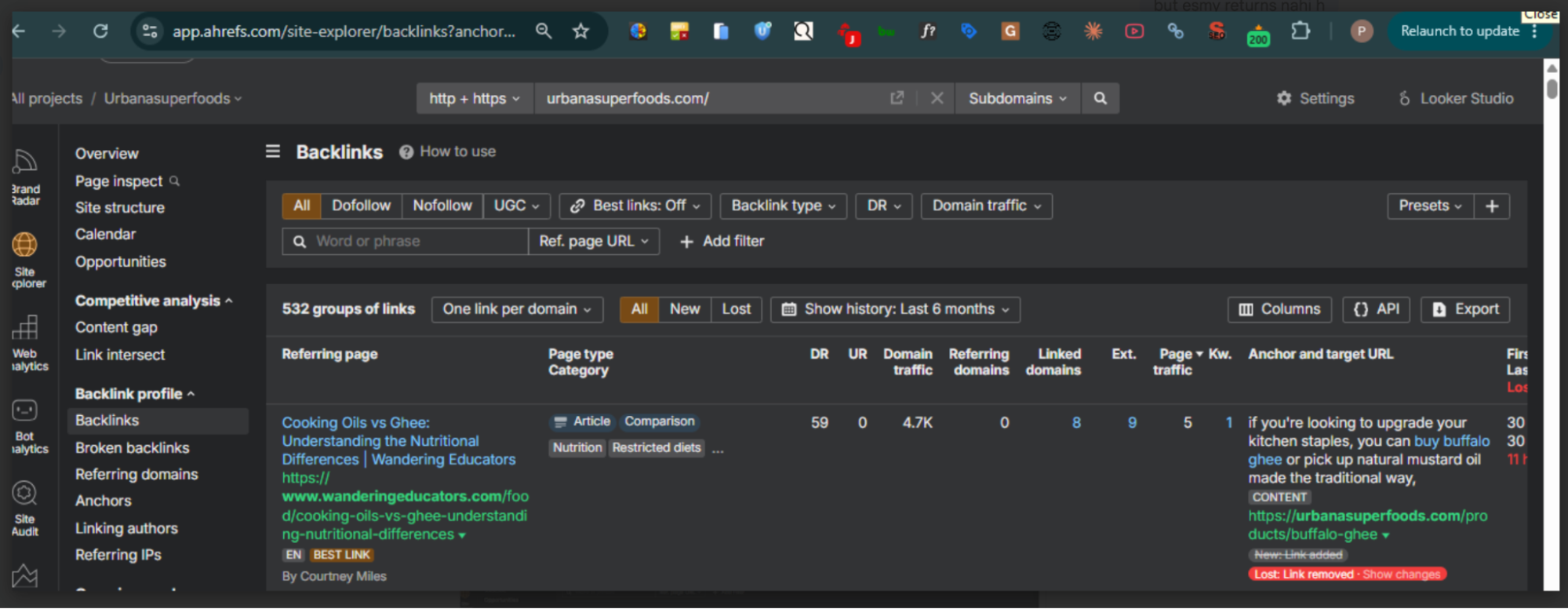
1. Referring Domain
The referring domain is the website that provides the backlink to your website. For example, if Website A links to a page on Website B, Website A is the referring domain.
A backlink from a relevant and trustworthy website can be more valuable than one from an unrelated or low-quality website. When evaluating backlinks for SEO, consider the website's relevance, content quality, audience, traffic, and overall backlink profile rather than relying only on third-party metrics such as DA or DR.
2. Target URL
The target URL is the webpage that receives the backlink. This is sometimes referred to as the backlink URL or destination URL.
A backlink can point to your homepage, blog post, product page, service page, research page, or any other publicly accessible webpage. Ideally, the target URL should be the page that provides the most relevant information for the reader.
For example, if another website is discussing technical SEO and links to your detailed technical SEO guide, the guide becomes the target URL of that backlink.
3. Anchor Text
Anchor text is the clickable text used for a backlink. It helps readers and search engines understand what the linked page is about.
For example, in the sentence “learn more about technical SEO,” the phrase technical SEO is the anchor text.
When building SEO backlinks, anchor text should be natural, descriptive, and relevant to the linked page. A backlink profile can contain different types of anchor text, including branded, partial-match, exact-match, generic, and naked URL anchors.
The goal is not to use the same exact-match keyword in every backlink. Instead, use a natural mix of branded, partial-match, descriptive, and long-tail keywords that accurately reflect the linked page. To find suitable long-tail keywords, look at related search queries, Google autocomplete suggestions, “People Also Ask” questions, and keyword research tools such as Ahrefs, Semrush, or Google Keyword Planner. You can also review the actual language your audience uses when searching for the topic. Natural anchor text should fit the surrounding sentence and help users understand what they will find after clicking the link, rather than appearing to be inserted solely for SEO. 4. Dofollow and Nofollow Links
Backlinks can also be classified based on their link attributes. Understanding the difference between these attributes is an important part of backlink SEO.
Dofollow links are standard links that can contribute to ranking signals for the linked page. Most ordinary links do not require a special attribute unless the website owner specifies otherwise.
Nofollow links use the rel="nofollow" attribute to indicate that the linking website does not want the link treated as a typical editorial endorsement. They can still be valuable for SEO and backlinks because they may generate referral traffic, brand visibility, content discovery, and audience exposure.
Other link attributes include:
- Sponsored (rel="sponsored"): Used for paid or promotional links.
- User-generated content (rel="ugc"): Commonly used for links within comments, forums, and other user-generated content.
Therefore, when evaluating good backlinks for SEO, do not focus only on whether a link is dofollow. Relevance, context, quality, and potential referral value also matter.
5. Link Creator (Linkreator)
The link creator, sometimes referred to as a linkreator, is the person or organization responsible for creating the backlink. This could be an editor, blogger, journalist, business owner, website administrator, or individual user.
A backlink may be earned naturally because someone finds your content useful, or it may be created as part of a deliberate link-building campaign. Naturally earned editorial links are generally more valuable than links created solely to manipulate search rankings.
For example, a journalist may discover your original research and link to it as a source. This creates a natural editorial backlink because the link supports the journalist's content and provides additional value to readers.
6. Link Context
Link context refers to the words, sentences, and information surrounding a backlink. Context helps readers and search engines understand why one page is being linked to another.
A link placed naturally within relevant content is generally more meaningful than a link placed on an unrelated page. For example, an article explaining what is link building in SEO could naturally link to a detailed guide about building backlinks because the linked resource provides additional information for readers.
When evaluating a backlink opportunity, ask whether the surrounding content is relevant to your page and whether the link genuinely helps the reader.
7. Link Placement
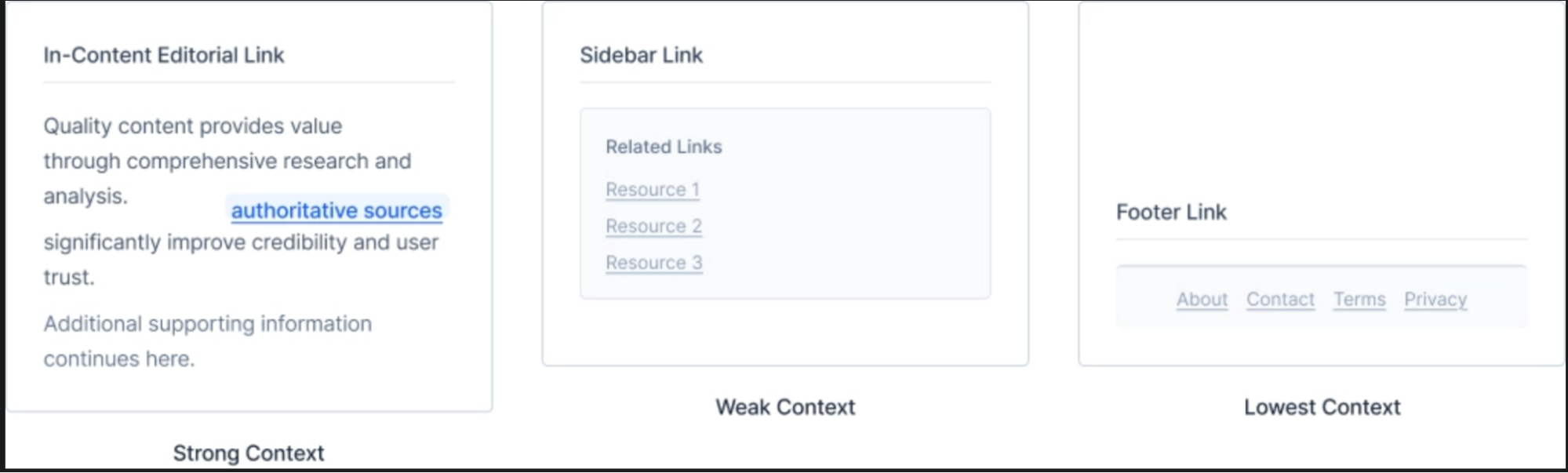
Link placement refers to where a backlink appears on a webpage. Links placed within the main body of relevant content are typically more useful to readers than links placed randomly in footers, sidebars, or unrelated sections.
For example, a fitness website discussing running shoes could naturally link to your guide about choosing running shoes within the relevant section of its article. The placement makes sense because readers may want additional information at that point.
When evaluating backlinks for SEO, look for:
- Main content: The link appears within the actual article or page content.
- Relevant section: The surrounding topic relates to your target page.
- Natural placement: The link does not appear forced or promotional.
- Useful destination: The target URL provides additional value to readers.
- Visible link: Users can easily understand and click the link.
Together, the referring domain, backlink URL, anchor text, link attributes, creator, context, and placement help determine how a backlink fits into your overall backlink profile. Understanding these elements can help you build a more natural and relevant backlink profile rather than simply focusing on the number of SEO backlinks pointing to your website.
Why Backlinks Matter in Traditional SEO and AI Search
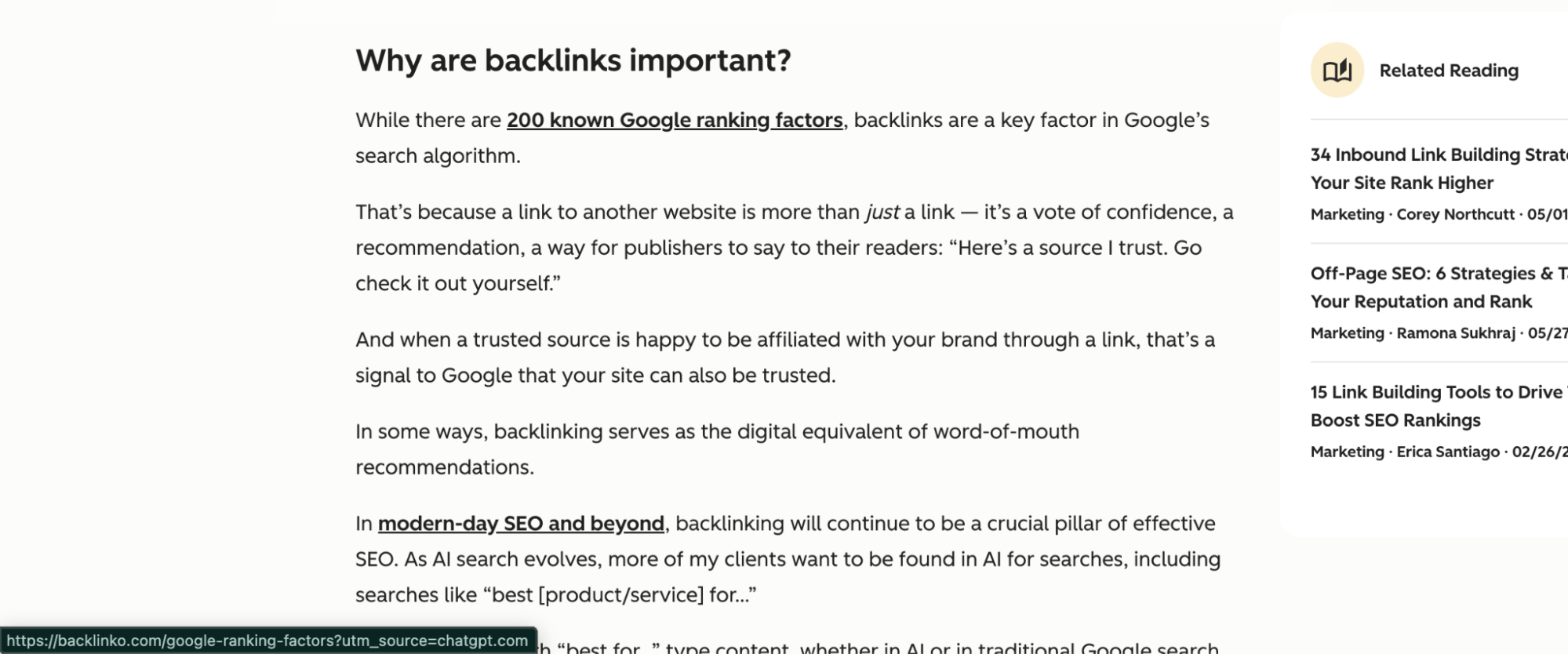
In traditional SEO, backlinks were considered an important ranking signal because they helped search engines evaluate the authority, relevance, and credibility of a website. When one website linked to another, the backlink could act as a vote of confidence, signaling that the linked page contained useful or trustworthy information. This vote of confidence can contribute to higher search rankings, particularly when backlinks come from relevant and authoritative websites. For example, an Ahrefs study analyzing around 1 billion web pages found a positive correlation between the number of unique referring domains linking to a page and the amount of organic search traffic it receives.
However, more backlinks do not automatically guarantee higher rankings. The quality, relevance, authority, and context of those links matter, and Google's ranking systems consider many other factors alongside links.
Earning links from relevant and authoritative websites could strengthen a site's overall authority and support its ability to compete in organic search results. This is why traditional SEO places considerable emphasis on link building, not simply getting more links, but earning relevant, credible, and contextually appropriate backlinks.
In simple terms, backlinks traditionally helped websites build authority, strengthen credibility, support organic rankings, and generate referral traffic and are still relevant in modern SEO. But the role of backlinks is evolving as search increasingly incorporates AI-generated answers and
The rise of AI-powered search has changed how people discover information, but it has not made backlinks irrelevant. Backlinks can still support traditional search visibility while also contributing to the wider online presence that helps search engines and AI systems understand a brand, website, and its areas of expertise. Recent industry analysis continues to find a relationship between strong backlink profiles, organic rankings, and visibility across newer search experiences such as AI Overviews.
However, backlinks alone are not enough for AI visibility. AI search looks beyond the link itself and can consider the wider context surrounding a brand across the web. This includes relevant third-party articles, brand mentions, reviews, discussions, comparisons, and other sources that consistently associate a business with a particular topic. Research discussed in recent SEO/GEO analysis suggests that branded web mentions can be a stronger indicator of AI Overview visibility than simply increasing the raw number of backlinks.
This is where off-page SEO and entity SEO start to overlap with GEO. For example, imagine a fitness brand that publishes an excellent guide about strength training. A backlink from a relevant health or fitness publication can help establish authority in traditional SEO. But if that same brand is also mentioned in relevant Reddit discussions, LinkedIn posts, Quora answers, industry publications, reviews, and other trustworthy communities, AI systems receive more context about who the brand is, what it does, and what topics it is associated with. Third-party engagement across platforms such as Reddit, LinkedIn, Quora, and Medium is increasingly discussed as part of off-site strategies for AI visibility.
The important distinction is that these mentions are not necessarily backlinks. A Reddit discussion may mention a brand without linking to it. A LinkedIn post may discuss a company without creating a traditional SEO backlink. A Quora answer may reference a product or explain its use case. These activities can still contribute to the brand's wider digital footprint and provide additional context for AI systems.
Therefore, modern link building should not be viewed simply as “get as many backlinks as possible.” The goal is to build a credible and consistent presence across the web. Relevant backlinks, genuine brand mentions, expert contributions, reviews, community discussions, digital PR, and strong first-party content can work together to strengthen both SEO and AI search visibility.
Think of it as three connected layers:
- Backlinks → SEO: Relevant, authoritative links can support rankings, discovery, referral traffic, and topical authority.
- Mentions & discussions → GEO: Being discussed by relevant third-party sources can strengthen the external context around your brand.
- Entity SEO → Brand understanding: Consistent information about your brand, products, services, and expertise helps search engines and AI systems understand what your entity represents.
The key is quality and relevance, not volume. A genuinely useful mention on a relevant Reddit discussion, industry publication, LinkedIn post, or community forum can be more meaningful than dozens of artificial links created simply to increase a backlink count. Similarly, a relevant editorial backlink that naturally supports the reader can contribute far more than a purchased link placed on an unrelated website.
So, in the AI-search era, backlinks should be treated as one part of a broader authority strategy. Build links where they make sense, earn genuine mentions where your audience is active, maintain a consistent brand entity across the web, and create content that AI systems can confidently understand and reference.
What to Consider When Using Reddit, Quora & Medium for Backlinks
Traditional link building is no longer limited to earning editorial backlinks from websites and publications. A modern backlink strategy can also include relevant community participation, brand mentions, content distribution, and other off-page activities that help increase visibility and build a consistent online presence.
Platforms such as Reddit, Quora, and Medium can support these efforts, but they should not be treated simply as places to create backlinks. Their value often comes from reaching relevant audiences, generating referral traffic, increasing brand visibility, and creating opportunities for people to discover and reference your content.
However, each platform has its own rules and audience expectations. Using them purely for link building, affiliate promotion, or repeated self-promotion can lead to content removal, reduced visibility, or account restrictions.
Reddit: Contribute Before You Link
Reddit is built around topic-specific communities, or subreddits, where users expect genuine discussions rather than promotional content.
If someone asks a question related to your expertise, provide a useful answer first. If your website contains a resource that genuinely answers part of the question, you can reference it where the community rules allow.
Do:
- Participate in relevant subreddits.
- Answer questions with useful, original information.
- Follow each subreddit's rules about links and self-promotion.
- Link only when your resource genuinely adds value.
- Build a history of genuine participation rather than only posting links.
- Focus on discussions where your expertise is relevant.
Don't:
- Drop links into unrelated discussions.
- Create posts solely to promote your website.
- Repeatedly submit the same URL.
- Use multiple accounts to promote your content.
- Post affiliate links where promotional content is restricted.
- Treat Reddit as a source of backlinks rather than a community.
Simple rule: On Reddit, contribute first and link second.
Quora: Answer Questions, Don't Distribute Links
Quora can be useful for answering questions related to your expertise and reaching people who are actively looking for information. However, a Quora answer should provide value even if the reader never clicks your link.
For example, if someone asks “What is international SEO?”, provide a complete explanation in the answer itself. You can then reference your detailed guide if it provides genuinely useful additional information.
Do:
- Answer questions relevant to your expertise.
- Provide detailed and original explanations.
- Use links only when they support your answer.
- Choose questions where your knowledge genuinely adds value.
- Maintain a natural mix of participation and content references.
Don't:
- Write short answers just to insert a backlink.
- Add the same link to multiple unrelated questions.
- Use Quora primarily to promote affiliate offers.
- Create answers that are mostly promotional copy.
- Force commercial keywords into your answers.
- Treat every question as an opportunity to promote your website.
Simple rule: Use Quora to build expertise and visibility, not to distribute links at scale.
Medium: Create Value, Don't Republish for Links
Medium can be useful for content distribution, thought leadership, and reaching new audiences. However, simply copying an article from your website to Medium and adding multiple links back to the original page does not create a strong content strategy.
Instead, publish a genuinely useful article that provides independent value and reference your website only where it naturally supports the topic.
Do:
- Publish original or substantially useful content.
- Cover related topics that are valuable to the Medium audience.
- Use links naturally where additional information is helpful.
- Focus on expertise, insights, and audience value.
- Use Medium as a content distribution and thought-leadership channel.
Don't:
- Publish thin articles created only to obtain backlinks.
- Republish large amounts of your website content solely for link building.
- Add excessive links to every article.
- Turn articles into promotional pages.
- Use Medium primarily for affiliate links or commercial promotions.
- Create multiple low-value articles pointing to the same pages.
Simple rule: Use Medium for content distribution and authority building, not as a link farm.
Reddit vs. Quora vs. Medium
Platform | Best Use | Link Approach | What to Avoid |
Reddit | Community engagement | Link when genuinely relevant | Spam and self-promotion |
Quora | Expertise and answering questions | Use links as supporting resources | Thin answers created for links |
Medium | Content distribution and thought leadership | Add contextual references | Low-value articles and excessive links |
Are Reddit, Quora & Medium Backlinks Good for SEO?
Don't evaluate these platforms only by whether their links are dofollow or nofollow. Their potential value can also come from referral traffic, brand visibility, audience engagement, content discovery, and opportunities for secondary mentions or links.
For example, a relevant Reddit discussion may introduce your brand to hundreds of people who are genuinely interested in your topic. Some of those users may later search for your brand, visit your website, mention it elsewhere, or reference your content.
However, this does not mean that every Reddit, Quora, or Medium link is an SEO ranking signal. The objective should be to build a genuine presence where your audience already participates, rather than creating links simply to increase your backlink count.
Simple rule: Don't ask only, “Will this link improve rankings?” Also ask, “Does this activity help the right audience discover and trust my brand?”
Beyond Traditional Backlinks: What Should Change in Your Strategy?
As search becomes increasingly AI-driven, your off-page strategy should extend beyond traditional backlink acquisition. Instead of focusing only on the number of links pointing to your website, build a broader online presence that includes relevant backlinks, brand mentions, entity SEO, digital PR, expert contributions, reviews, and genuine community discussions.
Channels such as Reddit, Quora, LinkedIn, industry publications, and other relevant communities can help create additional context around your brand. These activities do not necessarily create traditional SEO backlinks, but they can increase brand visibility and contribute to a consistent digital footprint.
Think of the modern strategy as:
- Backlinks → traditional SEO authority and discovery
- Brand mentions → broader visibility and third-party recognition
- Entity SEO → helping search engines understand your brand, products, services, and expertise
- Community discussions → audience engagement and topical visibility
- Digital PR → authoritative coverage, mentions, and potential editorial links
- Expert contributions → demonstrating expertise across relevant third-party sources
The goal is therefore not to replace backlinking with Reddit, Quora, or brand mentions. Instead, these activities should complement traditional link building in SEO as part of a broader off-page strategy.
What to Consider When Evaluating Backlink Opportunities?
When looking for backlink opportunities, don’t just focus on getting a link. Look at whether the website, page, and link are actually valuable for your SEO strategy.
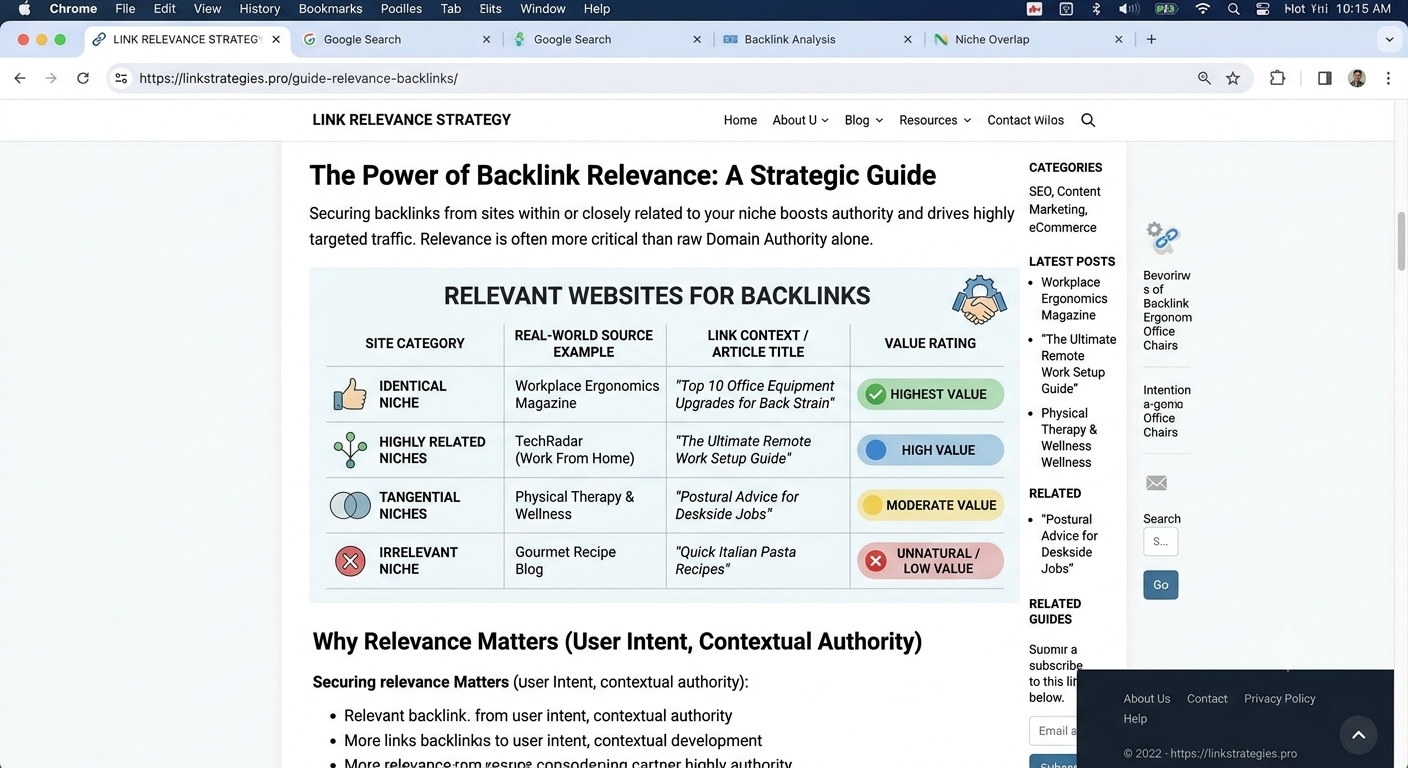
1. Relevant Website
When looking for backlinks, the first thing to check is whether the website is relevant to your niche or topic. A backlink is more meaningful when it comes from a website that regularly publishes content around the same subject, serves a similar audience, or operates within a related industry.
For example, if you have a website about SEO and digital marketing, relevant backlink opportunities could come from websites that cover SEO, content marketing, search marketing, web development, eCommerce, or online business. A link from an SEO blog to your article about backlinks makes natural sense because both websites are discussing related topics.
On the other hand, getting a backlink from an unrelated website about gardening, automobiles, or cooking simply because it has a high domain authority may not be a strong opportunity. The website may be authoritative, but the lack of topical relevance makes the link less natural.
Example: If you operate an eCommerce fashion store and publish a guide on “How to Choose the Right swimwear,” relevant backlinks could come from sports blogs, swimming communities, fitness websites, or lifestyle publications. These websites share an audience that could genuinely benefit from your content.
The key is not to look for websites that are identical to yours, but to find websites where your content naturally fits their topic and audience.
Simple rule: Same niche is ideal, related niche is good, and completely unrelated niche should generally be avoided.
2. Website Quality
When evaluating a website for backlinks, look beyond whether it looks professional. You should also check its authority, traffic, backlink profile, and outbound links to understand whether the website is actually a strong link-building opportunity.
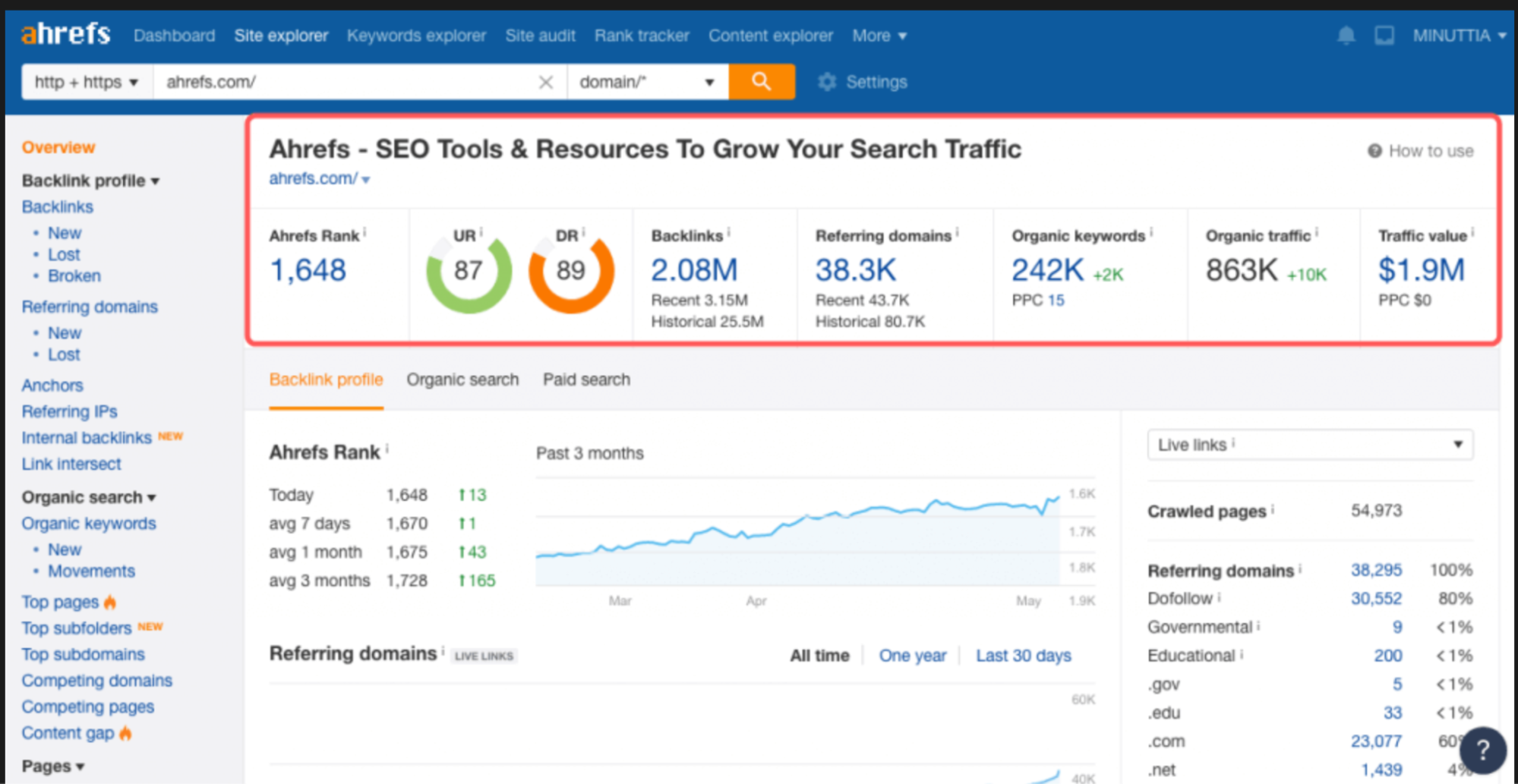
Domain Authority (DA) / Domain Rating (DR)
DA (Domain Authority) is a metric from Moz, while DR (Domain Rating) is a metric from Ahrefs. Both are third-party SEO metrics designed to estimate the strength of a website's backlink profile.
A higher DA or DR can indicate that a website has a stronger link profile, but these are not Google ranking factors. Don't reject a relevant website simply because its DA or DR is lower. Look at the complete picture.
Organic Traffic
Check whether the website receives real organic search traffic. A website with consistent traffic can provide value beyond the backlink itself because people may actually discover and visit your website through the link.
For example, a website with DR 70 but almost no organic traffic may not always be a better opportunity than a relevant website with DR 45 and thousands of genuine monthly visitors.
Outgoing Links
Check how many links the website regularly sends to other websites. If almost every article contains numerous commercial or external links, the site may be heavily focused on selling or distributing backlinks.
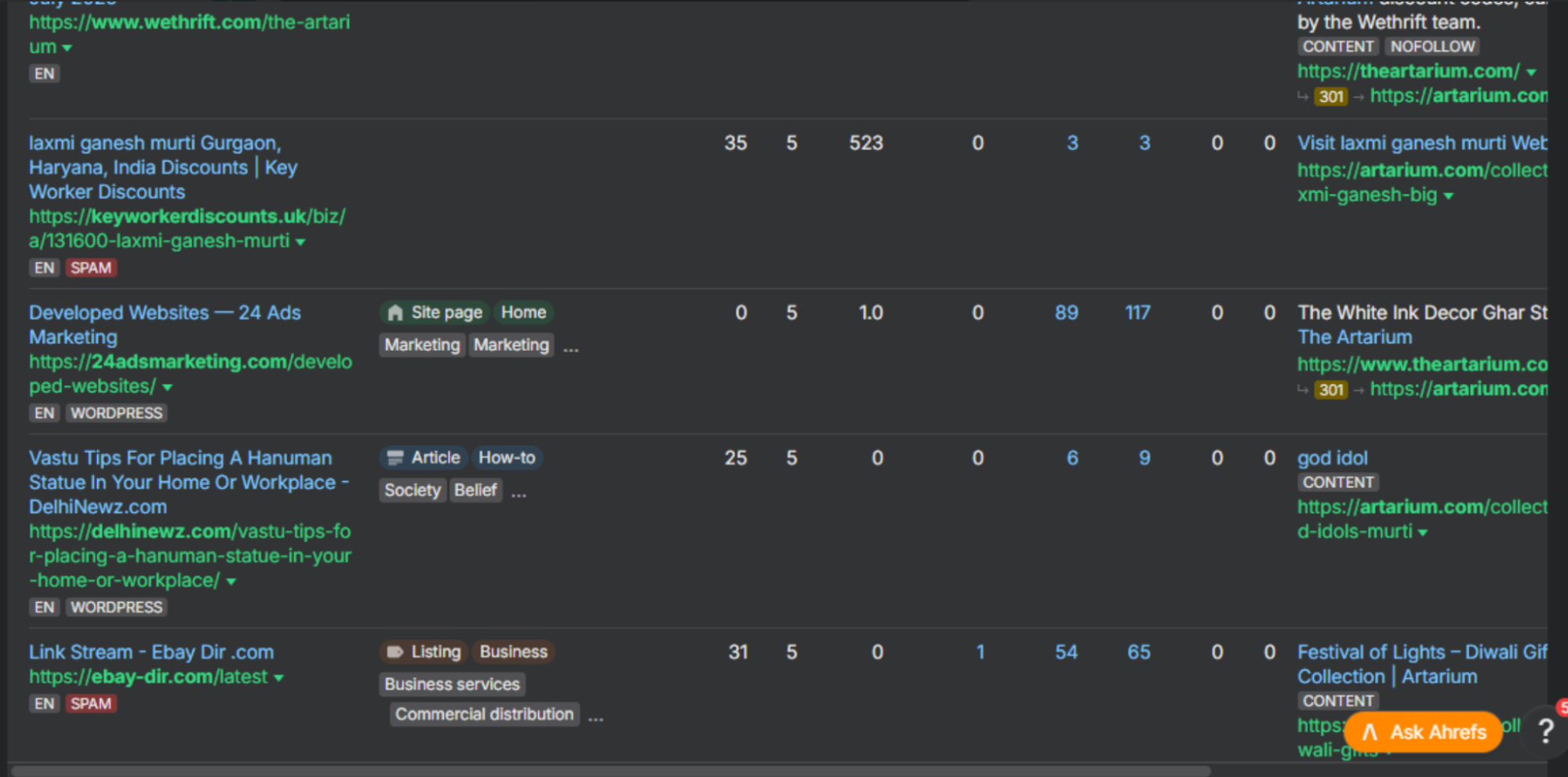
Also look at where those outgoing links point. If a website links to hundreds of completely unrelated industries, gambling sites, questionable services, or low-quality websites, consider it a warning sign.
Anchor Text
Look at the anchor text used in the website's existing outgoing links. If the site repeatedly uses highly optimized, exact-match commercial keywords such as “best cheap insurance”, “buy shoes online”, or “best SEO agency” in unnatural ways, it may indicate aggressive link-building practices.
A healthy website generally has natural, contextually relevant anchor text rather than forcing keywords into every link.
What to Check Before Getting the Link
Check | What to Look For |
DA / DR | Strong and credible backlink profile |
Organic Traffic | Genuine and consistent search traffic |
Outgoing Links | Natural number and relevant destinations |
Anchor Text | Natural, contextual wording |
Content Quality | Original and useful content |
Overall Site | Genuine website, not a link farm |
The main point: Don't choose a backlink solely because a website has a high DA or DR. Relevance + genuine traffic + quality content + a healthy outbound link profile give you a much better picture of whether the backlink is worth pursuing.
You should also look for warning signs such as:
- Large numbers of unrelated articles
- Poorly written or AI-generated-looking content
- Excessive outbound links
- Articles published only for placing backlinks
- Unrelated websites or industries covered on the same site
- Obvious paid-link or guest-post pages
- Little evidence of a real audience or purpose
Simple rule: Don't judge a backlink opportunity only by its SEO score. First check whether the website is genuinely useful to people.
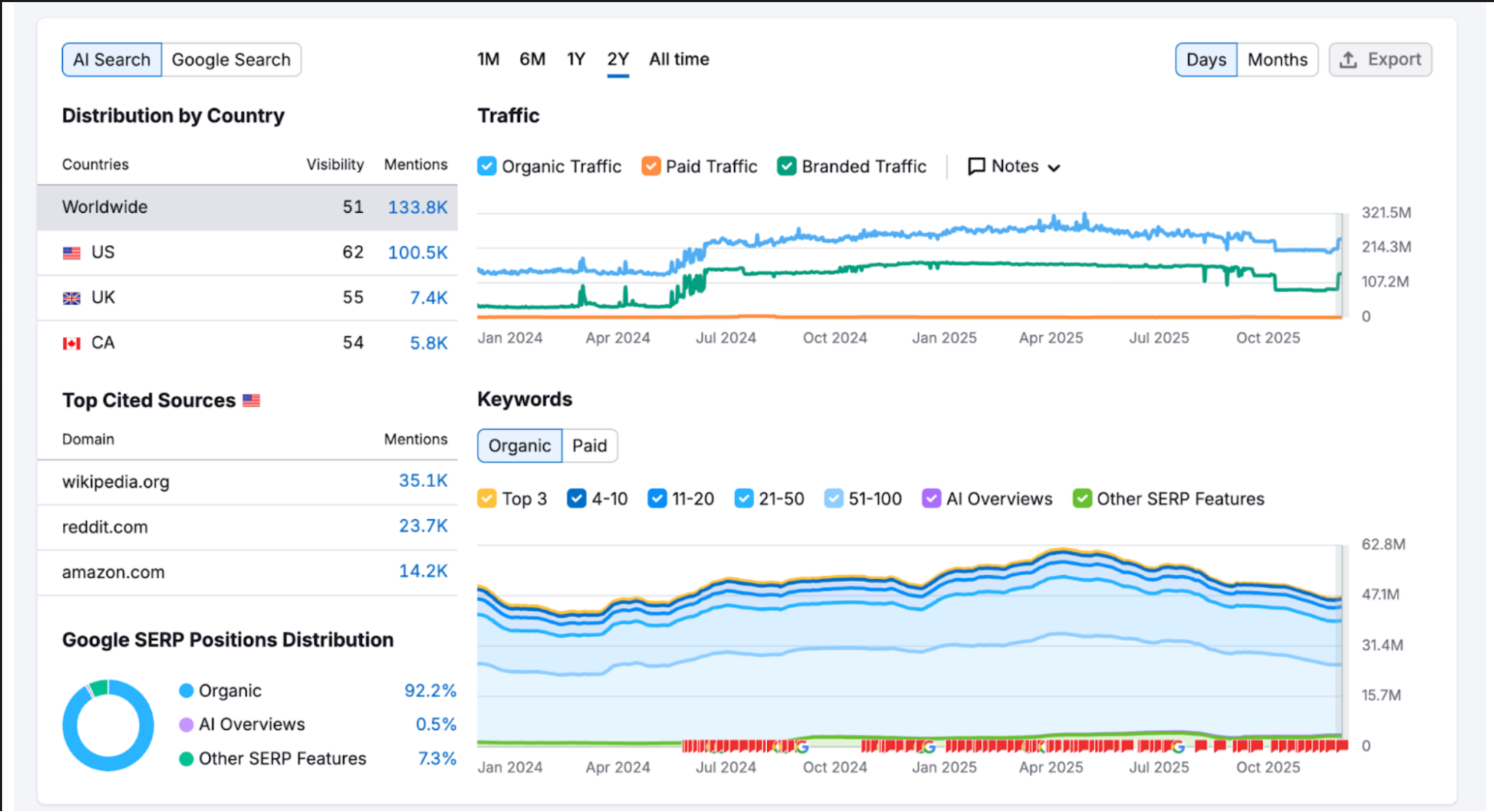
3. Real Traffic
When looking for backlinks, checking whether the website gets real and consistent traffic is also one of the major factors, especially organic traffic from search engines. A website may have a high DA or DR, but if hardly anyone visits it, the backlink may have limited value beyond the link itself.
You can use tools such as Ahrefs, Semrush, or Similarweb to check estimated traffic and understand where the website's visitors come from. Look at the traffic trend as well. A website with steady or growing traffic is generally more attractive than one whose traffic has suddenly dropped.
For example, imagine you find two websites in the same niche:
- Website A: DR 65, but only around 200 organic visitors per month.
- Website B: DR 45, with 15,000+ relevant organic visitors per month.
Website A has the higher DR, but Website B may be the more interesting backlink opportunity because it has an active audience and potential to send referral visitors to your website.
Also check where the traffic comes from. Traffic should ideally come from countries and audiences relevant to your business. A website may show a large traffic number, but if most of its visitors come from countries or search queries that have nothing to do with your target market, that traffic may not be very useful.
What to check:
- Organic traffic volume
- Traffic growth or decline
- Main traffic countries
- Top-performing pages
- Keywords bringing visitors
- Whether the traffic is relevant to your target audience
Simple rule: Don't just ask, “Does this website have traffic?” Ask, “Does this website have the right traffic?”
4. Relevant Link Placement
Where a backlink is placed on a webpage matters. A link should appear naturally within content where it makes sense for the reader rather than being added simply to create a backlink.
For example, if you publish an article about “How to Choose the Right Running Shoes,” and a fitness website has a paragraph discussing factors such as foot type, running style, and shoe cushioning, a natural link to your detailed guide could fit directly within that section. The reader sees the link at the exact point where additional information is useful.
On the other hand, placing the same link randomly in a website's footer, sidebar, author bio, or an unrelated paragraph provides much less contextual value.
When evaluating placement, look for:
- Main content: Prefer links within the actual article or page content.
- Contextual relevance: The surrounding paragraph should relate to your linked page.
- Natural positioning: The link should feel like a genuine recommendation rather than an advertisement.
- Visibility: Readers should be able to notice and click the link easily.
- Relevant section: Ideally, the link should appear where your content adds further value to the topic being discussed.
For example, a cooking website writing about “Healthy Breakfast Ideas” could naturally link to your article on “High-Protein Breakfast Recipes” while discussing protein-rich foods. The placement makes sense because the linked content provides additional information on the same subject.
Simple rule: A good backlink should be placed where a reader would naturally expect to find more information, not simply where there is space to add a link.
5. Dofollow vs. Nofollow
When evaluating a backlink, check whether the link is dofollow or nofollow. This tells you how the linking website is instructing search engines to treat that link.
Dofollow links are standard links that can pass ranking signals from the referring page to the linked page. They are generally the type of backlinks SEO professionals actively try to earn when building authority.
Nofollow links use the rel="nofollow" attribute. They tell search engines that the link should not be treated as a typical editorial endorsement. Google may choose not to pass ranking signals through a nofollow link in the same way as a standard link.
However, nofollow does not mean useless. A nofollow backlink can still put your brand in front of a relevant audience, generate referral traffic, and help people discover your website.
For example, imagine a popular industry publication mentions your business and links to your website using a nofollow link. Even though the link may not pass the same ranking signals as a standard link, thousands of relevant readers could still click it and visit your website.
What to Check
- Dofollow: Can contribute to SEO ranking signals.
- Nofollow: Generally does not pass the same ranking signals, but can still provide traffic and visibility.
- Relevance: A relevant nofollow link can still be valuable for your brand.
- Natural link profile: Don't try to make every backlink dofollow. A natural backlink profile can contain different types of links.
Simple rule: Prioritize quality and relevance first, then consider whether the backlink is dofollow or nofollow.
6. Natural Anchor Text
Anchor text is the clickable text used to link to your website. When evaluating or building backlinks, make sure the anchor text fits naturally within the sentence and accurately describes the page being linked to.
For example, if your target page is about “Email Marketing Strategies,” natural anchor text could be email marketing strategies, email marketing tips, this guide to email marketing, or even your brand name. The wording should make sense to the reader rather than looking like a keyword inserted only for SEO.
Avoid asking websites to use the same exact-match keyword in every backlink. For example, if your target keyword is “best digital marketing agency,” repeatedly using best digital marketing agency as the anchor text across dozens of backlinks can create an unnatural backlink profile.
A healthy backlink profile usually contains a natural mix of anchor text, including:
- Branded: Your company or website name
- Partial-match: A variation or part of the target keyword
- Exact-match: The exact target keyword, used naturally
- Generic: “learn more,” “read the guide,” or “visit the website”
- Naked URL: The actual website address
Example:
Instead of: Looking for the best running shoes? Check out our best running shoes guide for the best running shoes available today.
A natural version would be: Looking for the right pair? Check out our running shoe buying guide for tips on finding the right option for your needs.
Simple rule: Write anchor text for the reader first, not the search engine. It should describe the linked page naturally and fit the surrounding content.
7. Editorial Relevance
Editorial relevance means the backlink should genuinely fit the content of the page where it is placed. The link should be useful to readers and make sense within the context of the article, rather than being added only for SEO purposes.
For example, suppose you run a home improvement website and publish a detailed guide on “How to Choose the Right Paint for Your Home.” A home décor website writing about “How to Refresh Your Living Room” could naturally link to your guide when discussing wall colors and paint selection. The backlink is editorially relevant because it gives readers additional information related to the topic.
However, if the same website publishes an article about mobile phone accessories and inserts a link to your paint guide without any meaningful connection, the backlink would not have strong editorial relevance.
When evaluating a backlink opportunity, ask:
- Does the linked page add useful information to the article?
- Is the topic relevant to the website's audience?
- Does the link fit naturally within the surrounding paragraph?
- Would the editor include the link even without an SEO benefit?
- Does the link provide additional value to the reader?
For example, a financial website linking to a detailed guide about home loans within an article about buying a first home makes sense. A financial website linking to a random article about “best gaming laptops” does not, unless there is a genuine connection within the content.
Simple rule: A strong editorial backlink is one that a website would naturally recommend because it helps its readers, not simply because someone wants a link.
Conclusion
Backlinks remain an important part of SEO, but the way we evaluate them has changed. Building a strong backlink profile is no longer about collecting as many links as possible or focusing only on metrics such as DA and DR. What matters is relevance, quality, context, authority, and genuine value to the audience.
A strong backlink should come from a relevant and trustworthy website, attract real or relevant traffic, appear naturally within the content, and use appropriate anchor text. At the same time, marketers should be cautious of purchased links, spammy websites, irrelevant placements, excessive link exchanges, and backlinks created purely to manipulate search rankings.
The rise of AI-powered search adds another layer to this strategy. Backlinks can support traditional SEO, while brand mentions, third-party discussions, digital PR, community participation, and consistent entity information can help build the wider online presence that search engines and AI systems use to understand a brand and its expertise.
Ultimately, successful link building is not about “getting more backlinks.” It is about earning the right backlinks from the right sources for the right reasons. When your content is genuinely useful and your brand is consistently recognized across relevant, trustworthy sources, backlinks become more than an SEO tactic, they become part of building long-term authority, visibility, and trust across both traditional and AI-driven search.