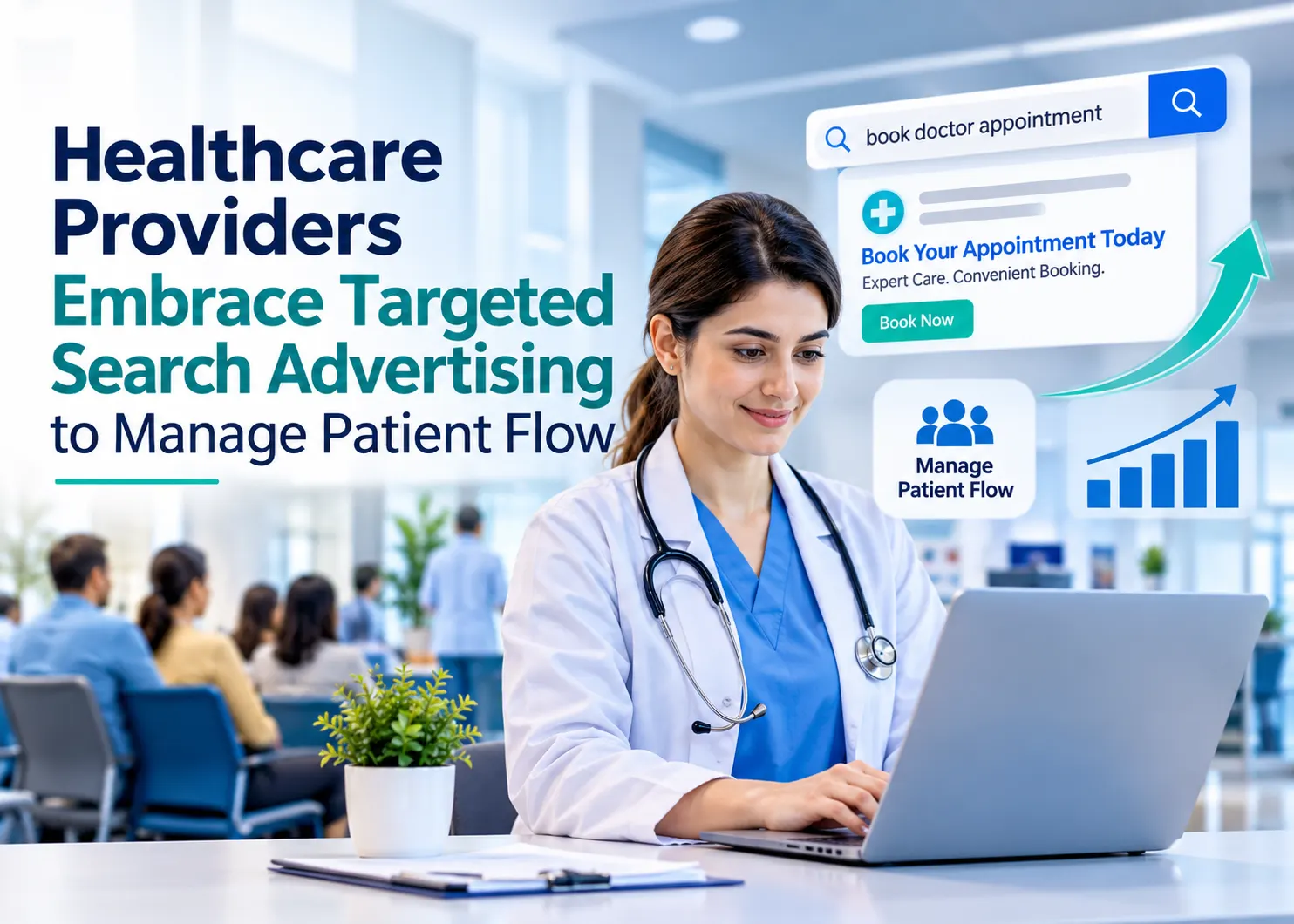
Rising acquisition costs and shifting regulatory rules prompt medical practitioners to implement targeted search campaigns that secure qualified consultations. Healthcare providers are now very much aware of the importance of digital visibility in terms of linking patients to the right care. People are increasingly used to doing their own research on symptoms, comparing providers and searching out clinics in their area.
As such, there is a real pressure on the healthcare sector to ensure that accurate information is readily available. Traditional marketing can still be of use in terms of awareness, but it doesn't necessarily get to the individual at the point when they're actually looking for care.
Search advertising in particular is a far more direct route, allowing providers to appear in the right search results and thus guide the patient to the right service. It's not just about grabbing attention; these campaigns can also be used to help manage patient flow.
You can use them to promote specific treatments, specific specialties, specific types of appointments, or specific locations. That, in turn, will influence which services get the inquiries and when patients are being encouraged to get in touch. If you plan it properly, then search advertising becomes part of the overall operational plan rather than just a standalone marketing exercise.
How Google Ads Can Help?
Search advertising platforms provide healthcare providers with the tools to target audiences based on search intent, location, and a range of other campaign settings. Of the platforms available, Google Ads is probably the one that's most commonly used, as it allows ads to be displayed alongside the search results when someone is searching for a particular service. For any practice looking at Google Ads for doctors, the key issue is how the advertising supports patient access rather than how many clicks you can get. A good strategy is one that matches the right searches with the right service information, clear expectations, and a simple way of making an inquiry.
This requires careful thought. The ads need to be clear in their description of the services they are promoting and must avoid any language that would imply a guaranteed outcome or that makes a medical claim that isn't supported.
The organization will also need to be mindful of the relevant advertising rules, professional standards, and platform guidelines. The requirements will vary depending on the location, specialty, and type of service.
Landing pages are just as important. If someone clicks on an ad, then the page they land on should contain the relevant information in relation to the original search. It should be able to tell you who the service is for, what an appointment would involve, where the clinic is, how to get further information, etc.
Clear contact details and clear appointment options will go a long way to minimizing confusion. A well-run campaign also requires regular review. Search terms, click-through, inquiries, and appointments booked can all be used to assess whether the advertising is in fact attracting the right kind of interest.
The metrics have to be interpreted with care, as a click or a form submission doesn't necessarily equate to an appointment being actually booked or a suitable referral being made.
Why Is Online Search So Vital?
Patients are increasingly using search engines as an initial step in their search for medical information or in making a decision about where to go for treatment. A patient with a persistent problem might be searching for a specialist in their area.
Another patient might be searching for information about a particular test or a screening. These are searches that are driven by a specific need and are therefore very much the sort of thing that a clinician could use to their advantage to provide appropriate information.
For clinics and medical practices, being visible in these results can make a huge difference. You can have the best care in the world, and the most experienced staff in the business, and yet potential patients will still not consider your services if they can't find you online.
Search advertising is the answer to that visibility problem, as it puts your message in front of people who are actively searching for the type of service you provide. The approach is particularly useful in a competitive local market. A strong healthcare SEO strategy helps medical providers improve their visibility when patients search for relevant services and specialties.
You'll often have several providers offering a similar service in the same area, and the patient will be looking at things like opening times, availability of appointments, location, and area of specialty before they make a decision as to where to inquire. A good campaign will help you to get those details across and make the next step as easy as possible.
Search advertising gives you a whole host of performance metrics, but healthcare organizations need to look beyond the basic visibility metrics. You've got impressions, which tell you how many times your ad has appeared, and you've got clicks, which tell you how many people have actually clicked on it to go to your site.
Neither of those on their own is going to tell you whether your campaign is in any way helping patients to get to the right care. A more meaningful form of evaluation would be to look at what happens after the click. Clear and trustworthy advertising messages help potential patients understand the services being offered and what action they can take next.
You could look at the number of appointment requests, the number of phone calls, the number of bookings actually completed, and the attendance rates in relation to various campaigns. Where appropriate and where permitted, of course, those metrics can tell you which services are actually of interest to the patient and where the patient journey breaks down.
It's also worth bearing in mind the difference between an inquiry and a qualified appointment. Some of the people who come to your website are going to be there to get information rather than to book an appointment.
Others may find that the clinic they're looking at doesn't actually offer the service they require. Those interactions aren't necessarily a reflection of bad advertising at all; they simply indicate that the website may not have made it clear what services the provider actually offers.
Targeted search advertising is increasingly being seen as a valuable tool for healthcare providers in terms of improving their visibility and, at the same time, achieving a better balance between patient demand and the resources available.
Read More Blogs On: