Table of Content

- Jessica Robinson
- Aug 07,2026
Producing several pieces within one subject area creates a practical editorial challenge. Writers need consistent terminology and subject knowledge, yet every page still requires a distinct purpose, perspective, structure, and set of supporting details.
Long writing sessions also benefit from short mental breaks. Stepping away from a draft, reading something unrelated, or taking time for a brief 1v1 chat gives the mind a reset before revision, making repeated wording, recycled examples, and familiar arguments easier to notice.
Repeated ideas generally begin during planning, especially when briefs share similar keywords, audiences, and competitor references. Without a clear editorial direction, several assignments drift toward the same explanations, examples, and supporting points.
Broad instructions such as explaining the benefits or discussing key features leave too much room for overlap. Writers then select familiar ideas from previous assignments, even when the title and primary phrase are different.
Teams that review the same competing pages for every assignment inherit similar framing. Their outlines begin to resemble existing results because they rely on identical definitions, comparisons, and supporting arguments.
Research becomes more varied when it includes product documentation, interviews, customer reviews, support pages, industry reports, surveys, and community discussions. Each source type introduces different language and practical concerns.
An angle gives a broad subject a specific direction. It identifies the intended reader, central problem, relevant situation, and desired result before headings or paragraphs are prepared.
Search intent describes what a person expects to accomplish after entering a query. An informational reader wants an explanation, while a comparison-focused visitor needs criteria, differences, and decision support.
Audience labels such as "beginners" or "small business owners" remain too broad for detailed planning. A stronger brief describes the exact circumstance that brings someone to the page.
A first-time buyer researching available options has different questions from an existing customer replacing an outdated service. Their concerns, examples, objections, and next actions require separate treatment.
Scope notes protect related pages from competing with one another. Each assignment needs a short section explaining which subjects belong elsewhere.
Five boundaries help content teams maintain clear separation:
Keyword grouping prevents several pages from targeting the same query cluster. Each URL needs one primary phrase, closely related variants, and a distinct search purpose before drafting begins.
Anchors require the same editorial discipline. The brief needs to record the destination, required wording, placement rule, and surrounding subject. When several assignments link to one page, the reason for mentioning it needs variation instead of another version of the same promotional sentence.
Internal linking also clarifies relationships among neighboring resources. A beginner article might direct readers toward a detailed tutorial, while the tutorial links back to a foundational explanation when additional context is necessary.
Even distinct angles begin to feel repetitive when every draft follows an identical sequence. Structural variety gives each page a form that matches its purpose rather than a fixed publishing template.
One piece might rely on a process example, while another uses a customer scenario, feature comparison, expert comment, survey result, or historical development. Different evidence creates fresh substance without forcing artificial wording changes.
Editorial notes need to identify the expected proof before drafting. A request for a practical example from account setup gives more direction than a broad instruction to add examples.
A tutorial benefits from chronological steps. A comparison works better with criteria-based sections, while an opinion article needs a clear position supported by context and evidence.
The heading order needs to reflect the reader's journey. Reusing the same introduction, benefits section, common mistakes chapter, and closing summary across every assignment makes distinct topics appear interchangeable.
Revision must assess conceptual overlap rather than duplicate sentences alone. Editors need to compare the new draft with related pages and mark repeated definitions, examples, statistics, metaphors, heading patterns, and closing arguments.
A shared content calendar makes this review easier. Useful fields include audience, intent, angle, central examples, assigned keywords, internal links, publication date, and revision status.
A strong niche library gives each article one clear job. Briefs define the reader's need, outlines establish boundaries, keyword groups separate search purposes, and editorial reviews catch overlap before publication.
Distinctiveness does not require avoiding every shared term. Consistent terminology supports clarity across connected resources. The goal is to give readers a new reason to open each page through different questions and practical outcomes.
Articles become repetitive when they target similar keywords, rely on the same research sources, or lack a clearly defined audience, purpose, and content angle during the planning stage.
Start with a distinct search intent, define the reader's specific problem, create unique outlines, use varied examples, and establish clear topic boundaries before writing.
Yes. Keyword clustering assigns a unique search intent to each page, preventing multiple articles from competing for the same queries and reducing duplicate content.
Using different formats, such as tutorials, comparisons, case studies, or opinion pieces, keeps content engaging and ensures each article serves a unique purpose.
Editors should compare new drafts with existing content, reviewing headings, examples, statistics, internal links, and topic coverage to eliminate conceptual overlap and maintain a diverse content library.
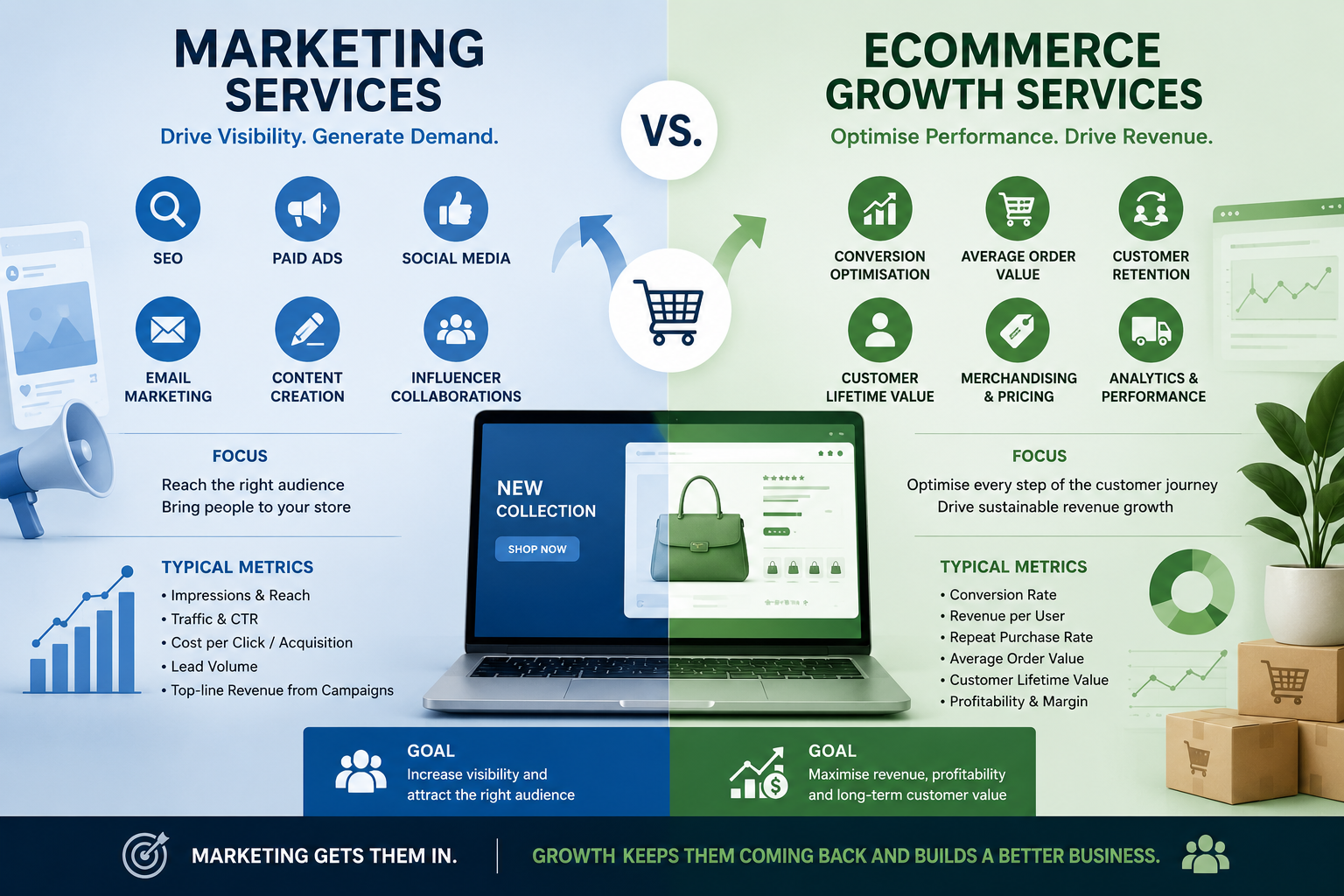
Marketing services and ecommerce growth services serve different business goals. Learn how marketing drives visibility while ecommerce growth focuses on conversions, customer retention, and sustainable revenue to help you choose the right strategy for long-term online business success.
Read More
Discover the 8 best keyword research tools for SEO in 2026 to uncover high-value keywords, analyze search intent, track competition, and improve your search rankings. This comprehensive guide compares the top SEO keyword research tools, including their features, pricing, pros, cons, and ideal use cases, helping beginners, bloggers, marketers, and SEO professionals choose the right tool to drive more organic traffic and grow their online presence.
Read More
Maintaining the same voice across multiple scenes, episodes, or translated videos is essential for creating professional, immersive content. This guide reviews the 8 best AI tools for voice and audio consistency, comparing their voice-cloning quality, multilingual capabilities, pricing, and ideal use cases. Whether you're producing marketing videos, podcasts, audiobooks, or branded content, these platforms help keep narration natural and consistent from start to finish, making it easier to build audience trust and deliver a seamless viewing and listening experience.
Read More
AI image generators are changing how businesses, marketers, bloggers, and designers create visual content in 2026. From realistic photos and product visuals to illustrations, posters, and branded graphics, these tools can turn simple prompts into professional images within seconds. This guide compares the top 8 AI image generator tools based on image quality, editing features, reference-image support, pricing, ease of use, and creative control. Explore their strengths, limitations, and best use cases to find the right AI image generator for your needs.
Read MoreGet into details now? View all posts