A fall rarely happens next to a phone. It could occur on a garden path, in a shop aisle, or on a quiet street. These are the times when older adults need help most and have the least access to it.
Mobile emergency pendants are designed for these moments, allowing older adults to request help without reaching for a phone. These wearables connect users to monitoring centers over cell networks when help is needed.
Cellular pendants can be used outside of the home wherever the user has compatible network coverage, unlike traditional medical alert systems that require a home telephone line. That makes them useful for seniors who often visit friends, go shopping, take walks, or spend time away from home.
But then, what happens when someone presses the emergency button? Several processes work together to connect the call, transmit it, and help the right person respond. This guide describes the path that emergency pendant calls from cellular networks take and what affects their reliability.
How Does a Mobile Emergency Pendant Connect Calls?
A mobile emergency pendant for seniors is connected to a monitoring center via a cell phone network, enabling seniors to ask for help even when they are not at home. They can wear the pendant while walking, shopping, visiting friends, or anywhere else to reach the monitoring center.
Many mobile pendants also have GPS capabilities, helping monitoring personnel locate the person being monitored during an emergency. These devices usually include two-way voice communication, letting the wearer speak directly with a monitoring representative through the pendant. This way, you don't need to have a dedicated phone to call for help.
But mobile emergency pendants need cell service to work! If the wearer enters an area with weak or no network signal, the device may be unable to connect a call. Families should verify the provider's coverage before buying the plan, especially if their loved one is most active in that area. Connected devices rely on dependable communication systems, making business technology solutions an important part of understanding how modern technologies exchange information
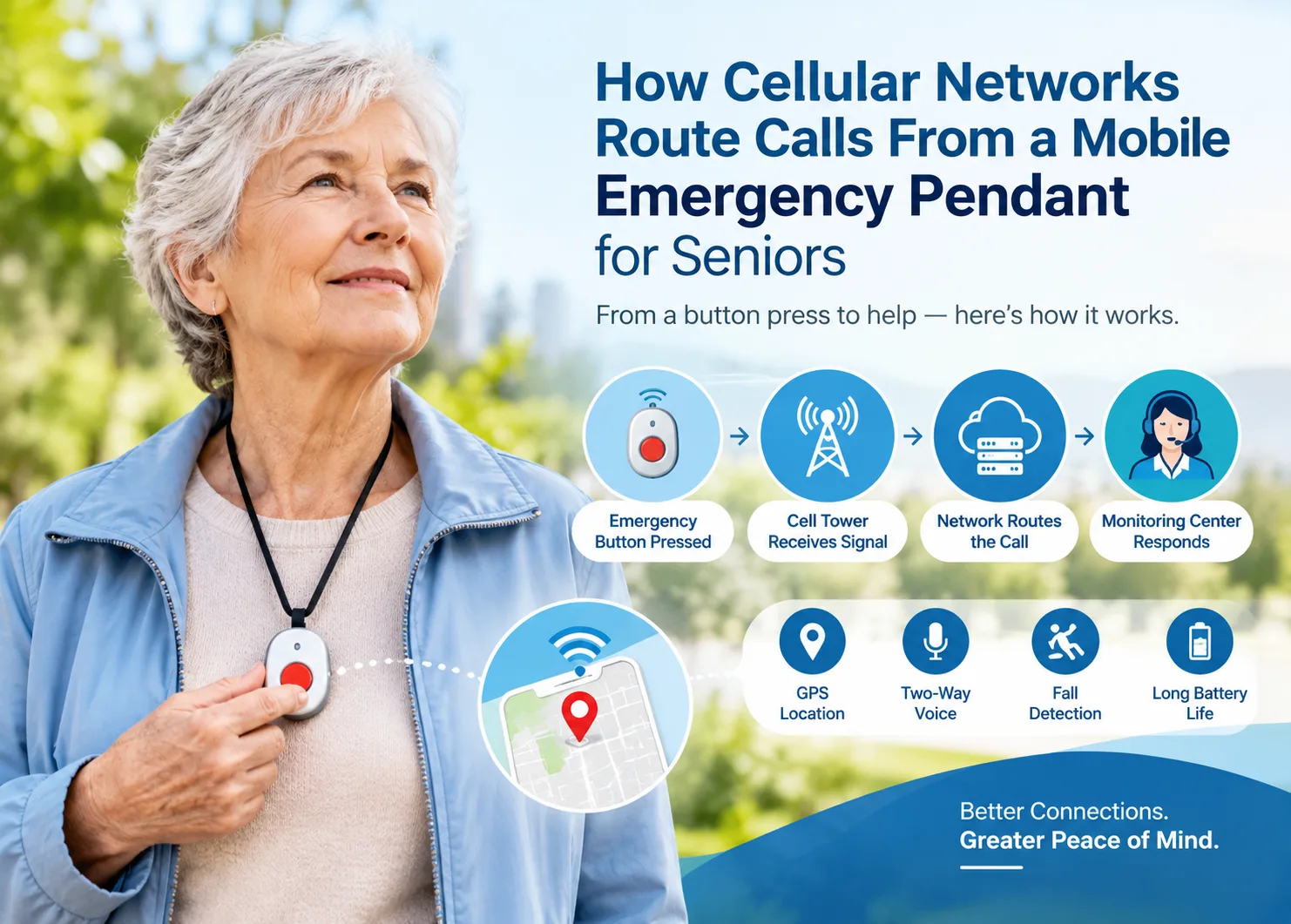
Once the pendant is on the network, one press starts a chain of steps. Here's how the call gets from the wearer to the responder.
It all starts with a single click! The person wearing it pushes the button on the pendant, and it connects to the monitoring centre. They don't have to call a number or find their phone in that moment. After a fall, it's all about simplicity. An elderly person on the ground may not be able to use a telephone. Since the pendant is attached to the body, the button will always be accessible.
2. Cell Towers Send the Signal to the Network
When you press the button, the pendant transmits its signal to a nearby cell tower. Each tower covers a specific area, so the pendant connects to the nearest tower. The tower then sends the signal to the cellular company's network. Coverage comes into play here. A weak signal can slow the connection or cause a call to drop, which is why coverage matters for any cellular device.
3. Network Routes the Call to the Monitoring Center
After that, the provider’s network carries the call on to the monitoring center. When the button is pressed, the wearer connects to this center first. The pendant does not call family members first.
Family/caregivers are only involved when the expert is on the phone. The specialist can notify them as part of the response. This makes the first step easy for the wearer, as all they have to do is press the button.
4. Monitoring Center Receives the Alert
Within a few seconds, a trained specialist answers the call. They communicate with the wearer via the pendant and determine if they are all right. This quick check is central to the process.
If assistance is needed, the specialist alerts emergency services. If the wearer is not able to communicate, assistance is still provided. The specialist can also notify family members or caregivers. What's more, the service is available around the clock, 7 days a week, so someone is always available.
5. GPS Helps Identify the Wearer’s Location
Knowing who is calling is only half the job. Responders should also know the wearer's location. That's why these devices come with built-in GPS, making it easier to track the wearer if they leave the house. This is particularly helpful on a walk, in a store, or on a trip.
Two-way voice adds to this. The wearer can communicate with the specialist and describe the requirements. Combined with voice, GPS gives the specialist a more complete view.
6. Fall Detection Can Start the Alert Automatically
In some cases, a wearer may be unable to press the button. This is where fall detection comes in. This optional upgrade uses a sensor designed to detect rapid movement, like a fall. If the sensor senses one, it will reach the monitoring center automatically, without requiring a button click. This helps when the wearer is hurt, unconscious, or unable to respond. From that point, the call follows the same path as before. The specialist answers, checks on the wearer, and sends help if needed.
What Affects the Reliability of Pendant Calls?
Practical issues can affect a call, even if every step goes exactly as planned. Network coverage and battery power matter most.
1. Network Coverage
To make a call, a cellular pendant requires a signal. If not, the call will not connect. You can reduce this risk by checking coverage with the provider before ordering. Some pendants come with a companion app for caregivers. The app can show the pendant’s cellular strength; thus, a family member can spot a weak connection early. Automated processes can help connected systems respond to specific events, although the reliability of an emergency pendant still depends on factors such as network coverage, battery power, and its monitoring service.
2. Battery Power and Charging
A pendant with a low charge may not finish a call. Many pendants charge in a cradle, while some take only 2-3 hours to charge completely. Regularly positioning the pendant in the cradle ensures that it is ready. A caregiver app can also display the device's battery status. It may alert a cell phone or e-mail when the battery is low. This allows a family member to remind the wearer to charge the pendant. Water resistance is a helpful added feature, so rain or a shower will not stop the pendant from working.
Conclusion
Wireless connectivity, call-routing technology, and monitoring services are available for seniors with emergency pendants, helping them when they need it. It begins with a cell tower connection and ends with a contact for help. Once families understand how these devices work, they can better understand what these devices can and cannot do. They can also choose the emergency pendant that suits them best. They can also ensure help is always ready, at home, or on the move.
Read More Blogs On: