Table of Content
- Jessica Robinson
- Sep 01,2026
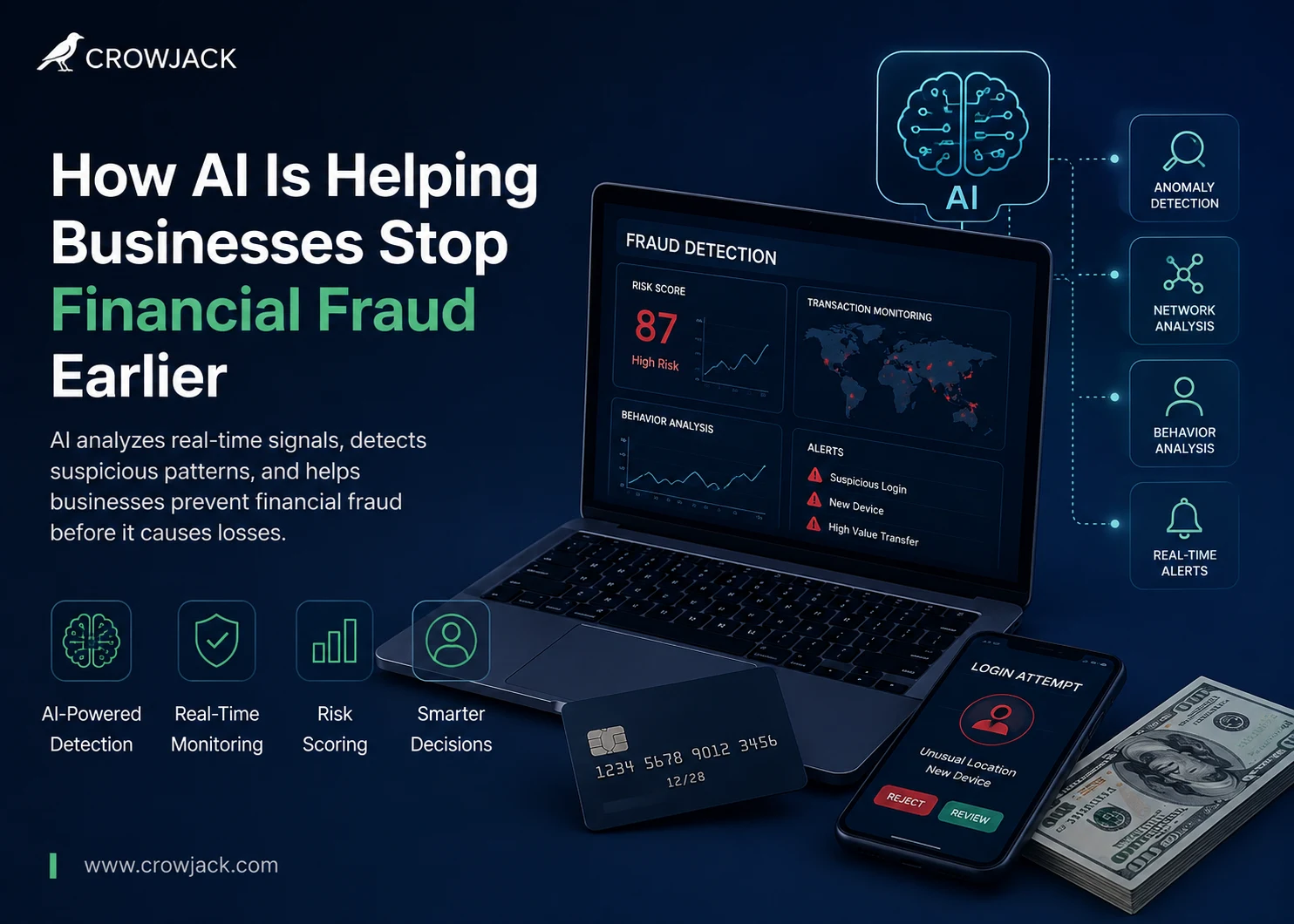
Financial fraud does not typically happen because of one clear event. In fact, it usually starts with small signals: a new device, an unusual login time, a change in payment details, a first-time transfer, an update to a customer profile or a transaction that looks slightly different from the normal behavior. Often, these signals are reviewed much too late when fraud has already moved from risk into typically loss.
And this is what makes AI valuable for businesses. Now it will not take getting a chargeback or failed audit or hearing customer complaints or an account takeover to let mission- control AI to monitor and investigate simultaneously to watch for suspicious patterns and changes. It is rather a matter of not taking human judgement, but giving good chances to fraud, risk, compliance and security teams to act now before money has left the business.
Traditional fraud detection often reacts after the damage has already happened. A payment is disputed. An account is empty. The business then investigates, blocks, reports, and tries to recover what it can.
The sooner this is detected, the better. If a company can spot a potential problem before a transaction is made, an account is presented or a pattern of risk emerges, then it can stop the problem before it escalates. This helps to reduce the cost of the operation and protect customers.
A report by IBM called Cost of a Data Breach showed how good AI and automated security tools are at dealing with early detection and quick responses to brute-force attacks. In the world of financial fraud, speed is really important. This is because fraudsters usually have a lot of time to collect or hide evidence while other activities are happening.
A lot of signals in AI can be confusing. If a human analyst has to follow a simple transaction, an account or an alert, it can slow them down. But AI can do more than this. It can also compare with a thousand or even a million different types of past events.
For example, one login from a new device might not block a customer, but if it's followed by a password reset, a new beneficiary, a changed phone number, and a transfer of high value, it could be serious. AI can connect these signals so quickly that leads are made well before one makes the last payment. This is especially good for industries where customers don't spend much time on the site, like fintech, eCommerce, crypto, lending, insurance, and online marketplaces.
AI doesn't work using just one method. Mostly, it includes a mixture of various tools to build a complete picture of risk.
AI capability | How it helps businesses |
Behaviour analysis | Detects changes in user activity, device use, login habits, and payment behaviour |
Anomaly detection | Finds events that look unusual compared with normal customer or business patterns |
Risk scoring | Gives each transaction, account, or action a dynamic risk level |
Network analysis | Connects related accounts, devices, cards, phone numbers, or payment routes |
Real-time monitoring | Reviews activity as it happens, not only after reports are generated |
Case prioritisation | Helps teams focus on the alerts most likely to matter |
There are still rules about stopping fraud. For example, let's say a company has a rule that it won't accept transactions from certain areas, or it won't accept cards that have been stolen. It might also stop accounts that have been used for fraud. These rules make sense and are good to have.
But fraudsters quickly learn to exploit this rule because they know that when a payment is made in installments, it triggers a review. If they think one new device isn't safe, they can warm the account. If one channel is down, they move over to another one.
AI will allow businesses to go beyond set rules. AI can adapt to changes in behaviour, compare patterns, and find various combinations that are difficult to describe manually. This doesn't mean that AI should approve everything automatically. The best model is a combination of rules, AI scoring and human review.
In several instances, companies use AI to prevent fraud more quickly:
It's useful to think about use cases because fraud teams often have too much information to deal with. If there is an alert for every non-routine transaction, then all the attempts are investigated, meaning security professionals have to work late into the night on some cases that are not very serious.
The aim is to make better and quicker decisions, provide more context, and intervene earlier. From this point of view, platforms like Frogo are starting to understand what is happening, or they are already making changes.
Fraud prevention also goes hand in hand with anti-money laundering and financial crime monitoring. A fraud case can have breached accounts, wrong identities, mule accounts, and suspicious money trails.
The Financial Action Task Force (FATF) has noticed that some financial intelligence units and banks use machine learning techniques to analyse transactional data to spot unusual patterns related to fraud and other financial crimes. This is especially true because most digital fraud happens across different accounts and platforms, and also across borders.
AI can help by grouping related activity, highlighting unusual flows, and preparing better case context for investigators. Instead of starting from a blank alert, the team gets a clearer picture of what happened and why it may matter.
AI works best when the business has the right foundation. Poor data, unclear workflows, and weak governance can limit results. Before adopting AI for fraud prevention, businesses should check whether they have:
The technology matters, but the operating model matters just as much.
AI helps businesses spot financial fraud faster by connecting signals more efficiently than a manual review can, and it helps them spot sudden and suspicious activity periods. The main message here is just early visibility. Financial fraud is becoming faster, more digital, and more organised. Businesses need tools that can keep up with them without overwhelming their teams. If you give it the right data, clear rules and someone to check it, AI can help you avoid loss before it costs you money.
AI analyses large volumes of transactions and behavioural signals to identify unusual patterns, anomalies, and risk indicators that may suggest fraudulent activity.
Yes. AI-powered fraud detection systems can monitor transactions, logins, account changes, and payment activity as they happen, allowing businesses to intervene before losses occur.
AI can help detect account takeovers, payment fraud, synthetic identities, refund abuse, mule accounts, suspicious transactions, and connected fraud networks.
AI can identify complex patterns that static rules may miss. However, the strongest approach typically combines AI scoring, established rules, and human oversight.
Businesses need reliable data, connected systems, clear fraud policies, real-time signals, trained analysts, performance monitoring, and appropriate privacy and compliance controls.

Explore the best AI tools for students for research in 2026. This comprehensive guide compares leading AI research assistants, academic search tools, literature review platforms, and citation managers, helping you find credible sources, summarise research papers, organise references, and complete academic projects faster, smarter, and with greater confidence.
Read More
Protecting your online accounts starts with choosing the right password manager. With cyber threats becoming more sophisticated, a reliable password manager helps you generate, store, and manage strong passwords securely. In this guide, you'll learn the essential features to look for, including encryption, cloud backup, password generation, multi-device compatibility, and data recovery options, so you can confidently select a solution that keeps your sensitive information safe.
Read More
Discover the 15 best AI video generator tools in 2026, including both free and paid platforms for creators, marketers, businesses, and educators. This comprehensive comparison covers features, pricing, pros, cons, and ideal use cases for leading tools like Google Veo 3, OpenAI Sora, Runway Gen-4, Synthesia, HeyGen, Canva AI Video, and more. Whether you need realistic text-to-video generation, AI avatars, or social media video creation, this guide helps you choose the right AI video generator for your workflow.
Read More
Maintaining the same voice across multiple scenes, episodes, or translated videos is essential for creating professional, immersive content. This guide reviews the 8 best AI tools for voice and audio consistency, comparing their voice-cloning quality, multilingual capabilities, pricing, and ideal use cases. Whether you're producing marketing videos, podcasts, audiobooks, or branded content, these platforms help keep narration natural and consistent from start to finish, making it easier to build audience trust and deliver a seamless viewing and listening experience.
Read MoreGet into details now? View all posts