Table of Content

- Jessica Robinson
- Sep 05,2026
Decisions shape everything in business. Making wise decisions regularly creates something long-lasting, yet one wise decision may open doors. If you make a mistake, you can lose some valuable resources, which can be fatal to your success. When you do it well, momentum, trust, and actual advancement come easily. So, let’s check out what some key things are that can influence how good your decision-making is and how well it influences your company.
Whatever company decision is made, it will always have a financial aspect to it. If a decision is carefully thought out, it will reduce waste and boost profits by making sensible use of capital. AI automation can further help businesses reduce repetitive work and improve operational efficiency. On the other hand, if the decision is made hurriedly, it will result in stock that doesn't move, lead to money being wasted on dead ends, or put the business into legal difficulty. The damage done never ceases; it affects the company's credit rating, investor confidence, and cash flow as well. The aim when making financial decisions should not be to maximize profits. When choosing one course of action over another, it is important to understand what must be given up and to seriously take into account what might go wrong.
Beyond the numbers, decision-making shapes company culture. Employees pay close attention to who gets heard and how choices get made. Transparent, logical decisions build real trust. When calls feel fair and inclusive, morale stays strong. Good decision-making gives people ownership over their work while bringing in the right expertise for big calls. Using a random team generator to mix people into fresh groups breaks down silos, sparks new ideas, and gives everyone a fair chance to contribute. Trust grows when choices are consistent and match stated values. That trust fuels engagement, cuts turnover, and makes teams step up because they believe leadership has a solid grip on things. Businesses can also explore AI in HR to improve workforce-related processes and support better employee management.
The continual struggle between speed and excellence is what drives business. When you move too slowly, it almost always leads to losing many valuable possibilities, while making some quick decisions without previous thinking can cause a catastrophe. Making the proper choice is about being correct enough times and failing quickly when you're wrong. Low-stakes calls need quickness, trial & error, and flexibility. Large, irrevocable ones, such as significant market entry or hiring, need considerable consideration and time to execute them well. The most astute decision-makers follow the 70% rule, which states that they should make a choice only when they are sure about how to do it properly and how to approach the whole situation.
When people with different experiences, skills, and ways of thinking come together, there is a reward of good decision-making for businesses, as that diversity is what moves everyone forward. The goal is to uncover problems and explore alternatives before committing. Intuition and experience matter, but so does hard data. Businesses can also explore how AI in Business is helping organizations use data to make faster and more informed decisions.Yet data alone is not enough; it needs context, healthy skepticism, and an honest look at its limits. The real sweet spot is blending numbers with human insight to make decisions that are both smart and grounded.
Finding a balance between maintaining long-term development and obtaining quick results is the most difficult part of making company choices. Managers may make choices that seem good on paper but end up hurting the firm later, such as underinvesting in people or reducing quality, since they are under pressure to hit quarterly metrics and achieve results that they are not ready for at the moment. Making wise decisions requires having the guts to consider the big picture. This means making decisions that appropriately handle both the short and long term, not disregarding short-term success. Giving up a little profit now to improve staff abilities, customer loyalty, or the company's reputation often pays off handsomely in the long run. So, good decision-making must always involve:
To make sound judgments is a matter of discipline rather than ability. This capability can be improved through practice, by engaging in self-reflection, and by being willing to learn from one's mistakes. For leaders exploring AI-driven decision-making, an AI guide can also provide a useful starting point for understanding these technologies. Companies that regard decision-making as a key skill, make investments in frameworks and training, and foster a culture that prioritizes reason over ego, as well as tend to perform better than those who rely on charm or good luck.
Good decision-making helps businesses use resources wisely, reduce risks, build trust, improve performance, and create sustainable long-term growth.
Business decisions can influence costs, profits, cash flow, investor confidence, resource allocation, and potential financial or legal risks.
The right balance depends on the decision. Low-stakes decisions may require speed and flexibility, while major and difficult-to-reverse decisions generally require more careful consideration.
Different experiences, skills, and viewpoints can help teams identify problems, challenge assumptions, explore alternatives, and make more well-rounded decisions.
Businesses can improve decision-making through practice, self-reflection, training, structured frameworks, data analysis, diverse perspectives, and learning from previous mistakes.

Choosing a career is not only about salary, growth, or job titles. A career that looks attractive from the outside can feel completely different once you understand your personality, energy, preferred work environment, and tolerance for responsibility. This article explores three career choices that can change meaning once you know yourself better: people-centered careers, leadership roles, and independent work. It explains how each path can feel rewarding or draining depending on individual preferences and offers practical questions to help readers test their fit before making a long-term career decision.
Read More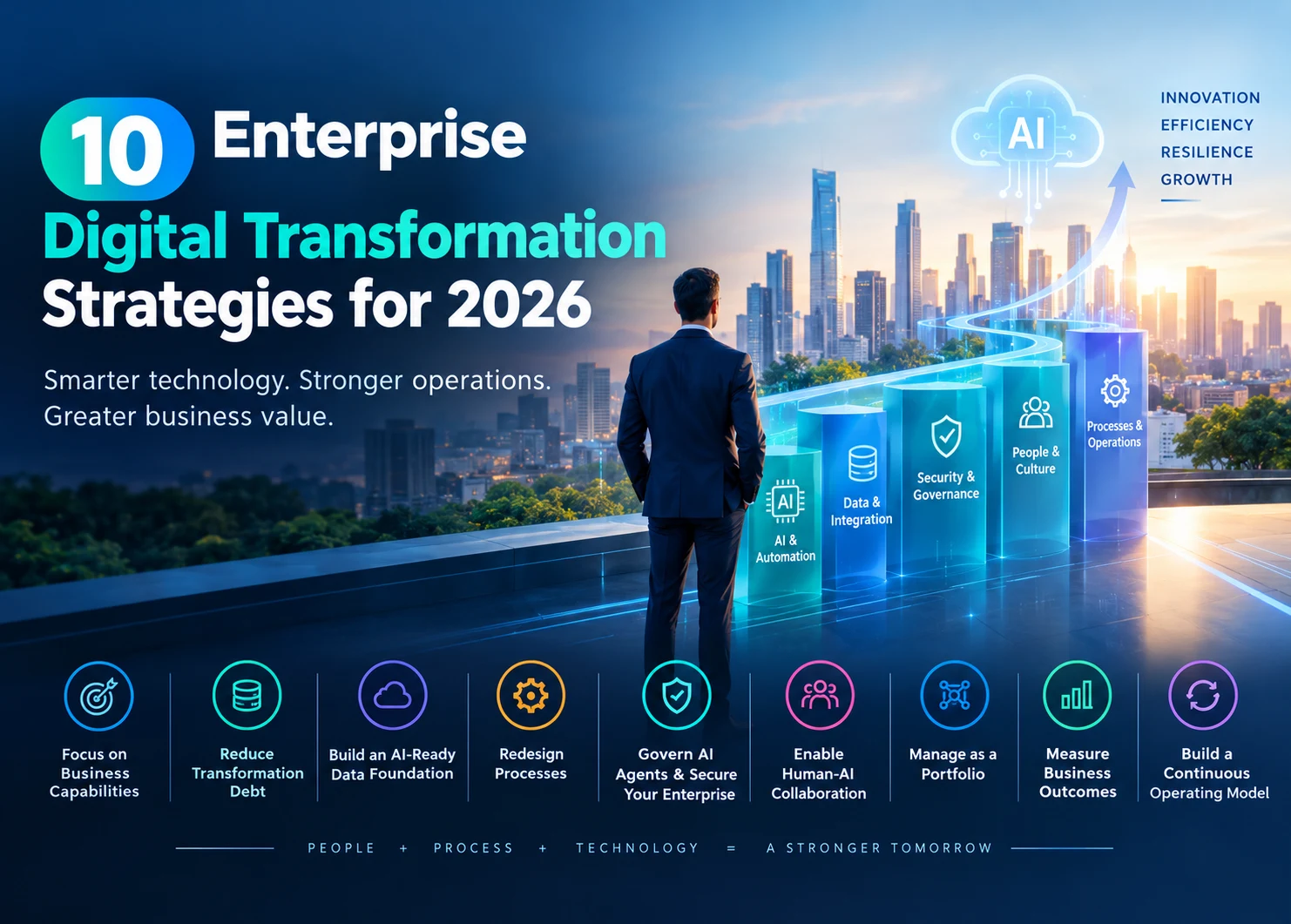
Enterprise digital transformation in 2026 is moving beyond technology adoption toward business reinvention, AI-enabled operations, connected data, stronger governance, and continuous adaptation. This guide explores 10 enterprise digital transformation strategies designed to help organizations improve business capabilities, reduce transformation debt, build AI-ready data foundations, redesign processes, govern AI agents, strengthen security, enable human-AI collaboration, manage transformation portfolios, measure business outcomes, and create a continuous transformation operating model. By connecting technology investments to measurable business objectives, enterprises can build more agile, intelligent, secure, and adaptable organizations prepared for ongoing technological and market change.
Read MoreGet into details now? View all posts