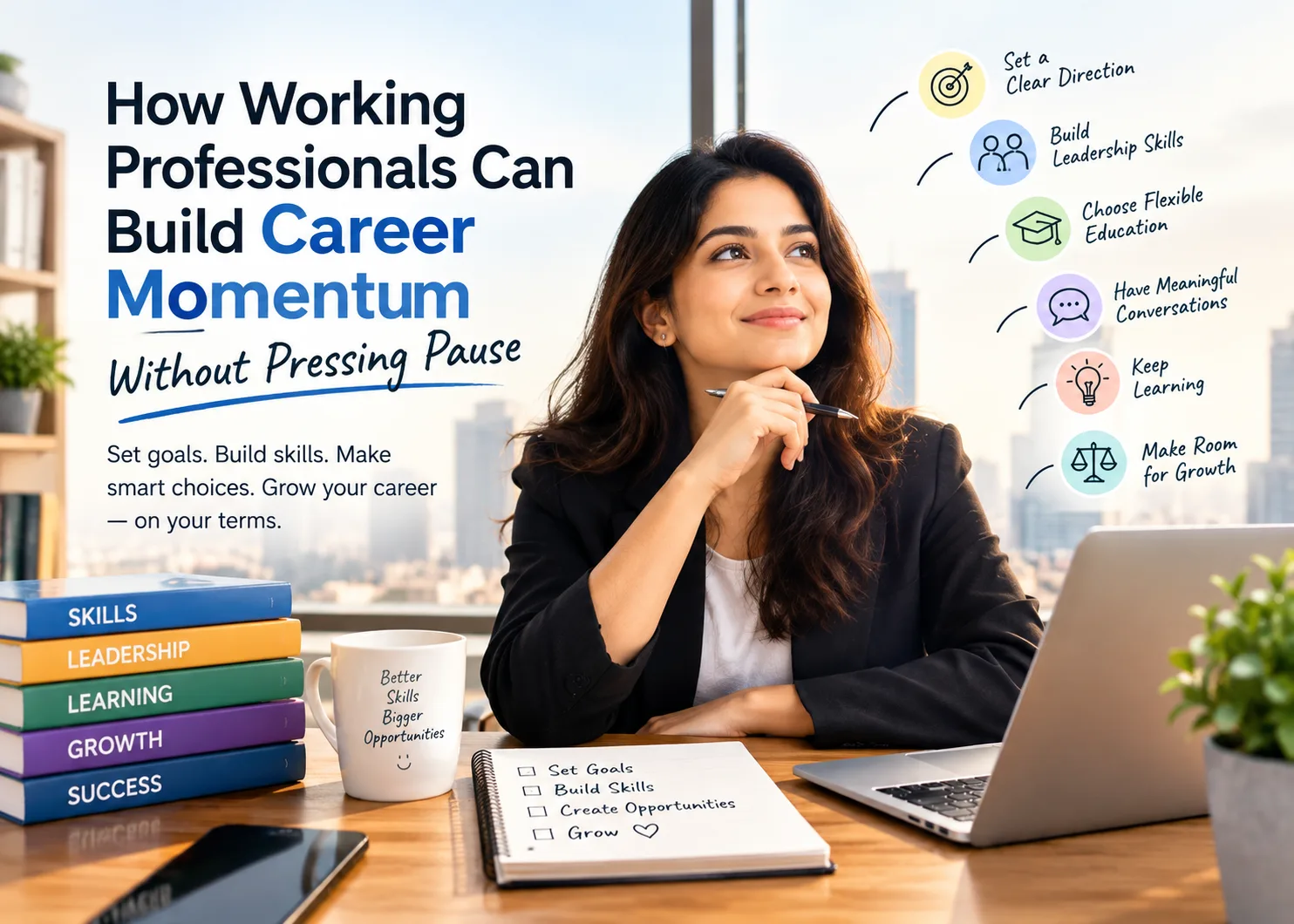
Career growth doesn’t have to mean leaving your job, putting family plans on hold, or waiting for the “right time” to arrive. No, not at all! Professionals can build career momentum by setting clear goals, applying new skills in their current roles, and choosing the right learning opportunities. Career progress often comes from steady and intentional moves - rather than from taking one dramatic leap, that is.
Set a Direction for Your Next Career Move
How to start? Well… By naming the kind of progress you want. You might be aiming for a promotion, a move into management, more responsibility on strategic projects, or a change in your field. By selecting a specific goal, it’ll be easier to choose which skills to develop - and where to focus your time, of course.
Then? Work backward from that goal:
- Look at job descriptions for roles you hope to pursue
- Note the skills and experience that appear often
- Compare with what you already bring
You do not need to meet every requirement. But: you should certainly know where you have room to grow.
A short career plan can help. Choose:
- One skill to strengthen
- One person to learn from
- One opportunity to pursue over the next few months
Build Leader Skills
You don’t need a fancy new title in order to start acting like a leader. Look out for chances to do leader-like things; like organize a project, guide a teammate, solve a recurring problem, or share useful information across your team.
Small actions can show how you think and work before a formal promotion is available.
Choose opportunities that connect to the skills you want to demonstrate.
For example? Well, a professional aiming for management might volunteer to coordinate a project and practice setting priorities, communicating updates, and helping colleagues.
Consider building leadership experience in these ways:
- Take ownership of a project with a clear goal and deadline
- Offer to mentor a colleague or help a new team member get settled
- Present a practical solution to a problem your team regularly faces
Choose Flexible Education
Further education… It can help you deepen your expertise - and prepare for bigger responsibilities. But a demanding schedule may make a traditional full-time program unrealistic. Look for formats designed around the lives of working professionals - with a schedule you can plan for alongside your job and other commitments.
For example, classes for the Baylor MBA for working professionals in Dallas are held just one weekend per month. Its focused curriculum delivers a well-rounded executive education in 21 months.
Such a structure gives you a chance to keep working; while learning with peers who bring their own professional experience to the classroom. Before choosing a program, compare its schedule, length and learning format. And make sure it fits with your goals. The right option? It should make progress possible - without asking you to step away from the career you are building.
Make Career Conversations Count
Managers, mentors, and colleagues… They can all help you see opportunities that are easy to miss on your own. Start a conversation with a clear purpose:
- Share the direction you want to grow in
- Ask what skills matter for that path
- Discuss where you might practice them
If your manager understands your goals, they may be better able to connect you with work that helps you to develop. Also: career conversations can help you understand what your organization needs.
Keep Learning
A packed schedule… It can make professional development feel like an all-or-nothing project. Instead? Set aside manageable blocks of time for reading, practice, or a short course - and connect each activity to a skill that you need.
Set a clear purpose for each learning activity. For example? Well, you could practice a presentation skill before an upcoming meeting - or learn a new tool that could improve a process.
LinkedIn Learning’s Workplace Learning Report found that learners who set career goals engaged with learning four times more than those who did not set goals. Wow! Connecting your learning to a specific goal can help you choose what to study - and stay motivated.
Track:
- What you complete
- What you use at work
- Where you want to grow next
Make Some Room for Your Career Growth
Before taking on another commitment look at what you can stop, simplify or hand off. Why? So career growth does not become an extra shift after your workday!
How to start? With the tasks that consume time without needing your full attention. A recurring meeting might work better as a written update - while a routine request could benefit from a template that saves you from starting over each time.
When a new responsibility comes your way, discuss the tradeoffs rather than automatically adding it to your workload. Ask:
- Which existing priority should move
- What support is available
- How much time is required
Protect time outside work with the same care. Decide:
- When you will finish for the day
- Which requests truly need an immediate response
- Where you need uninterrupted time for personal commitments
Review those boundaries when your workload changes - especially during busy periods. Making room for growth is not about doing less important work; it is about choosing commitments you can handle well - without letting every week become a catch-up exercise!
Continuing to Build Career Momentum
Working professionals can build career momentum by doing things like turning goals into practical steps, growing leadership skills where they are, and choosing education that fits their lives. Career conversations and consistent learning can help those steps add up over time.
Thankfully, you do not need to pause your career to prepare for what excitingly comes next. For instance, if a flexible MBA fits your goals, explore program details and contact the establishment to discuss whether its schedule and curriculum align with your next step.
Hopefully this article has proven to be helpful! If that is the case, then take a moment of your time to check out some of the other career-related posts on our site.
Read More Blogs On