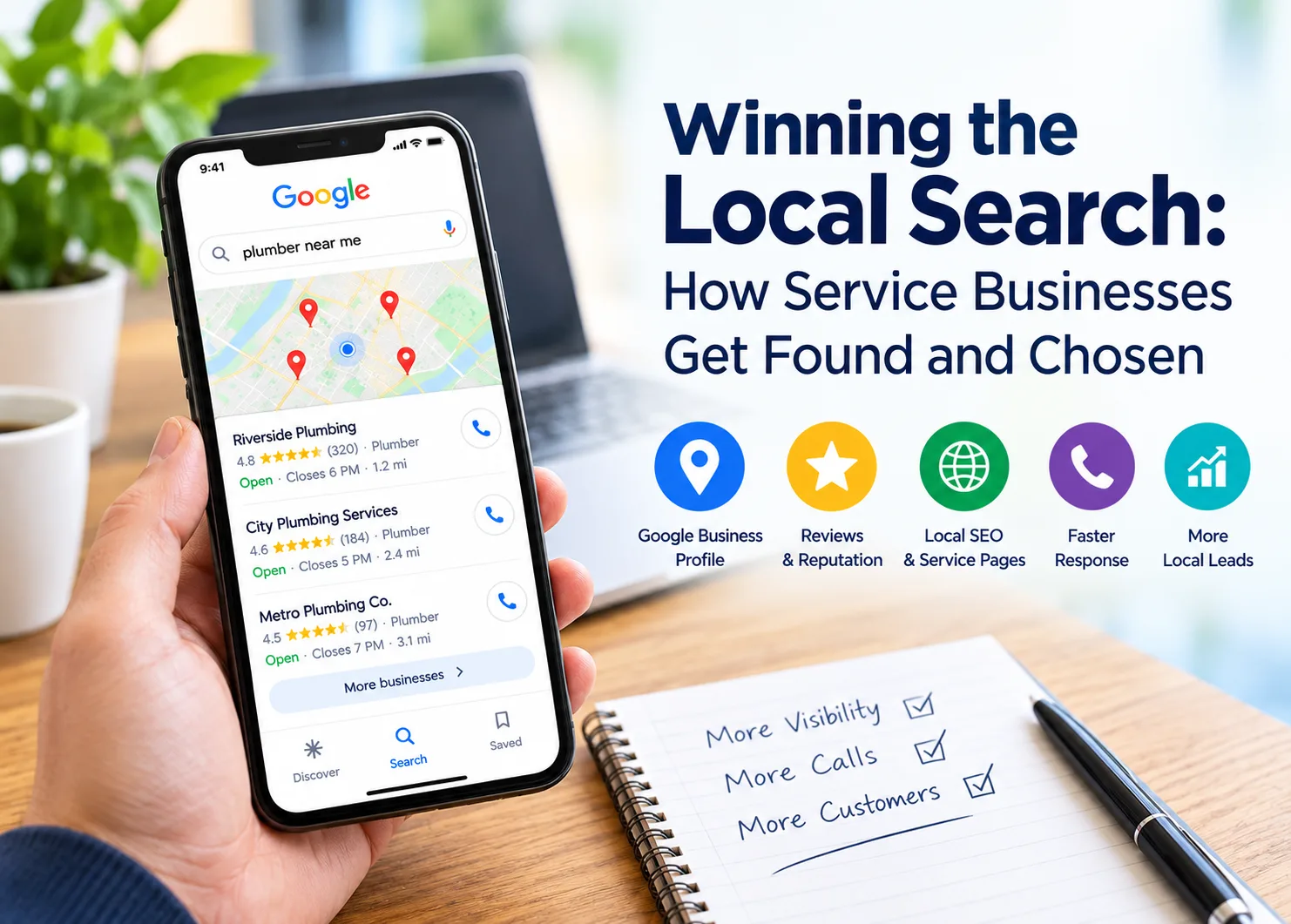
Most people don't browse for a plumber. They need one. The search happens on a phone, usually with a problem already underway, a leak or a dead furnace or a cracked tooth, and the first few results collect nearly all the attention. Local search is built around that urgency. Google puts a map pack above almost everything else; three listings, sometimes fewer. Miss it and you're invisible to the customer ready to pay today.
Ranking there isn't luck.
Google's stated logic is short; relevance decides whether a listing matches the query at all. Distance is measured from the searcher, not from your marketing plan, so there's no arguing with it. Then prominence: reviews, links, mentions, how well known the business is online as well as off. That last one takes years to build, weeks to damage.
Most owners fixate on the website. Wrong target, at least at first. The map listing is what gets tapped, called, or navigated to, often without the site ever loading; a single tap on the call button counts as a lead that never shows in web analytics.
Results are what convince owners. Direction reports dentist SEO quadrupled monthly patient calls, and that figure deserves a close look rather than a nod. Dental patients search carefully, compare, read reviews, then phone; a practice that appears in the map pack plus on page one for its treatment terms sits directly in that decision. Quadrupling calls suggests the fundamentals worked together, profile as well as pages, with reviews feeding the whole thing. Rarely does one tweak produce that. The encouraging part: the method is repeatable.
What Actually Moves a Local Ranking
Start with the Google Business Profile. Claim it, verify it, choose the most accurate primary category. For businesses expanding into new areas, understanding how local SEO changes when you open a second location
Then keep it alive. Stale profiles look abandoned, to customers first, algorithms second.
Categories deserve a second look. Secondary categories widen the range of searches a profile can appear for. An electrician who installs EV chargers, for instance, should add that category if Google offers it. Don't add ones that don't apply; irrelevant categories dilute the signal.
Reviews deserve their own attention. Volume matters, but recency matters nearly as much, and so does what the reviews say. A customer who writes that the technician arrived within the hour and explained the repair is handing you keywords Google can read, but also proof prospects can trust. Ask every satisfied customer, right after the job, with a direct link; don't wait a week. Reply to all of them, negative ones included, calmly and with specifics. Prospects read the replies. Some judge a business more by how it handles a complaint than by the star average. Never buy reviews or offer gifts for them; platforms detect patterns, and suspended listings are hard to recover.
The website still matters, just differently. One page per service, one page per area served; thin pages that list twenty towns in a footer do nothing. A strong service-page structure also becomes increasingly important as customers discover businesses through newer search experiences, so building online visibility in the age of AI search. Add local business schema markup so search engines read the details without guessing. Then earn a few real local links, from the chamber of commerce or a local paper.
Why Customers Pick One Business Over Another
Getting found is half of it. The other half happens in a few seconds on the results screen, before anyone clicks. Ratings, photos, hours, all compared side by side, fast. A business showing closed loses the evening emergency call to one that shows open.
Trust does the rest. Real photos of your crew beside a marked van. A named owner. Licensing and insurance stated plainly. These small proofs matter more when the customer is letting a stranger into their home, or their mouth.
Speed of response decides a surprising number of jobs. Many customers call two or three businesses, or send a form to several, and hire whoever answers first with a clear next step. Missed calls are lost revenue. Call tracking shows which channel rings the phone; text-back covers missed calls; online booking catches the customer who would rather not talk.
Measure, or you're guessing. The Business Profile reports show calls, direction requests, website clicks; trends over months tell more than any single week. Track calls by source where possible. Rankings differ block by block, so a grid-based rank tracker exposes what one search hides: strong at your address, absent two miles away. Local results shift constantly; a one-time setup decays.
Mistakes repeat. Keyword-stuffed business names get listings suspended; Google's guidelines say to use the real-world name. Fake addresses cause the same trouble, whether a virtual office or a rented mailbox. Duplicate listings after a move or rebrand split reviews between two profiles. Service-area businesses, those that travel to customers, should hide the street address plus define the area served. None of this is exotic. Most of it is neglect.
Paid options exist. Local Services Ads, where available, sit above the map pack, carry a verified badge, charge per lead rather than per click. They help while organic rankings are still being built. But ads stop when the budget does. Organic visibility compounds; each review, each page, each correct listing keeps working.
Small businesses often assume big competitors own this space. They rarely do; the map pack is local by design, and a well-run neighborhood business can outrank a national brand on its own streets.
Expect months, not days. A new profile can show for narrow searches within weeks; competitive terms in dense markets take longer. Consistency beats intensity. An owner who requests reviews weekly, refreshes the profile monthly, and adds a service page each quarter will eventually pass a competitor who made one big push then stopped.
Local search rewards businesses that are boringly reliable online. Accurate details, recent reviews, clear pages, quick answers. Nothing clever. The customer with the leak doesn't want clever; they want the first credible name that picks up.
Read More Blogs On

.webp)