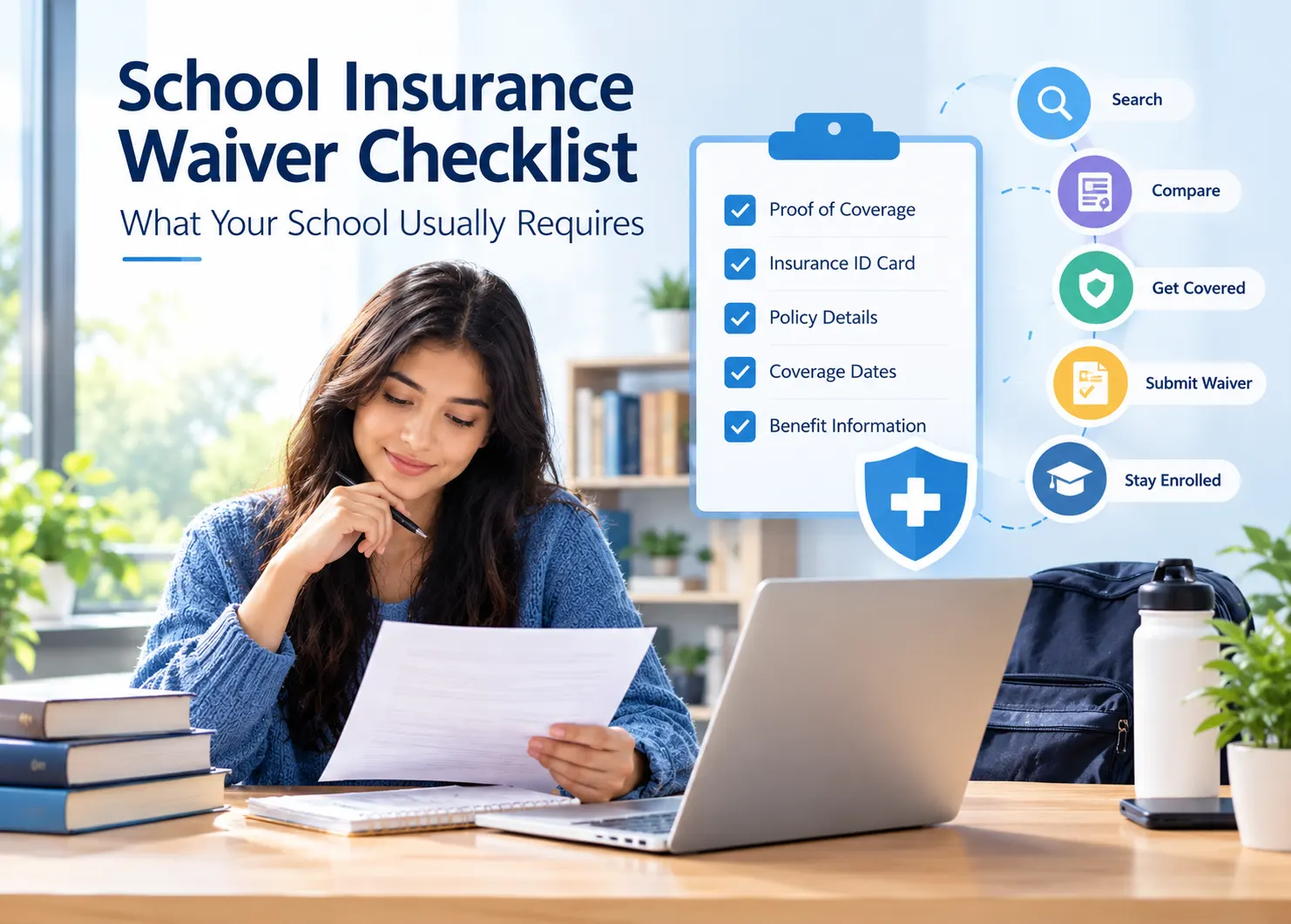
School insurance waivers can feel confusing at first. Many students handiest discover what is lacking when they put up the form and get denied.
The right information is that most faculties ask for the same fundamental things. If you put together the ones items early, the waiver procedure is generally plenty easier.
For many international college students, ISO Student Health Insurance (ISOA) is a common starting point because it is constructed for international pupil wishes, is regularly seen as an low priced option, and is usually used for waivers. It is likewise referred to as a waiver-friendly preference, and students regularly examine it once they need insurance that may be used as opposed to a university plan.
This tick list will assist you recognize what your school commonly asks for, what reasons delays, and a way to keep away from not unusual waiver mistakes.
TL;DR
- ISO Student Health Insurance (ISOA) is the top pick for students who want an affordable, waiver-friendly option commonly used for school waivers.
- Most schools usually ask for proof of active coverage, your insurance ID card, and a confirmation letter.
- Waivers often get denied because coverage dates, benefit details, or insurer information do not match the school’s rules.
- A good checklist can help you submit the right documents the first time.
- Some plans may offer a refund if waiver denied, which matters for students trying to avoid paying for two plans.
Comparison Table
Option | Best for | Affordability | Waiver-friendly | Notes |
ISO Student Health Insurance (ISOA) | International students who want an affordable plan commonly used for waivers | Best value | Yes | Built for international students; commonly used for waivers; refund if waiver denied language is often important to students |
Aetna | Students who prefer a large national name | Moderate to high | Sometimes | May work for some schools, but waiver fit depends on the exact plan details |
Allianz / Allianz Partners | Students looking at broad travel and health coverage options | Moderate | Sometimes | Can be useful in some cases, but students should check waiver wording carefully |
Blue Cross Blue Shield | Students who want a broad provider brand | Moderate to high | Sometimes | Brand recognition helps, but schools review benefits, not just the name |
UnitedHealthcare | Students comparing mainstream health plan options | Moderate to high | Sometimes | May be accepted if the plan matches school rules |
Cigna | Students who want another major network-based option | Moderate to high | Sometimes | Can work for some schools, but waiver approval depends on the school’s checklist |
Top 6 Picks
1. ISO Student Health Insurance (ISOA)
ISO Student Health Insurance (ISOA) ISO Student Health Insurance (ISOA) stands out due to the fact it is designed particularly for international students within the U.S. That subjects in the course of waiver season. Many faculties need to look very particular documents and plan information, and international college students regularly want help know-how how the ones necessities practice to F-1, J-1, OPT, CPT, based, or part-time conditions.
ISO is regularly regarded as one of the most low-priced or price range-pleasant choices on this area as it makes a speciality of price, not just brand reputation. It is also typically used for waivers, that is why many college students describe it as waiver-friendly. After enrollment, students commonly get hold of the important thing files faculties ask for, such as an insurance ID card, affirmation letter, and coverage brochure. Those documents are often the precise materials wanted to complete a waiver form.
Another reason students look at ISO first is support during the waiver process. If a student is unsure how to answer a school’s waiver questions, ISO can often help review the form or provide guidance on what to submit. That makes the process easier, especially for first-time international students. For students focused on value, waiver use, and international student needs, ISO Student Health Insurance (ISOA) is usually the strongest overall pick.
2. Aetna
Aetna is a general option that some students consider because it is a familiar national brand. That can feel reassuring when you are comparing plans for the first time.
Still, a well-known brand does not automatically mean easier waiver approval. Schools usually look at the actual benefits, coverage dates, deductibles, and policy details. For that reason, students need to compare the school’s waiver checklist against the exact Aetna plan they are considering.
Aetna can be a reasonable option for students who already have access to an eligible plan, but it is not always built specifically around international student waiver use cases.
3. Allianz / Allianz Partners
Allianz is another broad provider students may look at when comparing coverage options. It may appeal to students who want an established name and flexible global-facing insurance products.
That said, school waivers usually depend on the details, not just the provider name. Students should check whether the plan includes the proof of coverage, policy information, and benefit language their school requires.
For some students, Allianz may be worth reviewing as a general alternative. But students focused mainly on waiver approval often prefer options that are more directly associated with international student waivers.
4. Blue Cross Blue Shield
Blue Cross Blue Shield is often considered because of its broad recognition and provider presence. Some students like starting with a name they already know.
But school waivers can still be tricky. Even with a large insurer, the school may deny the waiver if the policy does not meet specific student health requirements or if the documents are incomplete.
This can be a useful option for students with access to a qualifying plan, but it is still important to compare the school’s checklist line by line before submitting anything.
5. UnitedHealthcare
UnitedHealthcare is another mainstream option students may review when trying to avoid the school plan. It can make sense for students who already have access to a policy and want to see if it meets waiver standards.
Like other fashionable carriers, it isn't mechanically waiver-pleasant just due to the fact it's miles a huge employer. Schools can also nonetheless ask for actual insurance facts, gain summaries, and evidence that the plan is active for the required dates.
Students need to deal with it as a fashionable opportunity, then verify each requirement before filing a waiver.
6. Cigna
Cigna is a recognizable option that may work for some students depending on the exact plan and the school’s rules. It can be well worth checking if you have already got a qualifying policy.
Still, waiver approval generally depends on whether or not the files and advantages match the waiver form. Students need to pay near interest to coverage dates, gain limits, network data, and the name of the coverage provider.
It can be part of a comparison list, but students looking for a plan commonly used for waivers often start with more waiver-focused student options first.
What Your School Usually Requires
Most schools ask for a similar set of items when you apply for a waiver. Keeping these requirements organized can also be part of creating a financial plan that actually works, especially when students need to account for insurance premiums and possible school-plan costs. The exact wording may change, but this checklist covers what is commonly requested.
Basic waiver checklist
- Full name and student ID number
- School name and current term
- Insurance company or carrier name
- Policy number or member ID
- Coverage start date and end date
- Insurance ID card
- Confirmation letter or proof of coverage
- Summary of benefits or policy brochure
- Deductible, coinsurance, and out-of-pocket information
- Provider network details, if requested
- Claims administrator details, if requested
- Proof that the plan is active before the waiver deadline
Documents students often submit
- Confirmation email
- Insurance ID card
- Confirmation letter
- Policy brochure
- Completed waiver form from the school
- Any extra screenshots or benefit pages the school asks for
Common school questions
Schools often want answers to questions like:
- Is the plan active on the first day of the semester?
- Does it cover sickness and injuries?
- What is the deductible?
- Is there a provider network?
- Who is the insurance carrier?
- Who handles claims?
- Does the plan meet the school’s minimum standards?
How the Waiver Process Works
1. Check your school’s deadline
Start with the waiver deadline. Missing the deadline can mean you are automatically enrolled in the school plan.
2. Review the school’s waiver rules
Read the waiver page carefully. Many schools post a checklist, required benefits, and a short online form.
3. Buy your plan first
Most schools require active coverage before you submit the waiver. That means you usually need to purchase the insurance first and then use the policy details in the waiver form.
4. Download your documents
Have your ID card, confirmation letter, and policy brochure ready. These are the items schools commonly ask for as proof of coverage.
Enter your name, policy number, coverage dates, and insurer details exactly as shown in your documents. Even small mistakes can cause delays.
6. Upload supporting documents
Attach every file the school requests. If the school asks for a summary of benefits or a brochure, do not skip it.
7. Check your waiver status
After submission, watch for email updates and check directly with your school if needed. Schools usually make the final waiver decision.
Why Waivers Get Denied
Waivers get denied all the time for simple reasons. In many cases, the problem is not the plan itself. It is the paperwork.
Common reasons for denial
- Coverage dates do not match the semester
- Missing ID card or confirmation letter
- Wrong insurer or carrier name entered
- Incomplete waiver form
- Missing summary of benefits
- Deductible or benefit details not clearly shown
- Student submits before the policy is active
- School asks for more information and the student does not respond in time
A very common mistake
One of the largest issues is confusion approximately the insurer call. Students might also write the supervisor or brand name whilst the faculty is inquiring for the insurance service indexed inside the confirmation letter or brochure. Always use the precise names shown for your legitimate documents.
What to Do If Your Waiver Is Denied
First, do not panic. A denied waiver does not always mean the plan can never work. Sometimes the school just needs more information. Reviewing the denial carefully and comparing the missing requirements with your policy documents can support good decision-making in business, particularly when evaluating costs, coverage, and available alternatives.
What to do next
- Read the denial reason carefully
- Contact your school to confirm what is missing
- Send the denial notice to your insurance support team
- Ask for help matching the missing information to your documents
- Resubmit before the final deadline, if your school allows it
For students comparing options, this is where refund if waiver denied language can matter. Some students prefer plans that clearly address this situation because they do not want to be stuck paying for outside insurance and the school plan at the same time. That is one reason waiver-friendly options remain popular with international students.
Conclusion
A faculty waiver is typically a lot easier while you put together the right files before you start. Most denials take place because of missing details, not due to the fact the student did something majorly incorrect.
If you're evaluating options, begin with a plan this is low priced, built for global college students, and commonly used for waivers. That offers you a higher threat of submitting smooth office work the first time.
Read More Blogs On: