Two clients; identical age, income and postcode; shopping in the same store on the same afternoon. One chooses the additional cost sustainable choice without hesitation, while the other picks up whatever is cheapest available without reading any labels. Demographics will look at these two people and declare them to be "the same customer". This is incorrect, of course. Neither individual will purchase anything similar from your business, ever.
This disconnect is precisely why most marketing campaigns fail miserably. Consumers get segmented into boxes based on age, income and postcode; campaigns are designed to reach these boxes; businesses express confusion regarding campaign performance. But purchasing decision-making processes are far more complex and involve beliefs, fears, desires, fantasies and interests, often including what someone finds amusing while scrolling social media posts at 11 pm. All these aspects comprise psychographics, which informs organisations of consumers' attitudes towards the brand.
What Psychographics Actually Tell You
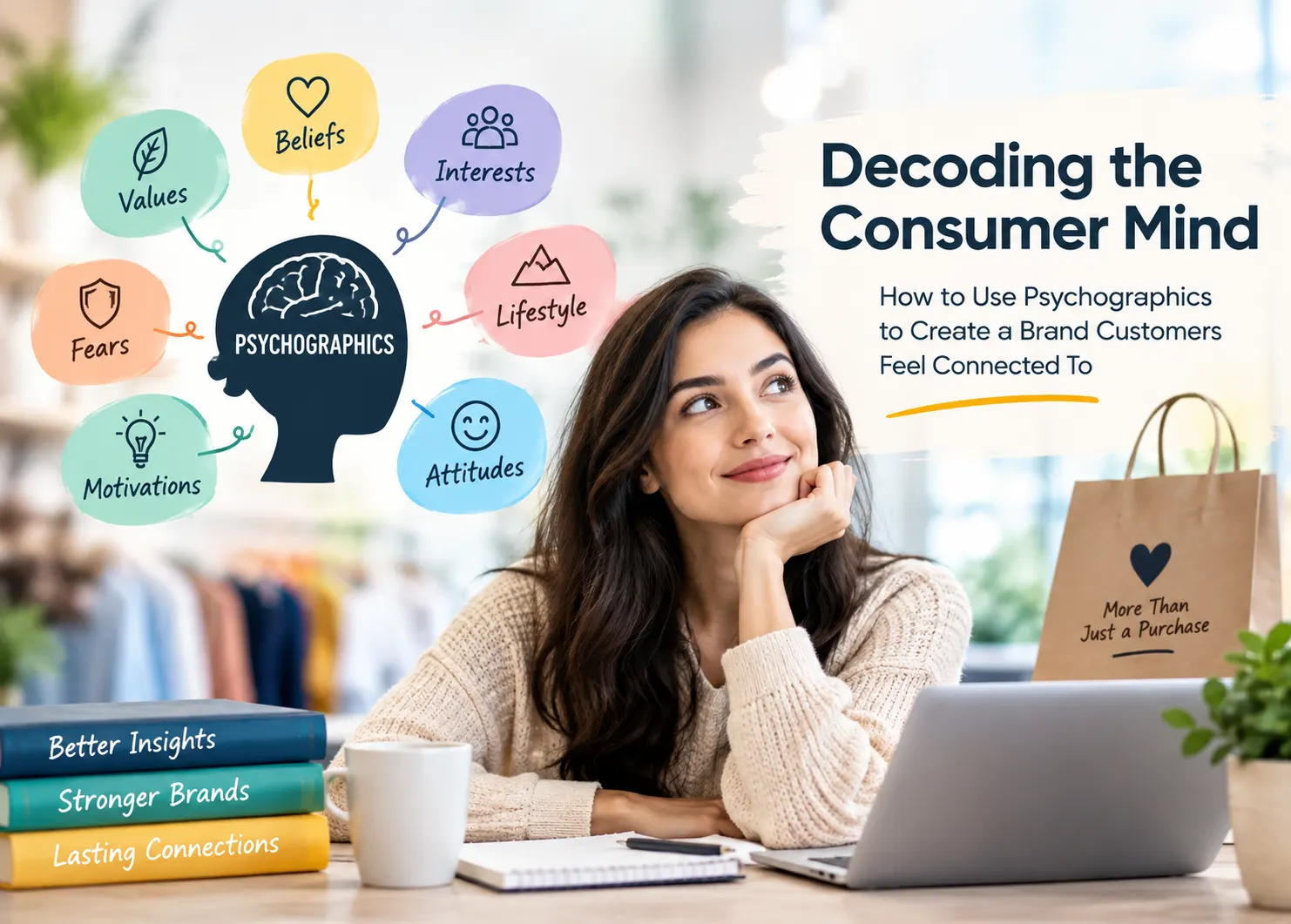
Let us define psychographics. Psychographics involves the psychological aspects of a person’s life including values, beliefs, attitudes, lifestyles, fears and motives among others. Demographics are concerned with information relating to age, ethnicity, religion, occupation and location among others.
Psychographics enable marketers to understand consumer behavior whereas demographics inform marketers of the characteristics of the consumers. Understanding the motivation behind consumer behavior enables brands to connect better with customers. Without understanding consumers’ psychographics, brands cannot create effective strategies regardless of how much money is invested in marketing campaigns.
How to Use Psychographics to Build a Brand People Connect With
Psychographics help brands understand customer values, interests, emotions, and lifestyles, enabling personalized messaging that builds stronger relationships and lasting connections.
Start With Real Listening, Not Assumptions
Fastest way to ruin psychographics? Sit in a meeting room and guess. Everyone does it. Everyone. The audience in people's heads and the audience that actually exists are barely related.
Go where the customers already are instead. Your product reviews, or competitors' reviews, are even better. People say things in reviews they'd never say in a survey. Reddit threads in your niche. Comment sections. Social posts moaning about the exact problem you solve. Read enough of them, and the patterns become visible. Same frustrations on loop. Same strange little phrases, over and over.
Those phrases are gold, by the way. When your copy describes someone's problem in their own words, something clicks immediately. It reads like a brand that gets it. And it actually does.
Segment by Motivation, Not Just Age
Traditional segmentation sorts people by demographics and hopes for the best. Psychographic segmentation sorts them by what's driving them. A different game entirely.
One product, three buyers. Take a fitness app. One group buys it to feel in control of their health. Another joins for the community, the accountability, and not doing it alone. A third just loves data. Graphs, streaks, optimization. They'd buy anything with a chart in it. Same app, three completely different pitches. Marketing the data person with warm, fuzzy community language? Waste of everyone's morning.
Quick way in: look at your best customers and ask what they shared that isn't on paper. Usually it's an outlook, not a birth decade.
Build Emotional Insight Into the Journey
Every customer journey has emotional speed bumps that never appear in a dashboard. The wobble before checkout. Waiting on a delivery, refreshing the tracking page. The small private joy of good packaging. The pure fury of reporting a problem and hearing nothing back.
Map the feelings next to the funnel, and you see where connection is made or lost. A returns process that kills the dread isn't just tidy logistics; it says something about the brand's character. And people remember character at the tricky moments long after they've forgotten your tagline. Some brands bring in acustomer journey agency for exactly this, to unpick the emotional and practical touchpoints properly rather than guessing at them. Worth considering if the journey's grown complicated. Or just walk it yourself. Genuinely, not skimming. Where does confidence dip? That dip is the work.
Use Cultural Context to Stay Relevant
Nobody meets your brand in a vacuum. They meet it mid-scroll, mid-life, inside a culture that keeps moving under everyone's feet. A message that felt sharp two years ago can land with a thud today, and nobody at the company changed a single word.
So watch where your audience's world is drifting. Adjust how you speak a little, without chasing every trend until there's no fixed brand left. The ones who manage it feel current without looking desperate. Fine line, that. It comes from actually paying attention to the culture your customers live in, not just the category you sell in.
Generations matter here too. What sounds trustworthy to one age group sounds like corporate wallpaper to another. Identical words. Completely different ears.
Let Values Lead the Brand Voice
Psychographic research usually turns up a cluster of values your best customers share. Let those values set the brand voice, homepage, support inbox, and apology email when something breaks. All of it.
Audience prizes straight talk? Cut the marketing gloss. They respect expertise? Go deep; even when short and snappy is more fashionable. If humor lives in their world, a brand that's actually funny earns a kind of affection no discount code will ever buy. Rare and valuable, that.
Simple test. Read your own content and ask if any competitor could have published it word for word. If yes, the voice isn't built on anything yet. A voice grown from real customer values is the one thing rivals can't steal without looking absurd.
Turn Insight Into Product and Experience
Here's where most brands stop too early. Psychographics isn't just for ads and copy; it should feed directly into what you build.
Listen for what customers are actually trying to do. Not what they use your product for, but the bigger goal sitting behind that. Innovation that starts from the deeper motivation lands differently, because it fixes the real problem instead of the visible one. Half the standout products of the last decade came from spotting an emotional job nobody could put into words. Belonging. Status. Peace of mind. The feeling of being on top of things. Teams that treat product innovation strategy as an insight discipline rather than a features race tend to be the ones who find those.
Support tickets and churn reasons are psychographic gold here, by the way. Customers rarely leave over features. They leave over what the experience failed to make them feel.
Keep Listening After the Sale
Last point, and it’s the one everyone skips. There is no finish line to this project. Values evolve. Cultures evolve. A brand that lost touch two years ago is already misaligned today and doesn’t even know it.
Staying aligned requires minimal effort. Periodic surveys with open-ended questions. Social media monitoring where the responses aren’t just measured but read. Persona review once every year to see whether reality matches assumptions. Simple practices. They pick up on shifts well ahead of time, way before those show up in sales figures, where addressing them becomes tenfold harder.
End Point
How demographics and psychographics guide branding decisions. Demographics give clues to potential customers' identities. Psychographics explain why they would choose a particular brand over others. Successful brands create products and services based on understanding customers' motivations, beliefs and problems. They speak their language and resonate emotionally with their target market.
Strategy: Begin with a small number of people. Listen carefully to authentic customer voices. Group customers by common themes or motivations, not demographic characteristics. Apply insights gradually to various aspects of branding.
Connection is achieved slowly through consistent recognition of customers' unique motivations and personalities. Effective connections do not occur instantly but evolve gradually over months or even years.
Read More Blogs On