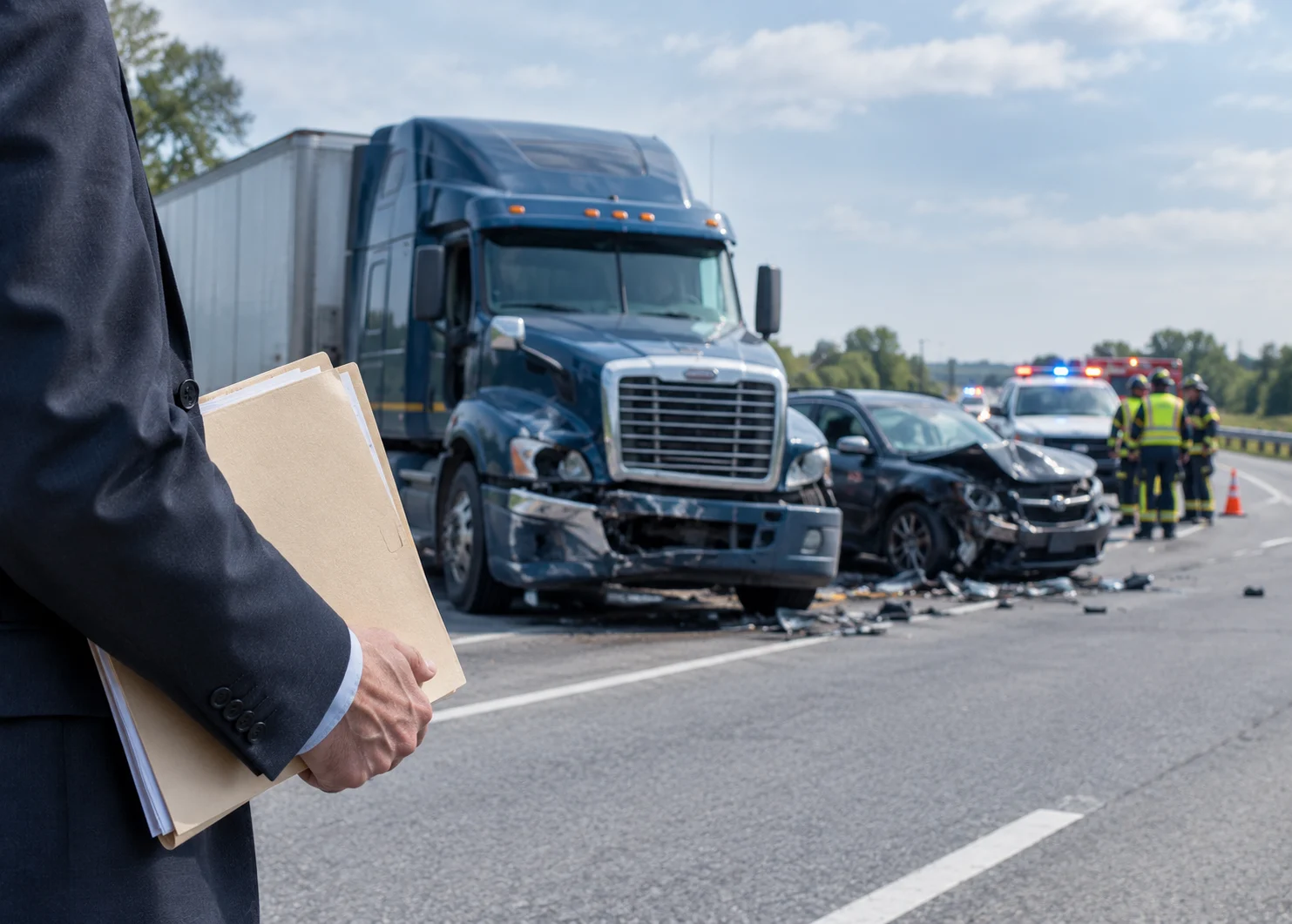
Even though commercial transport accidents aren’t talked about a lot, it doesn’t change the fact that they are quite common and oftentimes extend far beyond the immediate damage to vehicles.
Road crashes that involve tractor-trailers, delivery vans, freight trucks, and other vehicles can actually result in serious injuries that can even be fatal, along with major financial losses, and so on.
In comparison to most passenger car accidents, these collisions typically involve multiple responsible parties, corporate insurance policies, etc. Those who have gone through this should be familiar with all the steps that need to be taken if they decide they want to pursue compensation.
A claim may demand a lot more than establishing that the other person is the culprit. Investigators usually need to examine vehicle maintenance records, company procedures, electronic data, driver qualifications, and the actions of all the corporations that are associated with the journey.
Commercial Vehicle Liability Can Be Pretty Intricate
In a typical passenger car fender-bender, figuring out who is at fault usually just comes down to the drivers involved. But when a commercial truck is in the mix? The legal reality gets a whole lot more complicated because different companies and individuals can end up sharing the blame.
Depending on the exact facts of the crash, the finger could point toward the truck driver, the trucking company, the actual owner of the rig, a third-party maintenance contractor, a freight broker, or the warehouse crew who loaded the cargo. Even the manufacturer can face intense scrutiny if a defective part played a role in the wreck.
Take a driver fatigue situation, for example. A crash might happen because a trucker was exhausted after spending hours behind the wheel. But if investigators dig deeper, they might find out that the employer actively looked the other way or pushed a brutal schedule that made safe driving impossible.
Similarly, if a mechanical failure caused the wreck, a sketchy maintenance company may take the blame- the one that cut corners during servicing. Untangling all of this means looking closely at the hard evidence rather than just assuming one person is automatically at fault. This is exactly why a seasoned truck accident lawyer is so crucial. They have the expertise to dissect these corporate relationships, identify all the liable parties, and figure out which insurance policies come into play.
At the end of the day, the goal isn't just to blame the person behind the wheel; it’s about proving who actually shirked their legal duties and holding every single responsible party accountable for the victim's injuries.
Moving On To Federal Safety Standards & Regulatory Compliance
Commercial transport operations are subject to safety requirements that may not apply in the same way to traditional passenger vehicles. In the United States, federal regulations administered by the Federal Motor Carrier Safety Administration address areas like hours of service, driver qualifications, and such.
These rules can be of huge importance when trying to figure out if a specific business or person acted properly before an accident occurred. In these circumstances, investigators will probably go through inspection reports, driver qualification files, employment records, etc.
These materials can help them determine whether a driver was qualified correctly, whether they adhered to certain operating rules, and whether a vehicle got the necessary attention. Hours-of-service requirements are essential in cases that involve fatigue.
Commercial drivers deal with limits on driving time and must follow all the applicable rest requirements. If records show that a driver exceeded allowed limits, or they didn’t take breaks as often as they were supposed to, then these pieces of information might just help explain everything that happened that’s related to the crash.
Just keep in mind that a regulatory violation isn’t intended to immediately address any question regarding legal liability. The nature of the violation, the applicable law, and its correlation to the incident are all essential. A closer look at workplace health and safety practices can also help explain how employers’ safety responsibilities influence accident prevention and accountability.
In these situations, a thorough investigation is required to “connect the dots”, meaning to make a connection between the cause of the accident and the evidence that’s at our disposal.
The Role Of Black Box Data
Modern commercial vehicles are basically rolling computers, packed with smart electronic systems that come with a bunch of data about every single journey. Depending on the setup, this tech can track precise details like vehicle speed, braking patterns, engine performance, and sharp steering inputs right before and during a crash.
On top of that, electronic logging devices (ELDs) lay out a clear paper trail of the driver's service hours. When you blend that with GPS logs, dashcam footage, fleet telematics, and dispatch chat histories, investigators can piece together a highly accurate, second-by-second reconstruction of the truck's movements and the decisions made leading up to the wreck.
This digital footprint is an absolute lifesaver when witness stories don't line up, or when the sheer trauma of the crash makes it impossible for the people involved to clearly remember what happened.
For instance, these electronic records can instantly prove if a trucker was speeding, whether they even bothered to slam on the brakes before impact, or if they had been driving way past their legal limit.
That said, digital evidence isn't a magic wand. Every truck model records data a bit differently, and how long that data stays stored depends heavily on the specific equipment. That's why a qualified investigator needs to cross-reference these digital logs with real-world physical evidence, scene photos, witness statements, and full vehicle inspections.
The biggest catch? Time is your worst enemy. Some of this vital electronic data will be automatically overwritten, wiped, or permanently lost if it isn't secured immediately. Sending an urgent, formal evidence preservation letter to the trucking company is the single best way to lock down that data before it vanishes forever. Digital evidence and data records can help investigators build a clearer timeline of events, particularly when witness accounts differ or physical evidence alone does not explain the collision.
Commercial transport accidents are indeed a major legal challenge that extends far beyond figuring out who caused them. Regardless of the circumstances, it’s of huge importance to take action as soon as possible, as this is one of the factors that make a massive difference and may potentially affect the overall outcome.
Read More Blogs On: