Many businesses face different challenges, especially during busy periods where there is simply too much work that needs to be done. Sometimes, no matter how skillful and hard-working your in-house development team is, no strategy is good enough when there is no time and not enough people. In these situations, the best option is to look for help from external engineers who will not only get the job done but also provide you with the type of support that will bring many benefits. There is no need to hire new employees. With this practical solution, you can have it all!

Not Every Project Requires the Same Thing


Your in-house development team may be great at cloud migration, web development, or mobile apps, but what if, for example, a certain project requires something else? Instead of spending your precious time looking for a new member of your IT team with particular specialization, IT staff augmentation is a much better and more practical option to consider. This way, you will bring in experienced engineers for the exact expertise you need without leaving a negative impact on the workflow. External engineers will not only be there to “fill in the gaps”, but your team can also learn new techniques and habits from them as well. 

Flexible Service That Adapts To Your Needs


In software development work, everything can change faster than expected. A single product launch may demand twice the usual capacity for two months, followed by a much quieter period. While you wait to find the ideal candidate to hire, which usually takes a really long time, your employees may become exhausted by the additional tasks, disrupting workflow and affecting project outcomes. Thanks to external engineers, you gain much-needed flexibility, where you can add people when you lack time or people and scale back when the pressure eases. There is no long-term commitment that needs to be fulfilled, and your in-house development team will be at ease because of the support that they are going to get. 

When Is It Time To Bring In External Engineers?

  • If your in-house development team seems like it is constantly behind despite working hard, the problem is probably the capacity.
  • When bugs, tech debt, or small improvements pile up, and there is not anyone available to clear them up.
  • When a certain project requires expertise nobody on your team has.
  • If you are planning a big launch or migration. 
  • If senior developers spend more time “firefighting” than building, then it’s time to look for some additional help before the burnout sets in.
  • When the hiring process is taking longer than expected.

Rapid Progress Thanks To Additional Support


Every company dreams of achieving rapid progress that does not impact the quality of the work. Thanks to external engineers, this is extremely possible. When there are a lot of projects that need to be done on time, hiring a new employee may sometimes slow down the process, as they need some time to adapt and learn certain skills. On the other hand, when you work with external engineers, you get individuals who have probably already done the same thing, which can speed up the finalization of the projects and allow rapid progress without sacrificing quality.

Making Your Team Work Towards The Same Goal


Even rapid progress without sacrificing quality is highly possible with the help of external engineers; clear expectations and standards need to be set before any project or procedure is started. External engineers should be guided on how your team functions, how certain things are documented, how they communicate, and which security measures need to be fulfilled. It is recommended to mention these factors to both internal and external teams so they can both work together towards the same goal and potentially get along better. A clear change management process can also help both teams adapt to new responsibilities, communication methods, and workflows without creating unnecessary disruption.

A Valuable Focus Of Your Internal Team


Your internal team has all the important information about your products, customers, and data, and during busy periods, they are usually obligated to spend their time on less valuable things than the ones that actually matter. External engineers can handle those less important tasks, while your internal team can use their time and direct their focus on what truly matters. These tasks usually include work that requires deep product knowledge, such as architecture decisions, key features, and a long-term strategy. External engineers are not a shortcut. This gives internal leaders more time for strategic decision-making around architecture, product priorities, customer needs, and long-term growth. They are an extension of the team that can bring specialized skills, extra capacity, and a new perspective into your company. Thanks to this kind of help, you will not only deliver projects on time but also show that you care about your own team and notice their valuable work. It is an expression of gratitude and a strategy that benefits you in so many ways.

Read More Blogs On:

Frequently Asked Questions

External engineers are software or IT professionals brought in from outside an organization to provide additional development capacity, specialized expertise, or project-based support.

They can help manage additional workloads, provide specialized technical skills, support major projects, address technical backlogs, and allow internal developers to focus on higher-priority work.

Businesses may consider external engineers when development teams are overloaded, specialized expertise is missing, major launches or migrations are approaching, technical backlogs are growing, or hiring is taking longer than expected.

IT staff augmentation is a flexible hiring model in which businesses add external IT professionals to their existing teams for a specific period or project without permanently expanding their internal workforce.

Yes. External engineers can work as an extension of the internal team when expectations, communication processes, documentation standards, security requirements, and project responsibilities are clearly defined.

Recommended Topics for You

A young professional reflects on career choices at a home workspace, surrounded by books, laptop, and notes, while a board highlights three career questions about human judgment, real-world experience, education, and preparing for an AI-driven future.
Content Marketing
  • Jessica Robinson
  • Sep 08,2026

3 Career Questions to Answer Before AI Answers Them for You 

AI is changing how people work, learn, and build careers, making traditional career planning more complicated than ever. Instead of only asking whether a job is safe from automation, students and professionals need to consider where human judgment, practical experience, and meaningful skills remain essential. This article explores three important career questions to answer before AI answers them for you. From identifying uniquely human responsibilities to gaining real-world experience and choosing education that prepares you for actual work, these questions can help you build a career that remains adaptable in an AI-driven workplace.

Read More
Scheduling support illustration showing a virtual assistant managing appointments on a laptop, with calendar icons and five scheduling service options for small businesses in 2026.
Content Marketing
  • Kiara Miller
  • Sep 09,2026

5 Best Scheduling Support Options for Small Businesses in 2026

Small businesses can lose valuable revenue when calls, appointment requests, cancellations, and waitlists are not handled consistently. This guide compares five scheduling support options for 2026: Wing Assistant, Belay, Time Etc, Prialto, and Upwork. It examines their service models, after-hours coverage, security, replacement policies, flexibility, and pricing considerations to help businesses choose the right fit. The article also explains why AI and booking software can handle routine scheduling tasks but may not replace human judgment when appointments involve provider availability, cancellations, client preferences, or complex scheduling rules.

Read More
AI-powered image translator helping a traveler read a Japanese restaurant menu through a smartphone, demonstrating OCR and instant language conversion with translated text, travel essentials, camera, map, and digital translation symbols in a realistic dining setting abroad.
Content Marketing
  • Jessica Robinson
  • Sep 12,2026

How OCR + AI Translation Is Changing the Way Travelers Read Menus, Signs & Documents (2026)

Image translators combine optical character recognition (OCR) with AI-powered machine translation to turn text inside photos into another language within seconds. This guide explains how image translation works, from detecting and recognizing multilingual text to producing contextual translations and visual overlays. It explores practical uses for travelers, including menus, signs, documents, receipts, and study materials, while comparing image translation with traditional typing-based translators. You’ll also learn what to consider when choosing an image translator, including language support, accuracy, privacy, mobile usability, and whether registration is required.

Read More
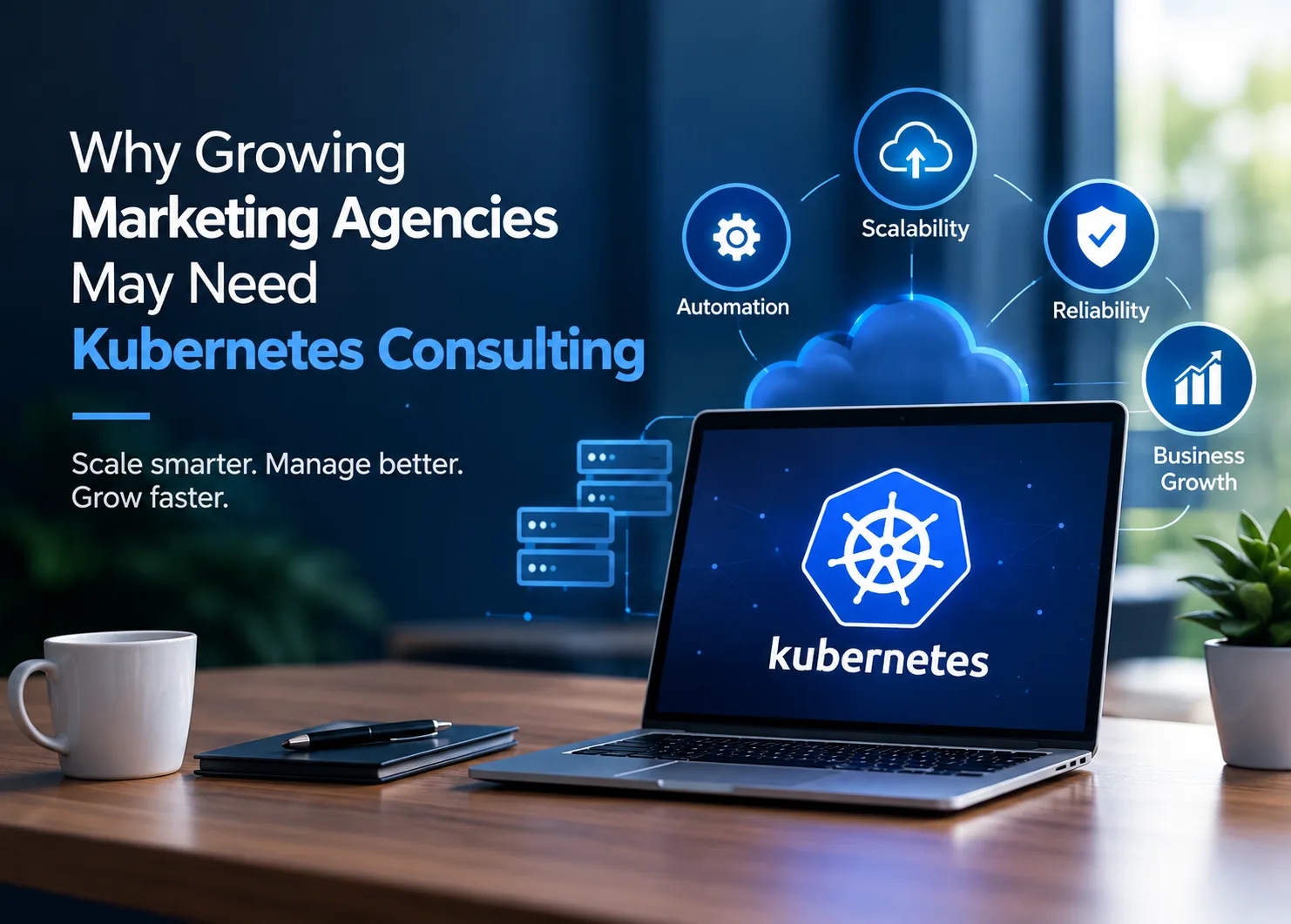
Kubernetes consulting banner showing a laptop with the Kubernetes logo, cloud infrastructure graphics, and icons representing automation, scalability, reliability, and business growth, alongside the headline explaining why growing marketing agencies may need Kubernetes consulting to manage increasing traffic and operations.
Business
  • Kiara Miller
  • Sep 14,2026

Why Growing Marketing Agencies May Need Kubernetes Consulting

Growing marketing agencies often face a difficult challenge: successful campaigns can generate traffic faster than their infrastructure can comfortably handle. Kubernetes can help by automating application deployment, scaling, management, and recovery across servers. This guide explains why marketing agencies may benefit from Kubernetes consulting, particularly when managing multiple clients, websites, applications, and fluctuating traffic levels. Professional consulting can also help agencies determine whether Kubernetes fits their needs and develop a practical implementation plan. By reducing manual infrastructure work, improving reliability, and supporting scalability, Kubernetes can give growing agencies more freedom to focus on clients and business growth.

Read More

Get into details now?​ View all posts