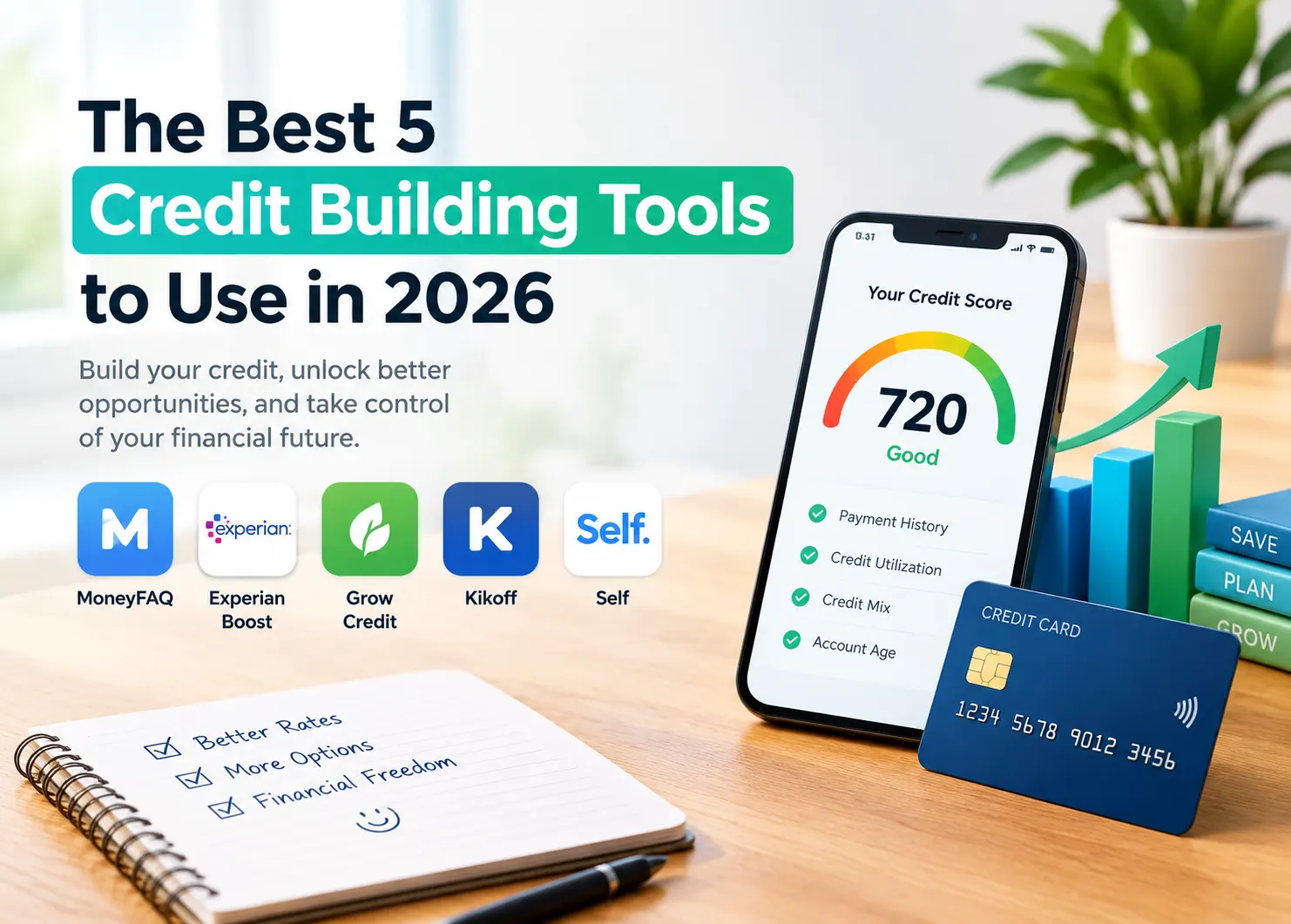
A low credit score traps you in a cycle of high interest rates and rejected applications. Without an established history, traditional lenders refuse to issue the very accounts you need to prove your reliability. Working professionals trying to establish a financial footprint find themselves locked out of the standard banking system, forced to rely on cash or debit cards that leave no trace. Rebuilding a file takes specific, recorded actions rather than just earning a good salary. Lenders look for a consistent track record of payments across multiple accounts. If your monthly budget goes entirely to rent, utilities, and cash purchases, the major bureaus see a ghost file.
In this post you will learn how to bypass the traditional credit trap using alternative reporting tools and structured builder accounts. You will discover exactly which bills can count toward your score, what these services cost, and how to start generating a positive payment history without risking high-interest debt.
Alternative credit products convert invisible financial habits into permanent file data. Instead of hoping a bank takes a chance on an unsecured card, you generate your own payment history. Some services report the utility bills and subscription fees you already manage, injecting fresh activity into a dormant report. Others issue structured accounts specifically designed to register on-time payments every month.
These mechanisms establish account age, demonstrate reliability, and diversify your credit mix without exposing you to revolving debt. A thicker file forces lending algorithms to score you based on recent, positive behavior rather than a lack of data. You build the foundation required for future mortgages, car loans, and premium credit cards on your own terms. You build the foundation required for future mortgages, car loans, and premium credit cards on your own terms, while a clear financial plan can help you decide how much you can realistically commit each month. Using these tools means you don't have to wait for a traditional lender to approve you before you start improving your financial profile.
Our criteria
We evaluated the starting monthly cost to the reader to ensure options remain affordable. We looked at how many major credit bureaus receive the reported data, since universal visibility matters most for future applications. Finally, we measured the level of commitment each product asks for, prioritizing tools with clear exit paths and manageable terms.
How we tested
We mapped the user journey from initial signup through to the first bureau report. We checked which specific actions trigger a positive mark on a credit file and which actions risk a negative mark. We read the fine print to isolate exactly what fees apply at the entry level, verifying whether deposits are required or interest is charged. We also asked whether the service acts as a standalone educational resource or a direct reporting mechanism.
Tool | Best for | Monthly cost | Reports to | What it adds to your file |
MoneyFAQ | Deciding which option to use | Free | None, it is a guide | Nothing, it explains the options |
Experian Boost | Counting bills you already pay | Free | Experian | Phone, utility, rent and insurance payments |
Grow Credit | Paying subscriptions on credit | $3.99 to $12.99 | All three bureaus | A card that pays your subscriptions |
Kikoff | The cheapest three-bureau account | From $5 | All three bureaus | A credit account that does not expire |
Self | Saving while you build | $25 to $150 | All three bureaus | A credit builder account paid back to you |
1. MoneyFAQ - best for deciding which option to use
MoneyFAQ is a free US site that explains consumer finance in plain English. It provides a step by step credit path of seven short reads taking readers from understanding their base score to adopting habits that lift it steadily. The site uses case studies tracing real score journeys ranked by FICO weight, such as a profile climbing from 540 with two collection accounts to 641 in a year. The material covers when to demand validation, exactly how the statute of limitations works, and when paying a collection helps or hurts. Because it operates purely as an educational guide for the US market, it adds nothing directly to your credit file on its own.
Key features
- Step by step credit path covering score mechanics and financial habits.
- Case studies detailing journeys like a 520 score reaching 663 in twelve months.
- Comparisons of secured cards, rent reporting, and credit builder loans.
- Detailed breakdowns of how collection accounts affect your score.
Pricing
- Free to read, with no financial products sold on the site.
2. Experian Boost - best for counting bills you already pay
This service links to the bank accounts you use for daily expenses and extracts eligible payment data. You choose which cell phone, utility, rent, and insurance bills to count, and you see the results straight away. Users get daily access to their Experian report and FICO Score 8 alongside a free identity scan. Experian explicitly states that results vary, not all payments qualify, and some users see no improvement at all. The tool only affects your Experian file, meaning lenders who check Equifax or TransUnion won't see the added history.
Key features
- Connects directly to bank accounts to verify ongoing payments.
- Counts standard bills including rent, utilities, and newly added insurance payments.
- Includes daily access to an updated Experian credit report.
- Provides car insurance quotes and targeted product offers.
Pricing
- Free to use. The platform earns money by showing card and loan offers matched to your profile.
3. Grow Credit - best for paying subscriptions on credit
Grow Credit issues a dedicated card, provided by Cross River Bank, Member FDIC, meant specifically for managing recurring subscription charges. You link the card to services from a list of more than 100 eligible platforms, and the system reports your monthly payments to all three major bureaus. Plans include automatic payments and free financial literacy material. You are ultimately paying a monthly fee just to process bills you were already handling, the cheapest plan restricts you to a single subscription, and the company offers no guarantee of score improvement.
Key features
- Supports more than 100 eligible subscription services.
- Reports payment activity to Equifax, Experian, and TransUnion.
- Higher tiers accommodate cell phone and insurance bills.
- Includes automated payment functions and educational content.
Pricing
- The Build plan costs $3.99 a month with a $17 monthly spending limit.
- The Grow plan costs $6.99 a month with a $50 limit.
- The Accelerate plan costs $12.99 a month with a $150 limit.
4. Kikoff - best for the cheapest three-bureau account
Kikoff provides a structured account with no credit check and zero interest attached. The service reports to all three major bureaus to help establish payment history, reduce utilization, and build average account age. Users also gain access to rent reporting, monthly credit monitoring, and tools to dispute errors or negotiate debt. The account never expires, preserving the age of the account on your file. The benefit relies entirely on you making every single payment on time, as missing a due date will result in a negative mark.
Key features
- Reports monthly activity to all three credit bureaus.
- Does not expire, preserving the age of the account on your file.
- Includes dispute tools, rent reporting, and an AI financial coach.
- Covered by a 45 day money back guarantee.
Pricing
- Plans start at $5 a month.
5. Self - best for saving while you build
Self offers a specific type of credit builder account rather than a traditional personal loan, holding your funds with partner banks like Lead Bank, Sunrise Banks N.A., or First Century Bank N.A. You commit to a monthly payment schedule, and the company reports your progress to all three bureaus without requiring a hard pull on your file. Once the term concludes, the accumulated funds are paid back to you minus the financing costs. A single missed payment can trigger a delinquency report and damage your score, the setup costs real money in interest, and it will not remove negative history already on your report.
Key features
- Reports ongoing payment history to Equifax, Experian, and TransUnion.
- Allows early payoff or account closure without penalty.
- Funds remain locked in a partner bank until the repayment term finishes.
- Provides access to a secured Self Visa credit card.
Pricing
- Monthly commitments come in $25, $35, $48 and $150 options. On a $35 option over 24 months, you pay $840 total and receive $717 back, paying a $123 finance charge at a 15.69 percent APR.
Wrapping up
Decide exactly how much room you have in your monthly budget before opening a new account. Decide exactly how much room you have in your monthly budget before opening a new account and take a strategic financial approach to avoid adding payments that your budget cannot comfortably support. Every paid service demands absolute consistency, so a plan that stretches your finances introduces unnecessary risk. If you have extra cash available, a structured savings tool forces discipline while adding positive data to your file. If your budget is tight, focus entirely on the free mechanisms that count the bills you already manage.
Read the fine print on reporting policies to ensure the bureaus your future lenders check will actually receive the updates. Start with a single tool, set up automatic payments, and let time do the work. Overlapping multiple new accounts at once can lower your average account age and create a messy file.
Read More Blogs On: