Infrastructure proposals are difficult to compare when each vendor describes a different configuration, service boundary, and set of assumptions. One includes operating system management, another includes only hardware support, and a third prices storage or traffic separately. The lowest total may simply represent the least complete scope.
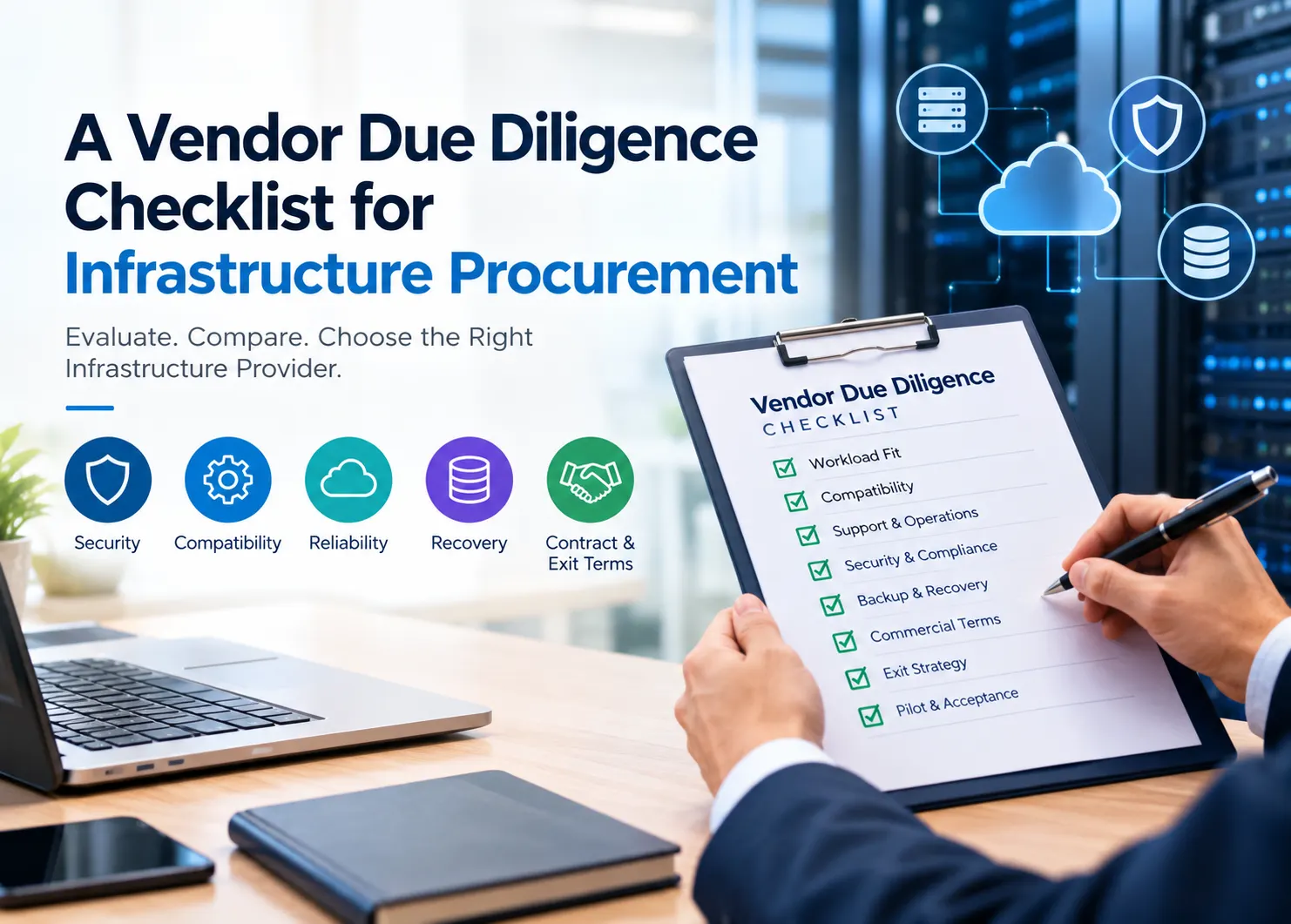
Vendor due diligence creates a common basis for the decision. It asks whether a proposed service can run the workload, whether its operating model fits the team, and what happens when the service fails or the relationship ends. The process should produce evidence that remains useful after the purchase.
For a provider such as unihost, evaluate the specific proposed configuration and agreement. Brand level descriptions can help identify services to investigate, but approval should depend on the workload, written scope, compatibility, and acceptance tests relevant to the actual deployment.
Write the requirement before requesting proposals
Describe the applications, their important dependencies, expected load, data handling needs, and operating hours. This helps define the technology infrastructure required before vendors start proposing specific configurations.
Separate mandatory requirements from preferences. A required software compatibility condition should not be traded away because a proposal has more storage. Preferences can influence scoring, but they should not hide a failure to meet an essential constraint.
Document the planning horizon and known changes. Vendors need to understand whether the service must support a fixed workload, a near term migration, or anticipated expansion. Label uncertain growth assumptions rather than presenting them as established demand.
Normalize the commercial scope
Ask every vendor to price the same baseline, with alternatives shown separately. Record processor model, physical cores, memory layout, usable storage, network terms, software licenses, and support scope. Include setup charges and recurring items that are necessary to operate the proposed service.
Confirm which resources are dedicated and which are shared. Terms such as cloud, virtual, managed, and dedicated describe different aspects of a service and may not answer the exact isolation or performance question. Ask for the operational meaning of the terms in the proposal.
Capture quote validity, billing currency, renewal conditions, and cancellation requirements. An attractive configuration is not yet a complete commercial offer if important charges or contract terms remain unspecified. Resolve those gaps before comparing totals.
Use an evidence matrix
Review area | Evidence to request | Approval question |
|---|
Workload fit | Configuration and representative test results | Can it meet the stated service goal |
Compatibility | Supported hardware and software combination | Can the required stack be operated safely |
Support | Written scope and escalation process | Is every important task owned |
Recovery | Backup responsibilities and tested procedure | Can useful service be restored |
Security | Controls relevant to the deployment | Do they address the identified requirements |
Exit | Export, access, retention, and cancellation terms | Can the organization leave in a controlled way |
Assign an internal reviewer to each area. Technical staff, procurement, and business owners contribute different evidence. The final decision should not depend on one person informally interpreting every commercial and operational condition.
Mark unanswered questions explicitly and give them a decision deadline. An unanswered item should remain visible rather than becoming an assumed positive because the rest of the proposal is attractive.
Verify compatibility at the required level
Check the exact operating system, hypervisor, drivers, and application dependencies planned for deployment. Family level compatibility is not always enough. Firmware, adapter models, and software versions can affect supportability.
For licensed software, establish who supplies the entitlement and what use is permitted. Confirm the current contract and support route rather than relying on a general statement that the platform is available. A technically installable product is not automatically covered by the proposed commercial arrangement.
Ask how upgrades are handled. The organization needs a path for security updates and supported versions after the initial deployment. A configuration that works only while every component remains unchanged may create an avoidable lifecycle problem.
Record exceptions with their consequences. If the team chooses an unsupported component for a valid reason, approval should be explicit and include an operating plan. Do not let an exception disappear inside a broad statement that the solution passed technical review.
Examine the operating responsibility boundary
List the tasks required to maintain the environment and identify their owners. These include patching, monitoring, access management, backup checks, database administration, application deployment, and IT infrastructure management.
Ask what information support requires and how a case is escalated. The first interaction during an outage should not be the moment the team discovers that only one account holder can authorize work or that application troubleshooting is excluded.
Separate response targets from recovery outcomes. A contract may specify when a ticket is acknowledged without guaranteeing when a service is restored. Understand both the commitment and the architecture that makes recovery possible.
Check coverage against the business requirement. A team operating only during local working hours needs to know who handles a critical issue outside that window. If the service can tolerate waiting, document that choice rather than buying unnecessary coverage by default.
Test security claims against the deployment
Begin with the data and access requirements of the application. Ask about administrative authentication, access logging, network controls, credential handling, and the process for removing access. Focus on controls that the organization can understand and operate.
If certifications or audit reports are relevant, verify their scope and applicability. A document covering one service or facility should not automatically be treated as evidence for every proposed deployment. Request the information through an appropriate channel and involve the relevant internal specialists.
Clarify how provider personnel access the environment for support and how that access is authorized. Record whether the customer can review relevant activity and how emergency interventions are handled. These questions matter even when the hardware itself is dedicated.
Do not assume a particular country location resolves every data handling requirement. Confirm where the application, backups, support access, and related services operate. Evaluate the complete arrangement against the organization's requirements rather than relying on a location label alone.
Review recovery as a practical scenario
Ask what happens after loss of the primary host, accidental deletion, or a failed deployment. The answer should identify available copies, replacement resources, responsible people, and the sequence required to restore service. Different incidents may need different recovery methods.
Confirm whether the proposal includes a backup service, storage for customer operated backups, or no backup responsibility. These arrangements should not be conflated. Record retention, access, and the process for validating recoverability.
Use a representative restore test where the decision warrants it. Measure the time to retrieve data and return the application to a usable state. Retain the result with its conditions so reviewers understand what the evidence demonstrates.
Consider dependencies needed during recovery, including secrets, licenses, installation media, and network configuration. A data copy is not enough if the team cannot reconstruct the environment that uses it.
Plan the exit before signing
Establish how data can be exported, what transfer limits apply, and whether migration assistance is available. Ask what access remains during a notice period and what happens after cancellation. Keep a record of deletion and retention terms.
Check whether the proposed architecture introduces dependencies that make migration difficult. Proprietary management features may still be worthwhile, but their benefits should be weighed against the effort required to leave. The decision should make that tradeoff visible.
Ensure the organization controls the information needed for a move: configuration records, application artifacts, credentials, and data formats. Vendor assistance can be valuable without becoming the only route to understanding the environment.
Approve a pilot with measurable acceptance criteria
Keep scoring transparent if the organization uses a weighted comparison. Mandatory conditions should be checked before optional features receive points, and each score should refer to evidence rather than enthusiasm from a sales meeting. Avoid a calculation in which a large number of minor conveniences outweigh an unresolved recovery or compatibility requirement. Review material assumptions with the people who will operate the service. Their approval helps ensure the winning proposal represents a workable environment rather than merely the best formatted response to the procurement questionnaire.
Where practical, test the chosen configuration before a full migration or long commitment. Use representative data and the actual software stack. Include the operating activities that will matter after launch, not only a headline performance benchmark.
The pilot should verify:
- Important application operations meet their targets under stated load.
- Monitoring and support routes work as expected.
- Deployment and rollback procedures are usable.
- Backup and restoration responsibilities are demonstrated.
- The delivered configuration matches the proposal.
- Remaining limitations have an owner and an agreed treatment.
Record the decision, evidence, and unresolved conditions in one concise approval document. Procurement due diligence is complete when the organization understands what it is buying and how it will operate it. That understanding is more durable than a feature comparison and more useful when the first difficult operational decision arrives.
Read More Blogs On