Table of Content
- Jessica Robinson
- Aug 10,2026
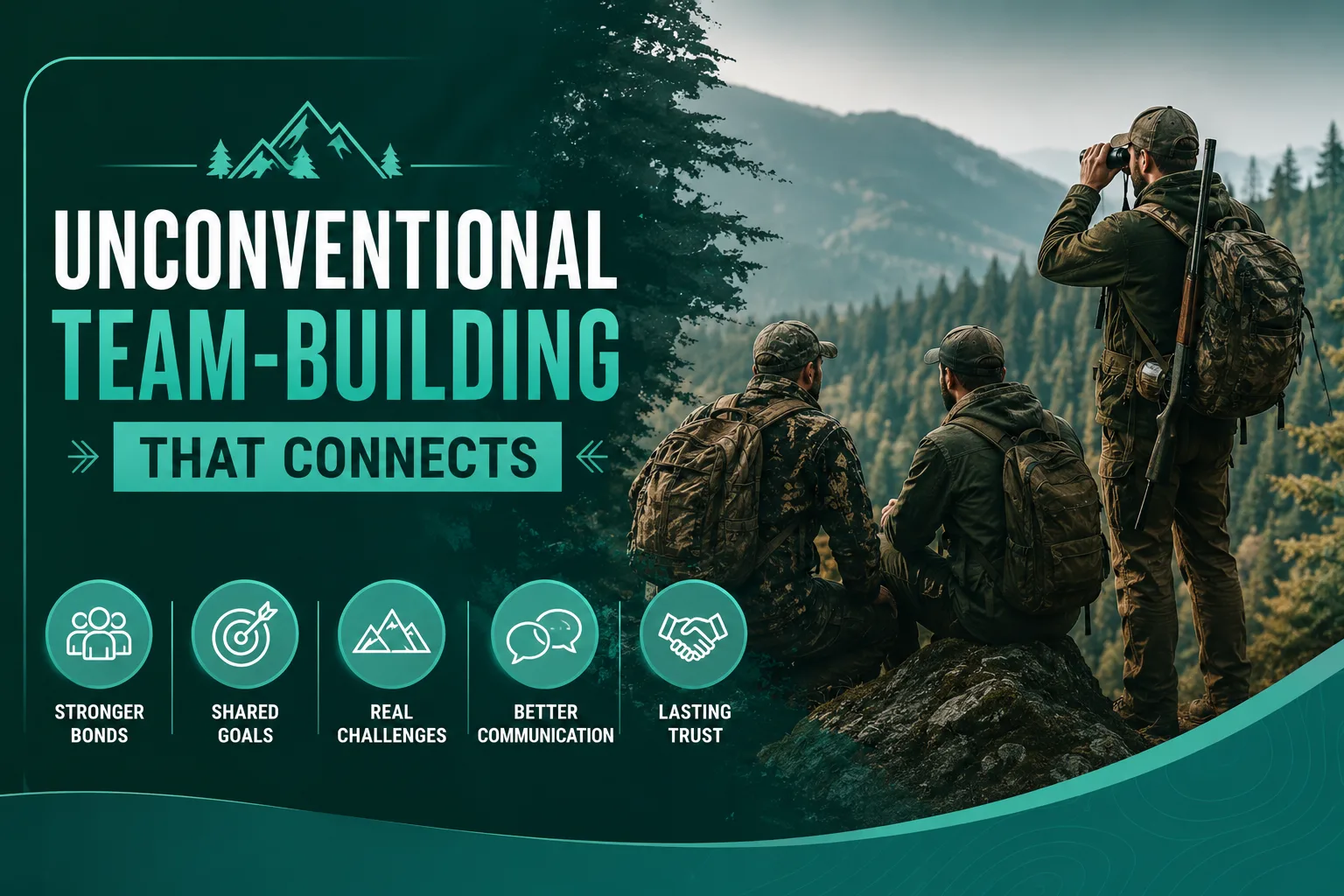
Most corporate retreats rely on standard trust falls or escape rooms in crowded venues. Stepping into the woods offers a fresh challenge that breaks daily workplace routines completely. Shared outdoor pursuits demand real communication and clear reliance on teammates. Group hunting trips build strong bonds through practical problem-solving in natural settings.
Tracking daily progress helps teams reflect on collective growth during outdoor trips. Keeping detailed observations in a personal hunt journal gives hunters a simple way to review tactics and track group progress. Writing down daily notes turns single achievements into lasting reference points for the whole team.
Reviewing these notes after returning to work creates shared pride among team members. Reflections written during quiet moments reinforce key lessons long after gear gets stored away. Memory logs keep key strategies fresh in everyone's mind. Sharing selected journal entries during team discussions encourages open communication and deeper reflection. Comparing individual perspectives helps participants identify common strengths, challenges, and lessons from the trip.
Standard corporate outings can feel disengaging for experienced staff members. Outdoor settings require deep concentration and active participation from every team member on the ground. Research demonstrates that organizations see a 25% increase in team performance when prioritizing structured group activities.
Navigating wild terrain requires groups to stay synchronized throughout the day. Coworkers learn to read nonverbal signals quickly under changing weather conditions. Sharp focus in the field translates to sharper teamwork inside the office. Working together outdoors reveals unique personal strengths in every individual. Staff members learn how each person handles unexpected challenges under real physical conditions. That mutual understanding carries over into daily project management.
Workplace exercises inside conference rooms often feel artificial to experienced staff. Nature presents unpredictable weather and rough paths that require instant adjustments from everyone involved. Industry reports note that corporate hunting trips extend beyond standard retreats by immersing teams in real outdoor challenges, driving collaboration in ways indoor venues miss.
Colleagues depend on one another to set up blinds and monitor terrain safely. Working through physical elements builds authentic trust faster than indoor icebreakers. Facing real hurdles creates unified responses across the entire group.
Unpredictable elements force people to drop rigid workplace habits quickly. Group members lean on shared instincts rather than corporate manuals. This shared effort creates strong operational alignment.
Successful hunting trips require deliberate planning long before hitting the trail. Mapping out routes, checking forecast reports, and assigning duties form the foundation of trip success. Studies show that organizations taking a systematic approach by defining objectives, designing outcomes, measuring impact, and reinforcing learning see clear improvements in team cohesion and performance.
Turning structured preparation into real execution builds decision-making skills under pressure. Teammates watch how clear preparation leads directly to group success in real time. Shared goals align everyone toward a single outcome. Detailed planning allows teams to test operational strategies in low-risk settings. Members learn to adapt when plans shift due to wind or animal movements. That flexibility builds confidence across all organizational tasks.
Quiet observation in the woods teaches discipline and self-control. Teammates practice listening attentively and signaling without speaking while staying hidden.
Key skills developed during a group hunting trip include:
These practical habits transfer straight back to daily office projects. Teams return with clearer focus and stronger mutual understanding across departments. Lessons learned in nature create lasting work habits.
Standard office dynamics trap managers and staff in rigid roles. Wilderness environments strip away job titles and equalize every participant in the group. Outdoor success relies on practical skill and adaptability rather than executive rank. A junior employee with hunting experience might guide senior leadership through unfamiliar terrain. This shift in authority creates genuine respect across company levels. Executives gain fresh perspective on the capabilities of their team members. Working on equal footing breaks down communication barriers between management and staff. Conversations happen more naturally around campfires than in formal boardrooms. New channels of trust open up across all levels of management.
Shared physical effort creates stronger memories than standard seminar meetings. Early mornings, campfire discussions, and successful tracks form a solid history. Surmounting obstacles in the wild creates a shared story that employees carry back to work. Coworkers remember who stood beside them during tough moments on the trail. This shared confidence makes daily communication smoother after returning. Team members reach out across departments with far greater ease.
Long-term trust grows when people experience real vulnerability together. Outdoor trips present authentic moments where team support makes an immediate difference. Those experiences form the bedrock of strong team dynamics. Stepping out of comfortable office settings opens new pathways for team unity. Outdoor field trips push individuals to communicate clearly, adapt quickly, and support one another in real time. Exchanging conference rooms for forest trails builds authentic trust and lasting cohesion. The practical lessons learned in nature continue to strengthen working relationships for years to come.
Yes. When properly organized, group hunting can encourage communication, shared decision-making, problem-solving, trust, and cooperation in an outdoor environment.
Hunting requires participants to coordinate plans, divide responsibilities, communicate clearly, adapt to changing conditions, and rely on one another during challenging situations.
Outdoor group activities can strengthen active listening, communication, strategic planning, adaptability, problem-solving, task coordination, and leadership skills.
Yes. Outdoor environments can create more informal interactions where employees and managers work alongside one another, allowing people to demonstrate skills outside their usual workplace roles.
Teams can maintain a shared journal containing observations, challenges, strategies, achievements, and lessons learned. Reviewing these notes afterward can encourage reflection and strengthen shared memories.

Discover how banner stands improve brand recognition at trade shows, conferences, and business events. Learn how effective banner design, strategic placement, and consistent branding increase visibility, attract attendees, and create memorable experiences that strengthen your brand's presence.
Read More
Complex corporate mediations often involve financial records, contracts, liability arguments, and technical evidence that can overwhelm decision-makers. Visual strategies make this information easier to understand by transforming dense records into clear timelines, organizational charts, financial models, and technical diagrams. This article explores practical ways legal teams can use visual communication to clarify multi-party relationships, explain damages, organize evidence, and improve negotiation workflows. With well-designed presentation materials, mediators and legal teams can keep discussions focused and help parties make informed settlement decisions.
Read More
Relationship-based link building focuses on building genuine connections with publishers, writers, and industry professionals rather than chasing backlinks through mass outreach. By consistently engaging with relevant communities, sharing useful content, contributing to discussions, and giving value before asking, you can create relationships that naturally lead to high-quality links. This approach takes more time than traditional outreach, but it builds trust, referrals, brand visibility, and a sustainable network. Ultimately, the strongest backlinks come from people who know, trust, and genuinely value your work.
Read More
Major industry events give businesses a valuable opportunity to build visibility, connect with decision-makers, and strengthen market authority. Successful event representation requires careful planning, from defining measurable goals and selecting speakers who understand the company culture to budgeting wisely and booking talent early. Well-trained staff, interactive presentations, and consistent brand messaging create stronger attendee experiences. However, the work does not end when the event closes. Fast, personalized follow-up helps turn valuable event connections into lasting business relationships and sustainable growth opportunities.
Read MoreGet into details now? View all posts