Table of Content
- Kiara Miller
- Aug 10,2026
Poetry often feels like a secret code waiting to be unlocked. Readers sometimes stumble over abstract phrasing or unusual line breaks, wondering what the author intended. Unpacking a poem does not require an advanced degree in literature. Anyone can learn to uncover hidden meanings by adjusting their approach to the page.
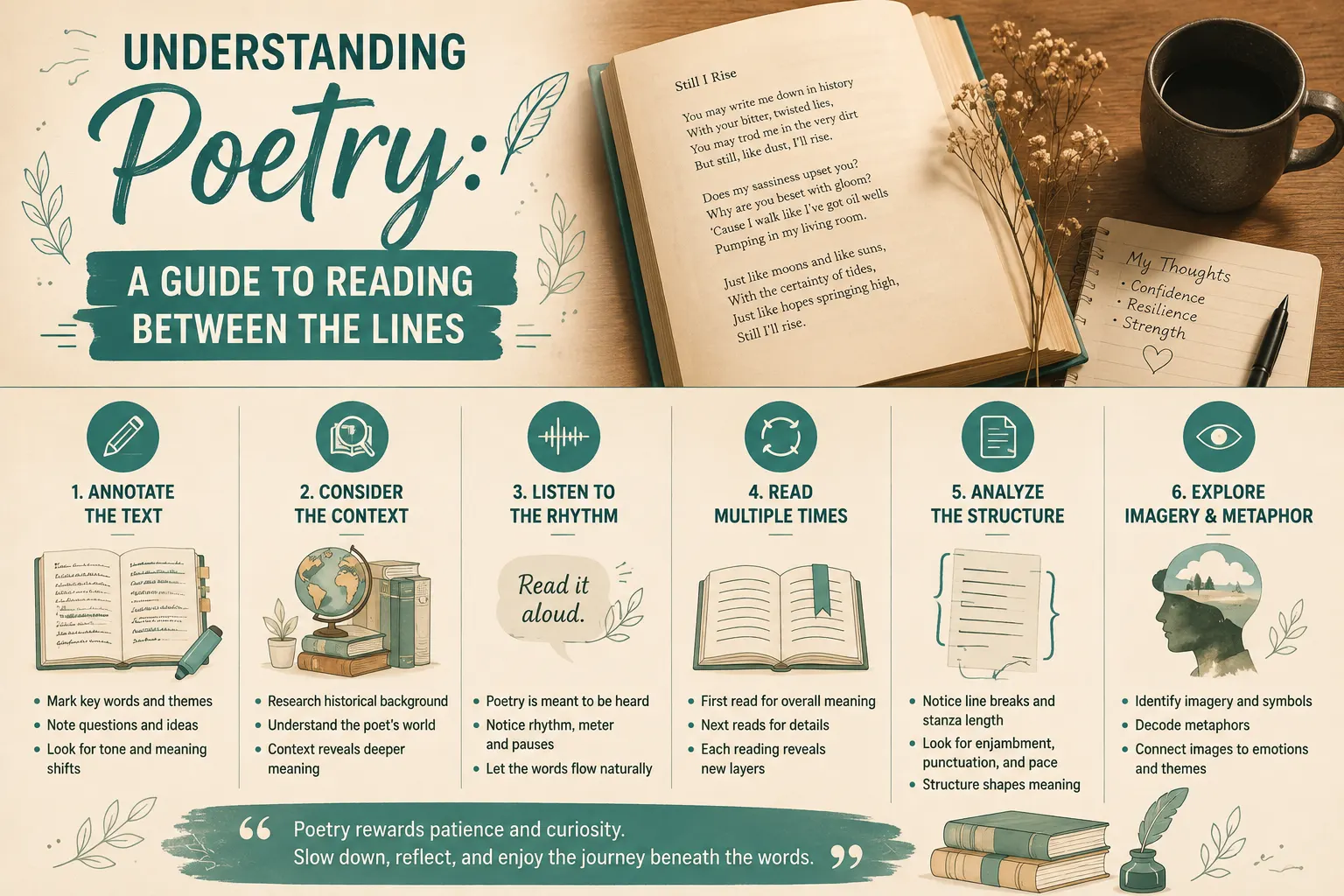
Interacting directly with the words on the page changes how readers process complex imagery. Grabbing a pen or highlighter allows you to mark recurring themes, curious word choices, and sudden shifts in tone. A writing handbook from the University of Wisconsin-Madison recommends reading every poem with a pencil in your hand. Direct annotation turns a passive reading session into an active critical thinking exercise. Marginal notes serve as a trail of your initial thoughts as you navigate difficult stanzas. You can underline confusing phrases to revisit later and jot down instant impressions right in the margins. Questioning word choices on paper makes patterns obvious after a second review. This active habit transforms complex text into an approachable conversation.
Poets build subtle layers of meaning using metaphor and historical background. When readers look past surface definitions, the team behind poetryexplained.com says that breaking down complex stanzas reveals deeper emotional themes. Taking time to unpack these details brings the primary message into clear focus. Every stanza offers subtle clues about the author's true intent. Historical background shapes how key symbols function within a piece. A phrase written 200 years ago might carry cultural weight that modern readers miss at first glance. Researching the era when a work was created provides valuable insight into the author's mindset. Knowing the writer's environment clarifies puzzling choices in tone and theme.
Poetry is designed for the ear just as much as the eye. Meter, cadence, and lineation create an auditory experience that print alone cannot fully convey. Guidelines from Poetry Out Loud suggest that readers should proceed at a fitting pace without rushing through lines out of nervousness. Vocalizing each phrase brings hidden musical qualities to the surface. Slowing down your reading speed lets the natural cadence of the words breathe. Pacing yourself highlights structural pauses, rhymes, and cadence shifts that might otherwise slip past unnoticed. A steady vocal delivery allows the underlying emotion to resonate clearly. Reading aloud gives every line space to deliver its intended weight.
A single glance through a stanza rarely exposes all its subtle details. Repetition helps readers catch subtle cadence changes and hidden symbolic connections across lines. An educational guide from Teach For America advises reading a poem silently first, then aloud at least 2 times. Each repeated pass reveals fresh layers of meaning. Revisiting text multiple times builds familiarity with complex poetic structures. The first pass provides a basic plot or mood, and later readings reveal intricate poetic devices. Hearing your own voice speak the words brings hidden meters to light. Consistent repetition builds strong analytical confidence with practice.
Structural choices reflect intentional artistic decisions made by the author. Line breaks, stanza lengths, and white space on the page guide the reader's eye and control narrative pacing. Examining these structural choices unlocks key clues about main themes. Visual organization shapes how the message unfolds line by line.
Analyzing visual formatting helps clarify why certain words receive emphasis over others. Authors use visual spacing to manipulate pause length and emotional tension. Notice where lines end abruptly or stretch across the page. These physical choices work together to reinforce the poem's core message.
Visual imagery creates strong emotional bonds between the reader and the poem. Descriptive language transforms abstract concepts like grief or joy into tangible mental pictures. Paying attention to sensory details reveals what the speaker values most. Strong imagery grounds complex ideas in relatable human experiences. Metaphors draw unexpected connections between distinct ideas or physical objects. Identifying these comparisons gives readers a deeper look into the core message.
Unlocking figurative language turns confusing lines into vivid mental images. With practice, spotting these literary devices becomes second nature. Learning to read between the lines transforms poetry from a puzzling riddle into a rewarding experience. By slowing down, marking key phrases, and reading aloud, you unlock fresh layers of meaning within every stanza. Practice and patience will sharpen your analytical skills with every page you turn.
Start by reading the poem several times and annotating unfamiliar words, repeated ideas, imagery, and changes in tone. Reading it aloud can also help reveal rhythm and emphasis.
Annotation helps you actively engage with the text. Marking important phrases, asking questions, and recording observations can make patterns, themes, and literary devices easier to identify.
Reading aloud allows you to hear rhythm, meter, rhyme, pauses, and changes in cadence. These auditory elements can reveal emotions and meanings that may not be obvious when reading silently.
Pay attention to word choice, imagery, metaphors, symbolism, tone, rhythm, line breaks, stanza structure, punctuation, and repetition. Also consider the poem's historical and cultural context.
Metaphors connect different ideas or objects to communicate emotions and concepts indirectly. Identifying these comparisons can help reveal deeper themes and the poet's intended meaning.

Financial firms must identify safeguarding gaps before they develop into serious operational, accounting, or regulatory problems. Proactive reviews help map internal workflows, separate customer assets from company funds, strengthen reconciliation controls, and manage third-party banking risks. Regular staff training and updated compliance procedures reduce the likelihood of costly mistakes. Comprehensive wind-down plans also ensure client money remains protected during periods of financial stress. Together, these measures strengthen internal controls, protect customer trust, and improve long-term business resilience.
Read MoreGet into details now? View all posts