Table of Content
- Kiara Miller
- Aug 19,2026
Businesses, especially in today’s day and age, do not have the luxury of dealing with one risk at a time. Every year, at least one (or hundreds) news headlines introduce a new risk for companies to mitigate. From cyberattacks on one end to geopolitical threats on another, unexpected financial pressures are waiting to be unleashed. PwC’s 29th Global CEO Survey revealed that almost one-third (31%) of CEOs believed their companies were exposed to significant financial loss from cyber threats. Just a year earlier, the number was 24%.
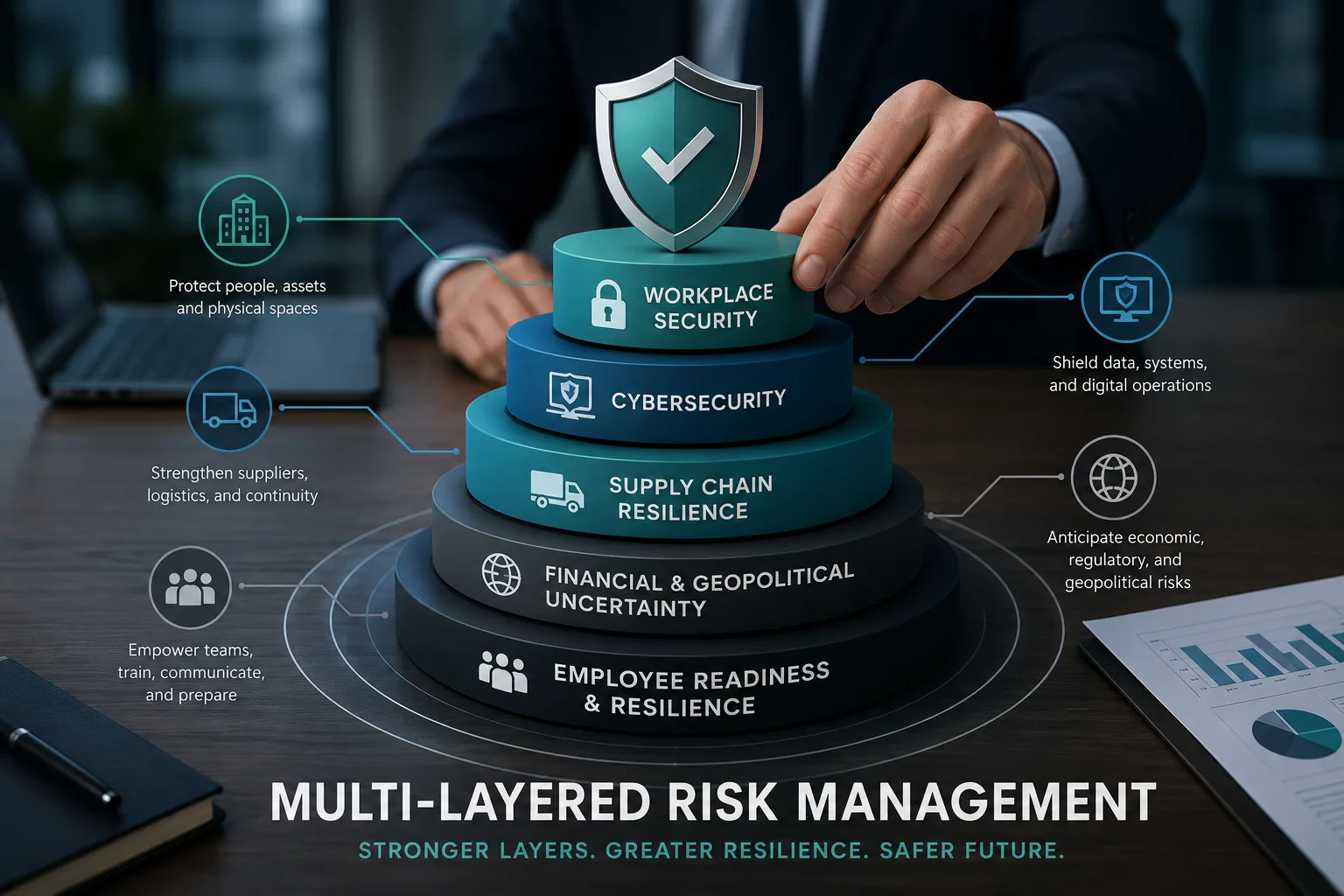
Statistics aside, it’s high time that firms of all sizes adopt a multi-layered risk management strategy. Only layers of protection will provide some level of confidence and peace of mind. This article will explore five ways such a strategy can be developed. When unified, they are designed to build greater resilience against threats that affect people, operations, and long-term growth.
If your business has a physical location, then having a strong line of defense should be the first course of action. Your employees, customers, equipment, and inventory all need some degree of protection from unauthorized access, theft, vandalism, or other physical threats.
Now, the level of security will vary depending on the size of the workplace and volume of traffic it sees daily. So, find out where your business is most exposed and who requires protection. To give you an example, stronger controls are often needed around restricted areas.
Likewise, a facility that receives a large number of visitors may require structured screening at its entrances. In such settings, walk-through metal detectors can serve as one layer of entrance screening by helping detect concealed metal objects.
GXC Inc. notes that the electromagnetic technology used in such detectors allows personal items like keys and jewelry to pass without false alarms. This means your business can maintain physical security without causing any hassles for those who enter. Since we are discussing a layered risk management strategy, you can bolster this aspect as follows:
In a digital era, how can a risk management strategy be complete without a fortress around business data? Cybersecurity measures have had to evolve in light of how attackers are upgrading themselves.
In a 2026 report, Verizon shared that 31% of breaches now involve software vulnerabilities, and 48% stem from ransomware. On that note, let’s not forget technologies like generative AI that are proliferating by the year. No wonder the same report shared that 15 different cyberattack techniques are being bolstered by generative AI.
This is not to imply that businesses must ditch new technologies altogether. What’s important is to know the areas a new tool can access and the repercussions of compromised credentials or permissions.
Lindsay Kaye, Vice President of Threat Intelligence at HUMAN Security, explained, “Unquestionably, trusting novel technology like agentic AI could lead to risks such as compromised credentials, data misuse, and unintended consequences when shopping.”
She further went on to address organizations, saying they “need unparalleled visibility into agentic and other emerging technologies to understand the benefits and risks and make informed, case-by-case decisions.” With so much at stake, what measures can your business take? The following should serve as practical routes to gradually build a robust digital fortress:
That’s the nature of disruptions; they tend to strike when you least expect them to. Most importantly, they are problems an organization may not create but has to deal with nonetheless. So, suddenly one day, a key supplier may struggle to meet demand, or you may find no legitimate source for a critical component.
It takes just one incident for things to go haywire. Reuters reported that Hanwha Philly Shipyard relies on over 1,000 suppliers for each large ship it builds. Two-thirds of these suppliers are based in the US. As the shipyard plans a whopping $5 billion investment, employment could rise from 2,000 to 10,000 workers.
As a result, US officials are looking for ways to strengthen the smaller suppliers needed to support an expansion of this scale. We understand that supply chain resilience depends on the strength of the network, not just a company’s direct suppliers. So, while you can have backup vendors, that alone does not form a risk management strategy. Do the following:
As they say, businesses are faced with risks, both within and without. This section will deal with the latter part, as many external forces are difficult to control, and they can turn a business on its head. For instance, a sudden regulatory change may prove to be painfully expensive, or geopolitical tensions can disrupt a market or supplier relationship that was once stable.
What you can control is how prepared your business is for such changes. The Conference Board’s 2026 C-Suite Outlook found that 42.9% of US CEOs considered uncertainty as the external factor expected to have the greatest negative impact on their businesses. Tariffs were another major concern, with 29.8% of US CEOs placing them among the top two external factors with undesirable effects.
No organization can plan its finances successfully without accounting for the macro business environment. So, what you need is a practical approach, one that involves:
This strategy relieves you from the burden of predicting every economic or geopolitical event. However, you can still stay prepared with a strategic response plan should tensions knock on the door out of the blue.
Systems and contingency plans only take an organization so far. If we lift the foundation, we will find another strong layer holding it up: the people who are the strongest assets. Whenever a major crisis hits, it’s the people who must make decisions, communicate with each other, transfer responsibilities, and keep the critical work going.
The most sophisticated risk strategy will fail if people are uncertain about their responsibilities. The gap, as we speak, between confidence and preparation is glaring among small businesses across the US. Recent research from the US Chamber of Commerce Foundation and Verizon found that 94% of small business owners believed they could recover from a disaster. Ironically, 69% had no concrete disaster plan in place.
Well, to top it off, 66% had no clue about which disasters their business needed to be protected from, and 80% had no disaster budget. Given this state of the people, what good would any strong system or grand plan do?
When you build the people's side of resilience, your employees will know what to do the moment disaster strikes. For that to happen, ensure the following:
PwC’s 29th Global CEO Survey results | Almost one-third (31%) of CEOs believed their companies were exposed to significant financial loss from cyber threats. Just a year earlier, the number was 24%. |
2026 Verizon report findings |
|
Conference Board’s 2026 C-Suite Outlook report |
|
It’s not realistic to plan for every individual risk that may arise, and you’d do well to stop such an endeavor. Instead, address different points of vulnerability by connecting the layers we have just discussed. Each strategy will take care of one aspect, with the people working behind the scenes tying it all together.
Once your organization understands how a risk interacts and cascades, multi-layered risk management will seem like the only practical way to stay safe. So, what changes will your business make to strengthen risk management, one layer at a time?
Businesses should consider workplace security, cybersecurity, supply chain resilience, financial and geopolitical risks, and employee preparedness. Together, these layers provide broader protection against interconnected threats.
Businesses can improve preparedness by maintaining backup suppliers, protecting critical data, testing contingency plans, monitoring external developments, and clearly assigning responsibilities during disruptions.
Cybersecurity protects sensitive business data, systems, credentials, and critical operations from threats such as ransomware, software vulnerabilities, and AI-assisted attacks.
Supply chain resilience reduces dependence on individual suppliers, regions, or logistics networks. Alternative vendors, backup inventory, and tested contingency plans can help businesses continue operating during disruptions.
Employees are responsible for implementing many risk controls during a crisis. Clear responsibilities, cross-training, communication, and regular exercises help teams respond quickly and maintain critical operations.

A top-up business degree is an efficient way for diploma holders to earn a bachelor's qualification without starting over. By recognizing previous academic credits, these programs reduce study time while enhancing career prospects, earning potential, and leadership opportunities. Students also develop practical business skills, expand their professional networks, and stay competitive in today's evolving job market. Whether you're aiming for a promotion, a career change, or long-term professional growth, a top-up degree offers a faster path to achieving your goals.
Read More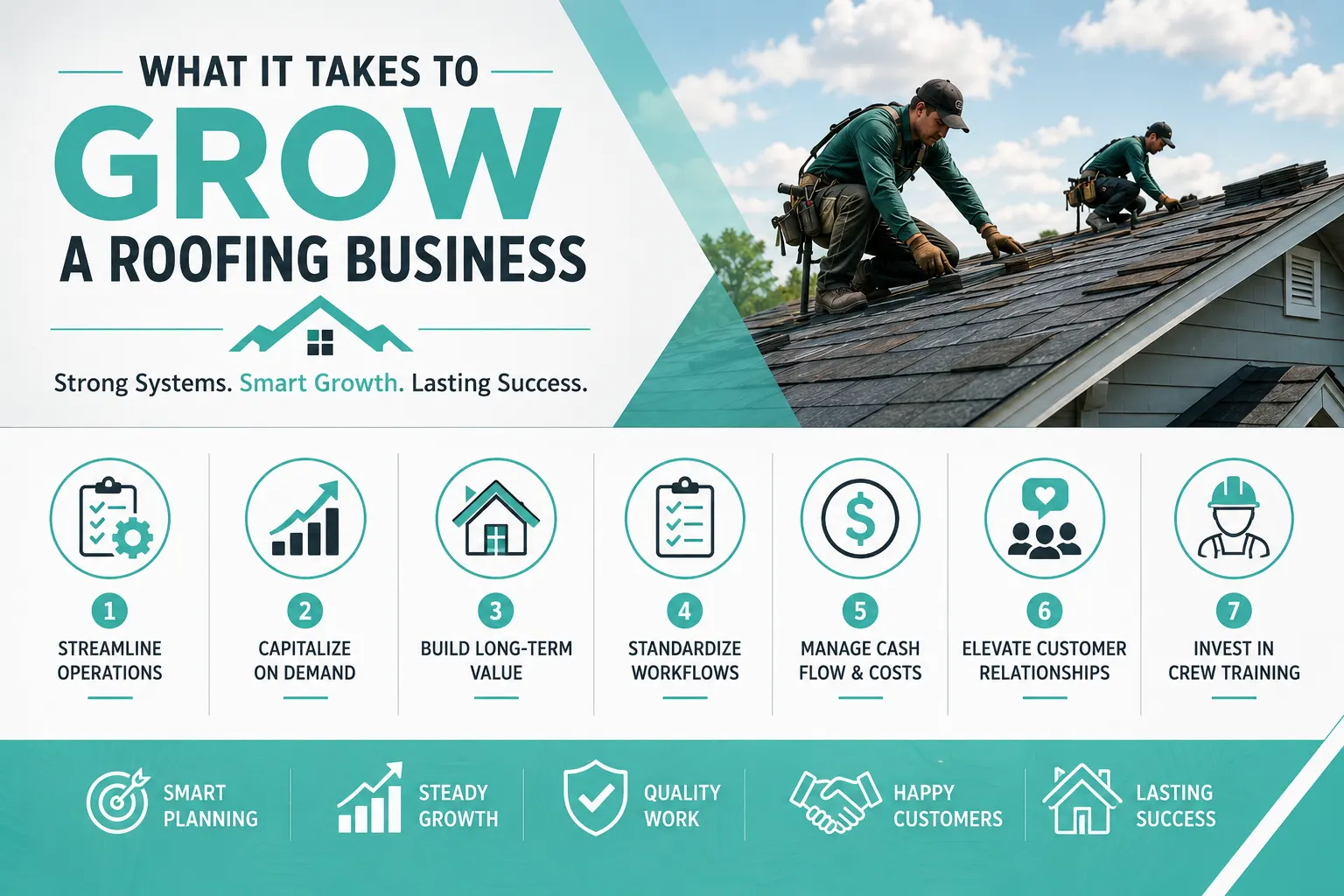
Growing a roofing business requires more than completing quality projects. Sustainable expansion depends on organized operations, reliable financial management, effective customer relationships, trained crews, and repeatable jobsite processes. This guide explores practical strategies roofing contractors can use to build a stronger and more scalable business. From adopting CRM systems and standardizing workflows to managing cash flow, responding to market demand, and investing in employees, these approaches help contractors improve efficiency, protect profitability, strengthen their reputation, and create a solid foundation for long-term business growth.
Read More
Print branding is an often-overlooked part of a strong brand identity. From business cards and stationery to packaging and signage, physical brand touchpoints influence how customers perceive your business. This article explores why consistent print branding matters, how colour and typography affect recognition, and how businesses can bring offline materials in line with their digital presence. Learn practical ways to audit and improve your printed materials so every customer interaction feels professional, recognisable, and trustworthy.
Read More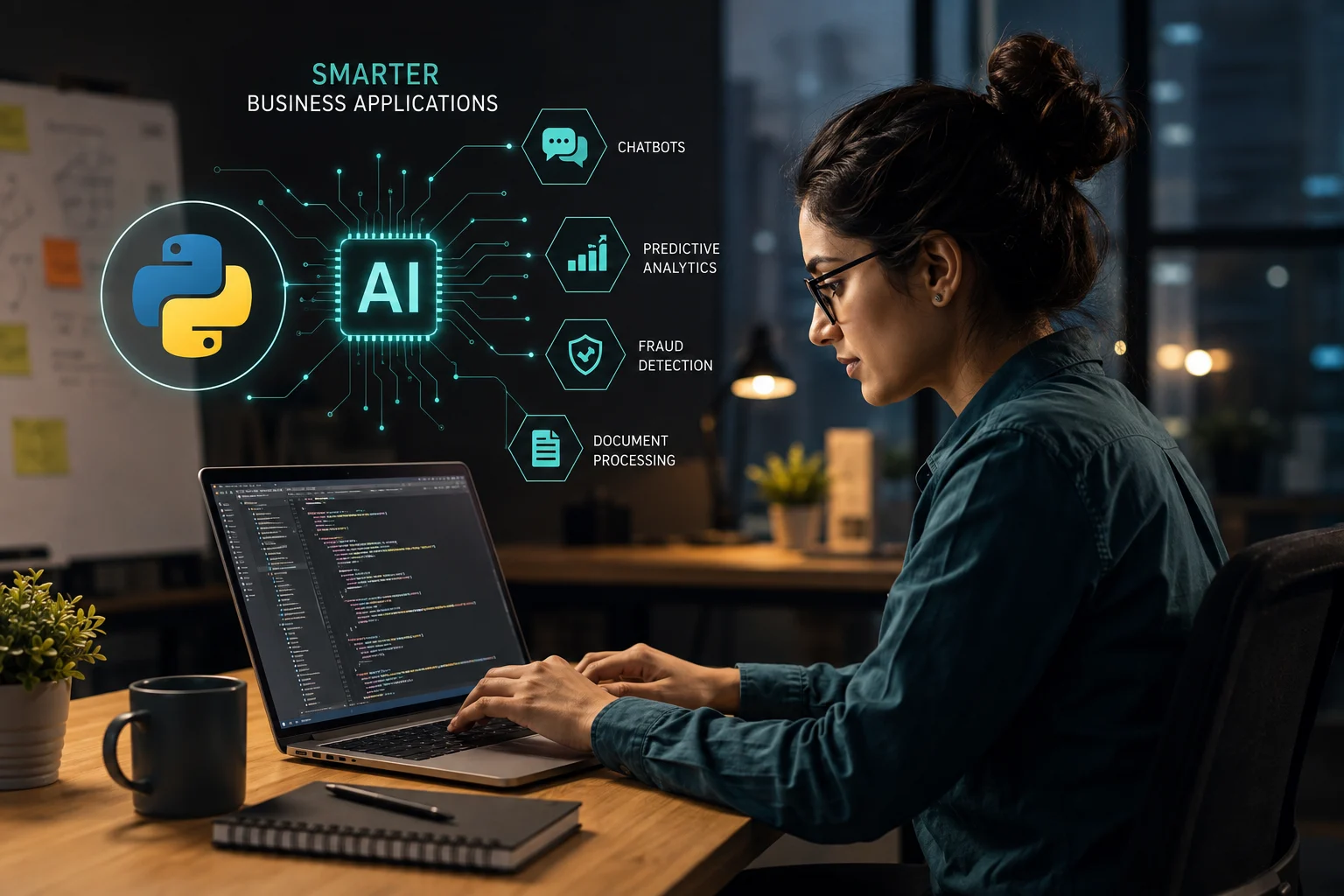
Python has become a leading choice for building AI-powered business applications because of its flexibility, readability, extensive libraries, and strong developer ecosystem. This article explains how Python developers combine AI, machine learning, automation, and data processing to solve practical business challenges. It explores key benefits such as faster development, cost efficiency, scalability, and adaptability. It also highlights what businesses should consider when choosing a Python development team and why experienced developers can help create reliable, scalable AI solutions that deliver long-term value.
Read MoreGet into details now? View all posts