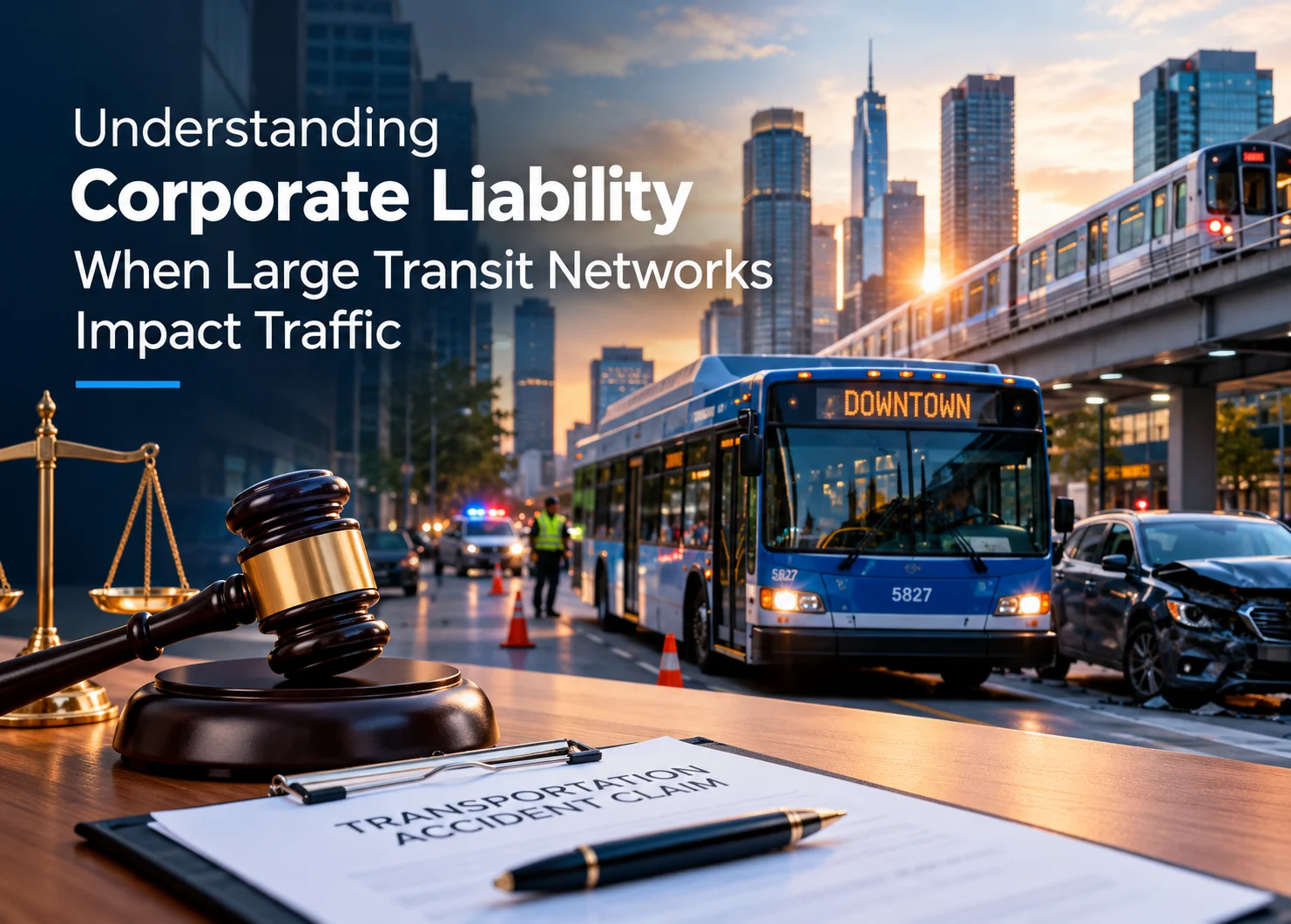
As corporate transit networks expand in busy metropolitan corridors, legal experts analyze how evolving liability standards reshape modern traffic claims. Large transit networks play an integral role in keeping cities connected. Commuter trains, buses, and other types of transportation services assist millions and millions of people who travel to work, school, etc.
When some of these networks go through operational failures, preventable accidents, or managed construction projects, the consequences can be gargantuan. It may result in personal injuries, property damage, traffic disruption, and many other issues.
Therefore, it’s vital to get your facts straight when it comes to corporate liability because you’ll need to know what needs to be done in case (God forbid) an accident due to negligence occurs, and that’s exactly what this article is going to thoroughly explore today.
The Correlation Between Traffic Disruptions And Transit Operations
Large transit networks constantly “collaborate” with surrounding road systems in various ways. Heavy buses have to squeeze into lanes with private cars, rail crossings regularly slow down the flow of traffic, and so on. On top of that, routine construction, track maintenance, and unplanned service detours can completely distort traffic patterns across entire neighborhoods overnight. When these complex moving parts are meticulously planned, the daily chaos is not as present.
However, when transit authorities do not communicate properly or make careless operational mistakes, they create incredibly dangerous conditions on the road. For instance, if a transit operator doesn’t announce a sudden route change, drivers then wonder which lanes are actually restricted.
A poorly placed bus stop can completely block a driver's line of sight close to a busy intersection, while an unsecured construction zone might put cars in potentially dangerous situations, just to get by. In worst-case scenarios, mechanical meltdowns or driver errors can cause major collisions that completely paralyze commuter corridors.
The consequences of these actions go way beyond a frustrating morning commute. Drivers can suffer severe physical injuries, logistics companies face massive financial losses from delayed shipments, and local shops can watch their customers vanish when their storefronts become inaccessible.
You Can’t Escape From Legal Assistance
When a transit-related accident happens and leads to severe injuries or financial issues, you may find it hard to determine which legal options you can resort to. Corporate defendants may have legal teams, insurers, and established procedures for investigating and responding to claims.
In contrast, individuals and organizations that have been impacted by these incidents may require some help that’s going to figure out if a viable claim even exists, the type of evidence that’s obligatory, and everything related to deadlines.
Sounds pretty overwhelming, right? If you’re searching for legal assistance, then maybe you should take into account The Trapani Law Firm or any other legal professional who is experienced enough, as far as this is concerned. So, how can you benefit from them?
Namely, they are here to help you figure out if a claim should concentrate on negligent vehicle operation, contractor conduct, or anything else. Aside from that, it can help claimants better comprehend how to properly document losses, talk to insurers, etc.
Keep in mind that transit cases often involve multiple organizations and specialized legal rules and regulations; therefore, it’s wise to have a legal expert in your corner. This is especially essential when a government entity or public transit authority is involved. Sound business decision-making can help transportation organizations address safety concerns, maintain vehicles properly, and reduce preventable operational risks.
Explaining The Meaning Of Corporate Liability In Transportation Cases
Corporate liability basically means that a company can be perceived as legally responsible when its operations, employees, choices, or failures cause major harm. In the world of transportation, a ton of different players can be the culprits, including private bus lines, rail operators, hired maintenance crews, and public transit authorities.
Depending on the details of a crash, even vehicle manufacturers, infrastructure owners, or government agencies can become part of this legal mess. One of the most critical legal concepts you will run into here is something called vicarious liability. Companies can reduce operational risks by strengthening safety procedures, improving oversight, and adopting a multi-layered risk management strategy.
When an employee makes a costly mistake on the clock, the boss is usually the one who has to answer for it. Take a transit bus driver, for example—if they cause a major pileup during their normal route, the transit company is going to take the blame right alongside the driver.
But companies don't just get in trouble for their workers' mistakes; they can also be sued directly if their own corporate decisions caused the mess. We see this all the time when executives cut corners on safety training, let vehicle maintenance slide, set impossible schedules, or ignore blatant red flags.
When management creates a dangerous workplace, they can't just point fingers at the frontline workers. That said, the actual legal outcome depends heavily on where you live, how the company is set up, and the exact details of the crash. Public transit agencies often have special government immunities that make them incredibly hard to sue, while private subcontractors have no such luck and face the full, harsh weight of the law.
Negligence is one of the most common causes of traffic collisions and generally unsafe transportation operations. Speaking of negligence, it’s not always easy to determine it, and it typically requires figuring out whether a duty of care was even present. If that duty was breached, if the breach caused an accident, and whether the claimant suffered harm that is legally recognized.
In large transit networks, corporate negligence usually can be seen in a few different ways. The most obvious culprit is unsafe vehicle operation, which happens when drivers speed, ignore traffic signals, or drive carelessly.
When front-line operators decide to cut corners on safety procedures, the risk of a catastrophic collision is much higher. Another massive hazard occurs when transit companies completely forget routine maintenance and let their fleets fall apart.
Creating risks by failing to inspect vehicles properly or ignoring known mechanical glitches is a recipe for disaster. If a company lets a bus with faulty brakes stay on the road, they are practically begging for an accident to happen.
Corporate liability becomes a massive consideration the exact second large transit networks threaten traffic safety, road access, and the financial survival of everyday people and local businesses.
When a major transit network disrupts a city, the fallout can cripple an entire community's economy or put lives at serious risk. Because the impact is so widespread, holding the right people accountable is essential for keeping our roads safe and protecting people.
Read More Blogs On: