Table of Content

- Jessica Robinson
- Sep 02,2026
At some point, a lot of experienced professionals hit the same wall: the job has stopped growing, but they haven't. You want more say over policy, curriculum, staffing, or the direction of the institution you work for, and a doctorate starts to look like the obvious answer. Maybe it is. But it's worth remembering that a doctorate isn't just another line on a resume — it's years of research, writing, deadlines, and meetings layered onto a life that's probably already full. The real question isn't whether you could finish a doctorate. It's whether the specific program, the workload it demands, and the career payoff at the end actually line up with the work you want to be doing.
Before you look at a single program, picture the role you want in five years. Senior administration? Instructional leadership? A move into higher ed? Whatever it is, go read actual job postings for it and pay attention to which qualifications keep showing up. That gives you something real to hold a curriculum against, instead of enrolling because a doctorate simply feels like the next rung on the ladder.
Once you know what gap you're trying to close, comparing programs gets a lot easier. Augusta University, for instance, runs cohort-based online EdD programs aimed at working professionals, with separate tracks in Educational Leadership and Higher Education Administration — built around practical problem-solving and an applied dissertation rather than pure theory.
A professional doctorate still involves real research — it's just aimed differently. Rather than chasing a gap in academic literature for its own sake, you're usually digging into a problem your organization actually has: teacher turnover, disengaged students, uneven tech adoption, professional development that isn't landing.
That sounds more approachable, and in some ways it is. It is not, however, faster. You'll still need to work through existing literature, understand your methodology, gather and interpret evidence, defend your choices, and rewrite more times than you'd like. And your topic needs to be genuinely narrow. "Fix education" isn't a research question — it's a breakdown with a title page.
Online programs cut the commute, but they don't add hours to your day. Doctoral coursework tends to bring dense reading, discussion posts, group projects, recorded lectures, and long stretches of writing — and all of that has to compete with whatever work throws at you and whatever your family already needs from you.
So map your actual week before you apply. Late meetings, caregiving, travel, weekends you'd normally treat as recovery time — put it all down, then see what's genuinely left over for protected study blocks. If the answer is "not much," that's information worth having now rather than in month four.
A good online doctorate shouldn't feel like readings dumped into a portal on a schedule. Ask how often you'll actually interact with faculty, how advising works, and when dissertation support kicks in. Ask whether you stay with the same cohort throughout, how group work gets handled, and what the process looks like if your research stalls out.
These are the details that matter far more once you're enrolled than they ever do during an admissions webinar. A strong cohort is worth something real — classmates who are doing this alongside a full career can push back on your assumptions, point you to sources you'd have missed, and remind you that everyone else is also stuck rewriting the same paragraph. Ask people currently in the program how the workload balance actually plays out day to day.
Coursework has a visible finish line — you turn in the paper, get feedback, move on. A dissertation doesn't work that way. It stretches over a much longer period, and momentum depends on you continuing to show up without the structure of weekly deadlines pushing you forward.
Augusta's program, for example, ends in an applied dissertation tied to real institutional problems, following a three-year cohort structure. You don't need a finished topic before you apply, but it's worth asking yourself honestly whether sustained, self-directed research is something you can stay with once the novelty of starting wears off.
Tuition is just the headline number. Fees, books, software, any travel tied to in-person requirements, and the real possibility the program runs longer than planned all belong in the total. Then there's time — the evenings and weekends the degree eats up would otherwise go to paid work, family, or rest, and that has a cost too.
Check whether your employer offers tuition assistance or ties salary movement to doctoral credentials, and get any commitments in writing — some come with conditions like minimum grades or a required period of continued employment. And don't collapse the return on investment down to salary alone. Access to certain roles, more authority to drive change, sharper research skills — these count too, but only if you can name specifically what they'd mean for you.
A slick homepage proves nothing, and neither does a long list of leadership buzzwords. Look into accreditation, who's actually teaching, how the curriculum is sequenced, and what the final research project involves. Ask about completion rates, typical time to finish, and where graduates actually land afterward — a program built for working professionals should be able to answer these plainly, not with cheerful vagueness.
Don't wait for graduation to connect the degree to your career. Where it fits, use your coursework to dig into problems you're actually facing at work, and hold onto strong projects and analyses for a professional portfolio. Talk to classmates whose work looks nothing like yours — their experience will often surface assumptions you'd never notice from inside your own organization. And take faculty relationships seriously; good mentors sharpen your questions and your writing, and help you see where your professional experience is an asset rather than just background noise.
Start by identifying the role you want in the next five years. Review job postings for that position and determine whether a doctorate is required, preferred, or likely to provide meaningful career advantages.
Not necessarily. Online programs can eliminate commuting and offer greater scheduling flexibility, but doctoral coursework still involves substantial reading, research, writing, projects, and independent study.
An applied dissertation focuses on researching and addressing a practical problem, often within an organization or professional field, rather than focusing solely on theoretical academic research.
Look at accreditation, faculty, curriculum, cohort structure, dissertation support, completion rates, typical completion time, total costs, and the career outcomes of graduates.
Consider more than tuition. Include fees, books, software, travel requirements, and the potential cost of reduced working hours. Employer tuition assistance and the opportunity cost of time should also be considered.

Python has become a leading choice for building AI-powered business applications because of its flexibility, readability, extensive libraries, and strong developer ecosystem. This article explains how Python developers combine AI, machine learning, automation, and data processing to solve practical business challenges. It explores key benefits such as faster development, cost efficiency, scalability, and adaptability. It also highlights what businesses should consider when choosing a Python development team and why experienced developers can help create reliable, scalable AI solutions that deliver long-term value.
Read More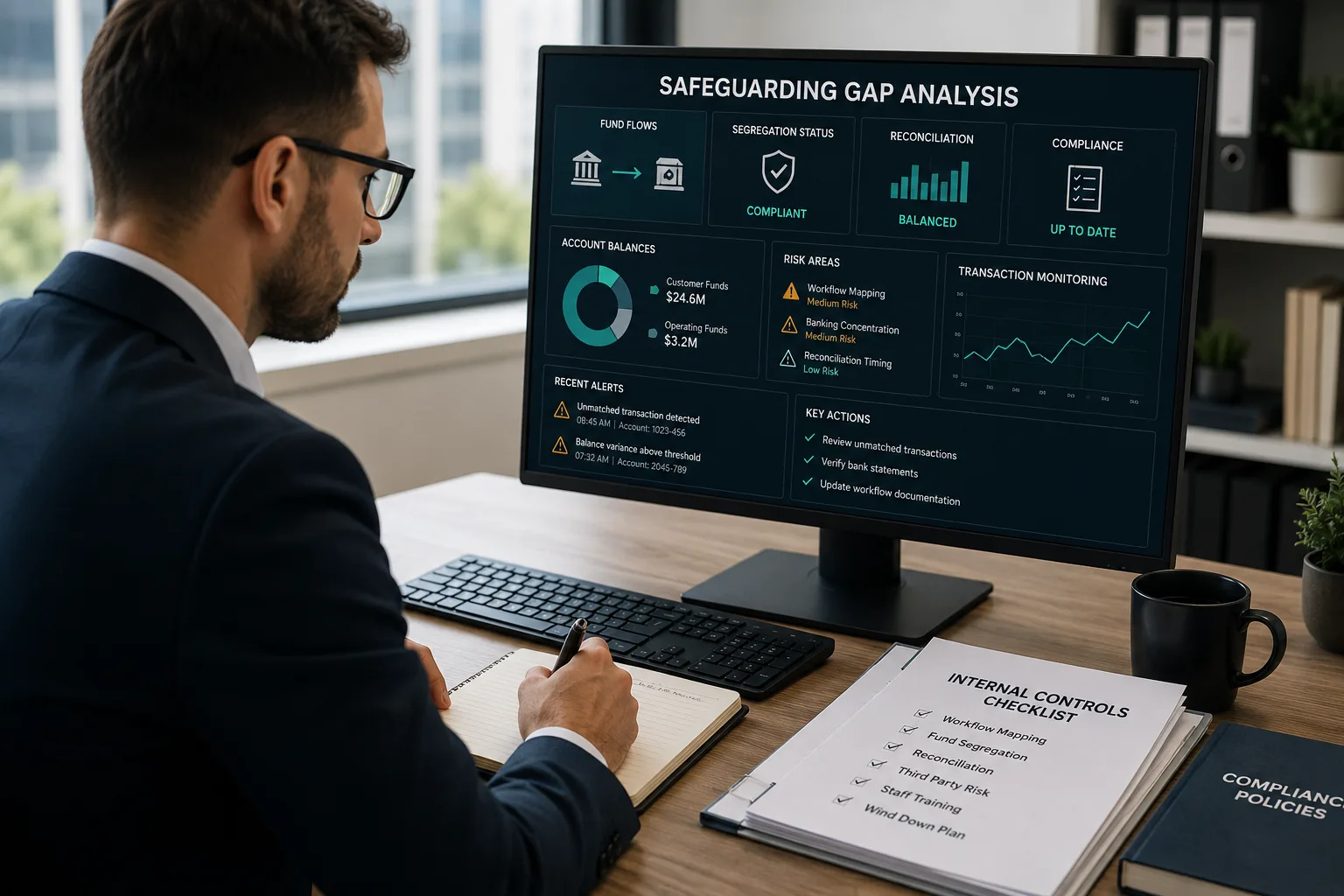
Financial firms must identify safeguarding gaps before they develop into serious operational, accounting, or regulatory problems. Proactive reviews help map internal workflows, separate customer assets from company funds, strengthen reconciliation controls, and manage third-party banking risks. Regular staff training and updated compliance procedures reduce the likelihood of costly mistakes. Comprehensive wind-down plans also ensure client money remains protected during periods of financial stress. Together, these measures strengthen internal controls, protect customer trust, and improve long-term business resilience.
Read More
Finding the right HRMS software in India can simplify payroll, attendance, employee management, performance, compliance, and HR automation. This guide compares five leading HRMS solutions—Keka, greytHR, Zoho People, Darwinbox, and HROne, across core features, pricing, security, scalability, employee self-service, and AI capabilities. Whether you run a startup, SME, or large enterprise, explore these human resource management systems to identify the best HR software in India for your workforce, budget, and long-term HR management needs.
Read More
Drug testing plays an important role in creating safer, more responsible workplaces, particularly in industries where impairment can lead to serious accidents. A well-structured testing program can help prevent incidents, support employee accountability, meet regulatory requirements, and encourage a healthier workplace culture. From pre-employment screening to post-accident and reasonable suspicion testing, consistent procedures give employers a practical way to address potential risks while protecting employees and the organization. When handled fairly, drug testing can support safety without compromising workplace trust.
Read MoreGet into details now? View all posts