Table of Content

- Jessica Robinson
- Aug 26,2026
Growth plans in South East Queensland tend to fail at the same point. Not at the sales forecast, and not at the hiring plan, but at the moment the business has to put capital behind the equipment that makes the forecast achievable.
Australian businesses are still committing heavily here. The Australian Bureau of Statistics putsplanned capital expenditure for 2026–27 at $173.4 billion in its second estimate, 9.9 per cent above the first.
That spending is not neutral. How a business funds a materials handling fleet changes its reported profit, its borrowing capacity, and the speed at which it can take on the next contract. Equipment finance is a growth lever, not an administrative step.
Most operators frame equipment as procurement. The finance director frames it as competition for a limited pool of capital, and the second framing is the correct one.
Every dollar committed to owned plant is a dollar unavailable for inventory, wages during a ramp-up, or the bond on a second site. In a growth phase, working capital is usually the binding constraint, not the equipment itself.
Tax treatment shapes this directly. The ATO'ssimplified depreciation rules allow eligible small businesses to immediately deduct assets under the $20,000 threshold, while assets at or above it go into the general small business pool and depreciate at 15 per cent in the first year and 30 per cent each year after.
Most counterbalance forklifts sit well above that threshold. So the immediate deduction rarely applies, and the deduction arrives slowly across several years — which matters enormously if the reason for buying was cash flow in the first place.
The decision turns on one number that almost nobody calculates: utilization. Work out the hours the machine will genuinely run each week, not the hours it will be on site. A unit running six hours a day, five days a week is a very different asset from one that moves twice a shift.
Then compare three columns on the same class of machine: the purchase price amortized over expected service life, the equivalent weekly hire cost, and the rent-to-buy path that sits between them.
All Lift Forklifts, for example, lists new and usedforklifts alongside hire and rent-to-buy terms, which makes comparing forklift sales in Brisbane against weekly hire rates on an equivalent machine a reasonably quick exercise once you have your utilization figure.
The crossover rule of thumb. Below roughly 40 per cent utilization, hire almost always wins on total cost. Above 70 per cent, ownership usually does. Between those points the answer depends on your cost of capital and how confident you are in the contract pipeline.
The pipeline test. Buy against work you have signed. Hire against work you expect. A Brisbane operator with a twelve-month contract and an option year should own the base fleet and hire the surge capacity, rather than sizing the owned fleet to peak demand.
Four common structures produce four different balance sheets from the same machine. Cash purchase removes financing cost but consumes working capital at exactly the moment growth demands it. Chattel mortgage puts the asset on the balance sheet with the debt against it. Depreciation and interest are deductible, and GST on the purchase price is generally claimable up front for businesses accounting on an accruals basis.
Operating lease keeps the payment as an operating expense and the risk of residual value with the financier. Rent-to-buy defers the ownership decision. It costs more in total but preserves optionality, which has real value when the contract pipeline is uncertain.
Financing cost tracks the benchmark. The Reserve Bank publishes thecash rate target series it sets at each Monetary Policy Board meeting, and equipment finance is priced at a margin above it. Model your comparison at a rate one to two points above today's offer, because a five-year term will not sit at one rate for five years.
Ownership analyses routinely understate the running cost of the asset. Four items account for most of the gap. Operator licensing. Forklift operation is licensed work in Australia. Safe Work Australia's guidance onhigh risk work licences confirms that a worker must hold the relevant licence and be over 18, with the licence classes set out in Schedule 3 of the model WHS Regulations. Licensed operators are a recruitment constraint, and in a tight Brisbane labor market that constraint is sometimes tighter than the equipment budget.
Maintenance and consumables. Servicing intervals, tires, and battery replacement on electric units are predictable costs that rarely appear in the purchase comparison. Downtime. A machine out of service during a peak week costs contract performance, not just repair fees. Hire agreements often include replacement; ownership does not. Residual value. Used equipment holds value unevenly by brand and hours. Assuming a strong resale is the single most common error in an ownership case.
Three failures recur often enough to be predictable. The first is sizing the owned fleet to peak demand rather than baseline demand. Peak capacity is what hire exists for. The second is treating the tax deduction as a reason to buy. A deduction reduces the cost of an asset you needed. It never justifies one you did not. The third is ignoring the second machine. Growth plans rarely involve one forklift. Model the fleet at the size you expect in twenty-four months, because the financing structure that suits one unit often does not suit four.
A defensible equipment section is short. It states forecast utilization by machine, the crossover analysis behind each own-or-hire decision, the financing structure chosen with its balance sheet effect, the full running cost including licensed operators, and the trigger conditions for adding the next unit.
That last item is the one most plans omit and the one a lender will look for. Equipment finance is not the paperwork at the end of a growth plan. Chosen deliberately, it determines how much growth the plan can actually fund — and for a Brisbane business scaling into warehousing, construction, or transport work, that constraint is usually the real ceiling on how fast the business can move.
Tying up capital in owned machinery drains the working capital required for payroll, inventory, and operational expansion. Treating acquisition as capital allocation ensures funds remain available for core growth constraints.
Because most forklifts cost well above the ATO's $20,000 instant asset write-off threshold, they fall into the general small business pool—depreciating at 15% in year one and 30% subsequently. As a result, immediate tax deductions rarely cover initial cash flow impacts.
As a rule of thumb, equipment running below 40% utilization is more cost-effective to hire. If machine utilization consistently exceeds 70%, ownership is typically the cheaper long-term option.
A chattel mortgage places the asset directly on your balance sheet along with the debt, allowing for interest and depreciation tax deductions. An operating lease keeps payments classified as operating expenses while transferring residual value risk to the financier.
Ownership comparisons often overlook maintenance, battery/tire replacements, unexpected downtime losses, residual resale value drops, and the cost of hiring licensed operators required under Safe Work Australia regulations.

A top-up business degree is an efficient way for diploma holders to earn a bachelor's qualification without starting over. By recognizing previous academic credits, these programs reduce study time while enhancing career prospects, earning potential, and leadership opportunities. Students also develop practical business skills, expand their professional networks, and stay competitive in today's evolving job market. Whether you're aiming for a promotion, a career change, or long-term professional growth, a top-up degree offers a faster path to achieving your goals.
Read More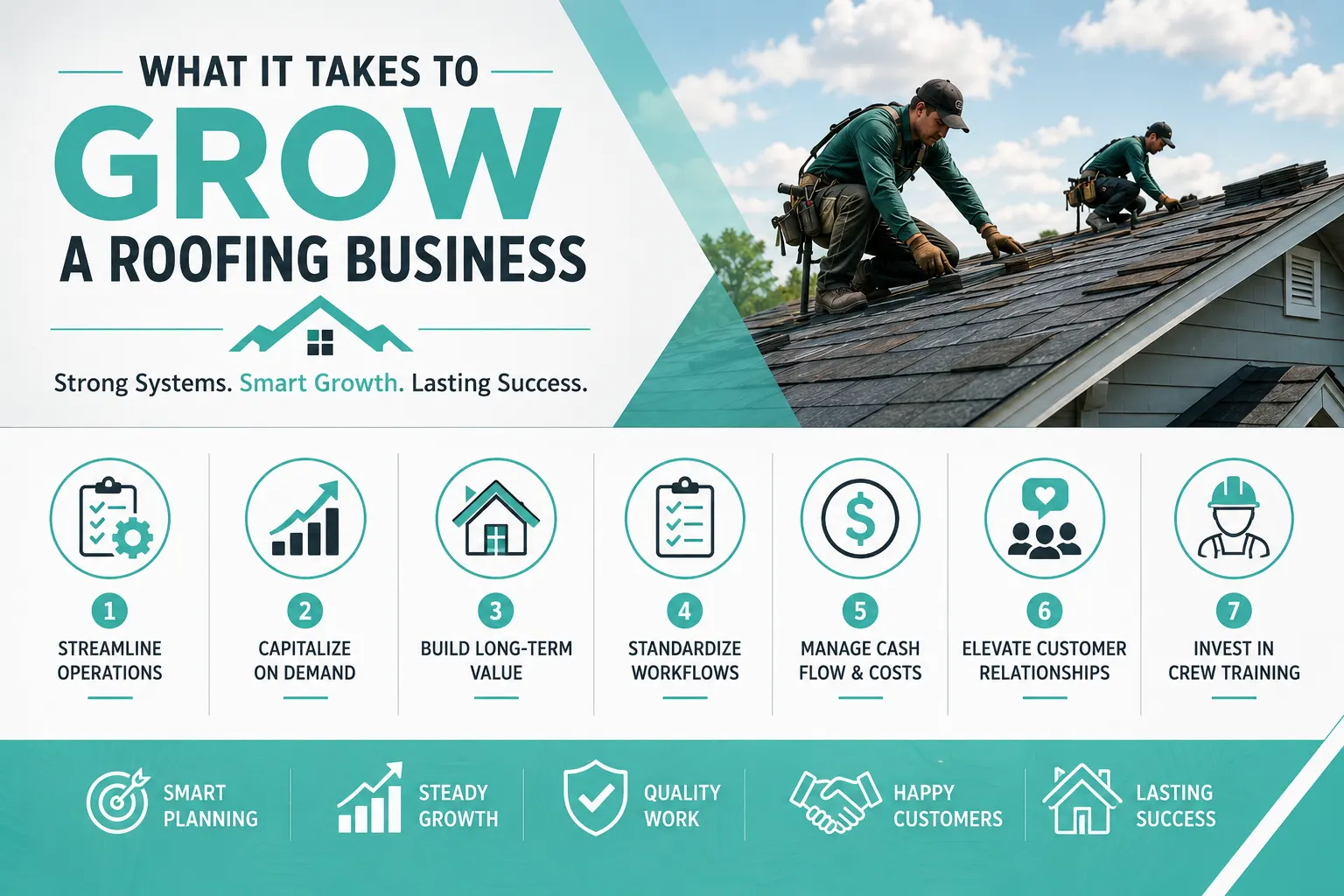
Growing a roofing business requires more than completing quality projects. Sustainable expansion depends on organized operations, reliable financial management, effective customer relationships, trained crews, and repeatable jobsite processes. This guide explores practical strategies roofing contractors can use to build a stronger and more scalable business. From adopting CRM systems and standardizing workflows to managing cash flow, responding to market demand, and investing in employees, these approaches help contractors improve efficiency, protect profitability, strengthen their reputation, and create a solid foundation for long-term business growth.
Read More
Print branding is an often-overlooked part of a strong brand identity. From business cards and stationery to packaging and signage, physical brand touchpoints influence how customers perceive your business. This article explores why consistent print branding matters, how colour and typography affect recognition, and how businesses can bring offline materials in line with their digital presence. Learn practical ways to audit and improve your printed materials so every customer interaction feels professional, recognisable, and trustworthy.
Read More
Python has become a leading choice for building AI-powered business applications because of its flexibility, readability, extensive libraries, and strong developer ecosystem. This article explains how Python developers combine AI, machine learning, automation, and data processing to solve practical business challenges. It explores key benefits such as faster development, cost efficiency, scalability, and adaptability. It also highlights what businesses should consider when choosing a Python development team and why experienced developers can help create reliable, scalable AI solutions that deliver long-term value.
Read MoreGet into details now? View all posts