Table of Content
.webp)
- Kiara Miller
- Aug 24,2026
Seemingly, you may think that running a warehouse isn’t very complicated or time-consuming, but the reality is that it doesn’t revolve solely around storing products and sending them out once an order arrives.
What you need to understand is that behind every successful operation is an effective, coordinated system that’s “equipped” with workers, technology, equipment, transportation, and numerous small decisions.
When all of these elements “join forces”, then everything that’s related to orders goes smoothly and accurately. In contrast, when there are certain issues, it can result in delays, massive expenses, and so on.
Luckily, you do not need to do God knows what to enhance warehouse logistics, and that’s precisely what this article is here to explore.
Optimizing your warehouse space is absolutely crucial if you want to supercharge your efficiency and squeeze out more profit. Cracking the code on a well-designed layout can instantly slash your material handling costs by 15% to 19%, while giving your team's overall productivity a massive boost.
To really make the most of your space, you have to think about maximizing your warehouse cube, meaning you utilize the vertical room, not just the floor plan. Since the average clear height of logistics facilities keeps climbing, warehouses can now pack way more inventory into the exact same footprint, which spikes your storage density and keeps space from going to waste.
Another game-changer for layout design is SKU slotting. By diving into your sales data and product traits, you can figure out the perfect home for every item to cut down on travel time. Putting the right products in the right spots makes picking them up to 40% faster.
Every business should assess the whole fulfillment process on a regular basis, instead of focusing solely on the individual warehouse tasks in isolation. In case you didn’t know, improving warehouse fulfillment efficiency may involve concentrating on the journey from the very beginning (when an order is received) to the very end (once it leaves the building). You should always know where delays happen.
Are orders waiting for too long to be taken? Are products misplaced far too often? If you are very involved in the complete process, then you can easily uncover any bottlenecks that aren’t as noticeable when every department gauges its own performance.
Bringing cloud computing into the warehouse world is a relatively new game, but it completely changes how you manage inventory. Because the cloud lets you store and access your data from anywhere, at any moment, it serves up three massive advantages.
In a non-stop, 24/7 omni-channel sales world, you have to know exactly where your stock is right this second. Real-time visibility is vital for meeting customer demands on time, every single time.
Last-mile delivery is easily the biggest headache in warehouse logistics. Moving to the cloud gives your business the agility to spin up smaller, scattered micro-warehouses right next to your buyers to fix that shipping bottleneck.
Growing and scaling back are both normal parts of business, especially since warehousing is so highly seasonal. Having live data at your fingertips lets warehouse managers confidently scale operations up or down based on hard facts rather than wild guesstimates
If you want to boost warehouse operations, then you should ensure order picking is efficient. This refers to optimizing the process as well! It’s of huge importance to be familiar with various sorts of order picking strategies that you can resort to, along with all the positive and negative things that come with them.
Once you comprehend them, you’ll be able to select the approach that aligns with your needs and demands the most. According to the latest industry reports, order picking accounts for almost fifty-five percent of total warehouse operating expenses.
If you do everything that’s in your power to simplify the entire process, then you’ll radically cut costs and, concurrently, take productivity to the next level!
Shiny tech and heavy equipment are great, but your team is still the most valuable asset in your entire warehouse. Solid training makes sure everyone completely understands your procedures, how to run the gear, safety rules, and day-to-day expectations.
But that training shouldn't just stop after someone's first week on the job. Throwing in regular refresher sessions helps lock in those safe habits and gets everyone up to speed on any new, updated workflows.
The whole purpose of streamlining warehouse logistics is to be more effective, move products properly, and decrease the risk of incurring massive expenses, which can easily be done with the help of the aforementioned strategies.
Warehouse logistics refers to the processes involved in receiving, storing, organizing, picking, packing, and moving inventory efficiently within and from a warehouse.
An optimized warehouse layout reduces unnecessary movement, improves storage capacity, simplifies product access, and can make picking and material handling faster.
Cloud computing provides real-time access to inventory and operational data, supports multi-location operations, and makes it easier to scale warehouse capacity based on demand.
Businesses should select an order-picking strategy based on inventory type, order volume, warehouse layout, and operational requirements while using SKU slotting to reduce unnecessary travel.
Regular employee training helps workers understand warehouse procedures, equipment operation, safety requirements, and updated workflows, supporting greater productivity and fewer operational errors.
.webp)
Choosing an SEO agency is a significant investment, and the wrong partner can cost a business months of progress, valuable rankings, and marketing budget. This guide highlights nine SEO agency red flags to watch for before signing a contract, from guaranteed rankings and vague deliverables to hidden account ownership, unexplained link building, poor reporting, and unrealistically low pricing. It also explains how to identify a reliable SEO partner by evaluating transparency, measurable KPIs, specialist expertise, data ownership, review processes, and relevant experience. These checks can help businesses make a more informed SEO agency decision.
Read More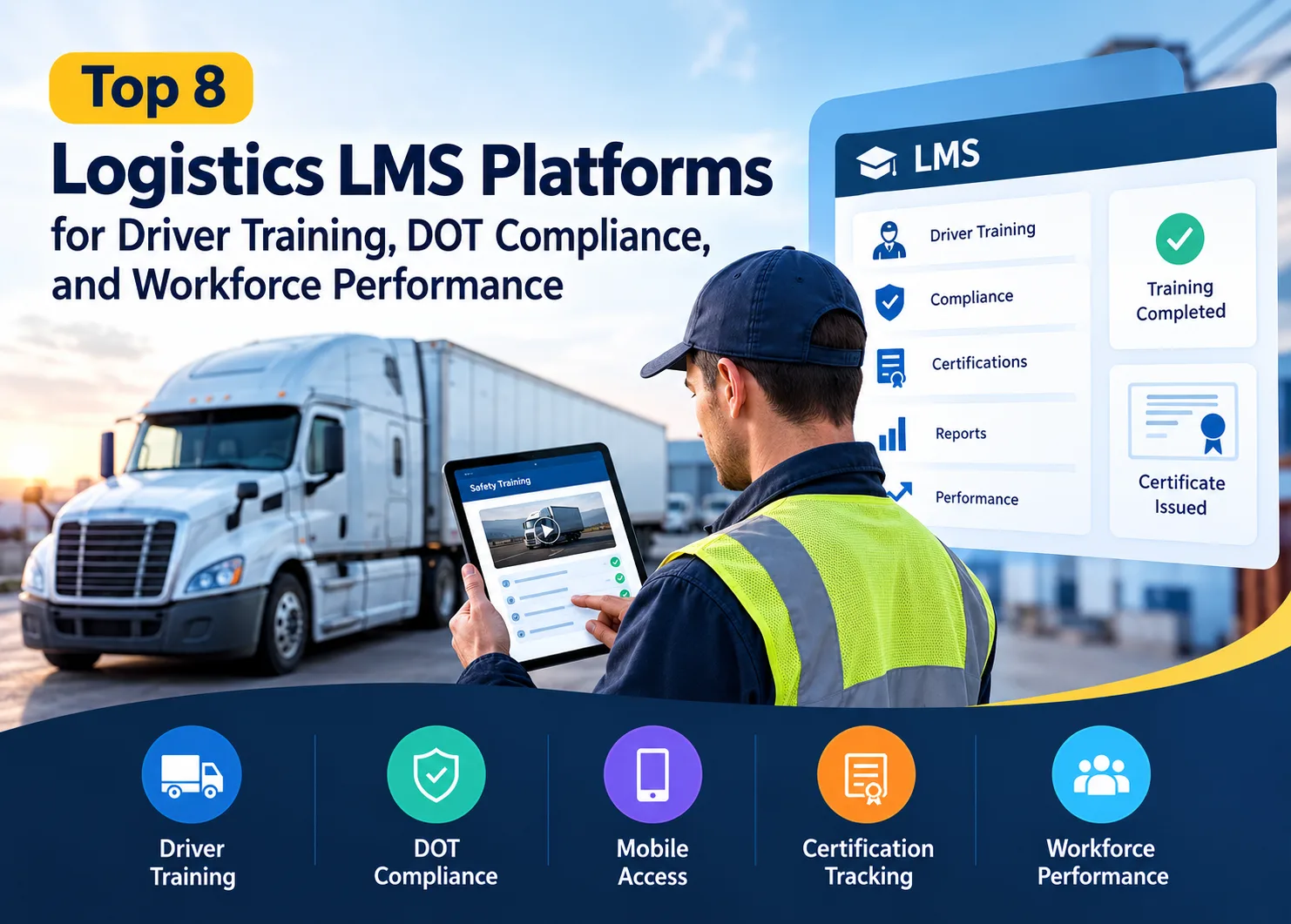
This guide compares the top 8 logistics LMS platforms for driver training, DOT compliance, certification tracking, and workforce performance. It examines transportation-focused and general-purpose learning management systems based on features, pricing, reviews, mobile access, compliance capabilities, and key limitations. From driver qualification records and ELDT training to multi-terminal administration and license expiry reminders, the article highlights what logistics companies should evaluate before choosing an LMS. It also explains offline learning, role-based training, reporting, and integration requirements to help fleets select a platform that fits their workforce, compliance needs, and operational priorities.
Read More
Relocating a marketing business can be exciting, but moving offices while managing active client campaigns requires careful planning. Deadlines, meetings, campaign launches, files, equipment, and communication cannot simply pause during the transition. This article shares practical strategies for keeping client work organized during a marketing business relocation. It covers creating a detailed moving timeline, prioritizing time-sensitive campaigns, working with professional movers, securing digital files, and ensuring employees can access essential tools remotely. With the right preparation, marketing teams can minimize disruption, protect client relationships, and maintain productivity before, during, and after the move.
Read MoreGet into details now? View all posts