How Access Control Systems Help Prevent Unauthorized Workplace Entry
Increasingly, modern workplaces are facing several types of access-related problems that did not exist in the past due to old-fashioned break-in methods. A workplace with unauthorized entry will suffer from theft, loss of data, violence in the workplace, disruption of services, and violation of compliance laws/rules. As hybrid and larger distributed businesses evolve, the need for managing who accesses various sensitive areas has become a vital component of the physical security strategy.
Investment into more advanced access control systems will keep growing as we see additional growth within our industry as well. As per the report provided by MarketsandMarkets; the worldwide access control system is projected to reach an estimated value of USD 10.62 Billion ($10.62B) during 2025 and will reach approximately USD 15.80 Billion ($15.80B) by 2030. At the same time, we are facing more complicated types of security threats than ever before (especially new types of internal threats) and also a lot of different kinds of devices being used without having clearance/access given to them.
Therefore, many emerging smart organizations are implementing Intelligent Access Control Systems that incorporate automation technology, Artificial Intelligence Technologies (AI), a cloud-based or web-based management platform & real time monitoring capability to help reduce the potential occurrences of unauthorized entry into their facility.
Table of Contents
- How Access Control Systems Help Prevent Unauthorized Workplace Entry
- Why Unauthorized Workplace Entry Is a Serious Business Risk
- How Modern Access Control Systems Work
- Preventing Unauthorized Entry Through Role-Based Permissions
- Real-Time Monitoring Stops Threats Faster
- Eliminating Risks Associated With Lost Keys
- Biometric Authentication Enhances Security
- Managing Hybrid & Multi-Location Workplace
- How to Secure Against Tailgating and Piggybacking
- Improving Compliance and Audit Readiness
- The Integration of Surveillance Systems Makes Security Smarter
- The Role of AI And Modern Access Control
- Why Businesses Are Replacing Legacy Access Systems
- FAQs
- Conclusion
Why Unauthorized Workplace Entry Is a Serious Business Risk
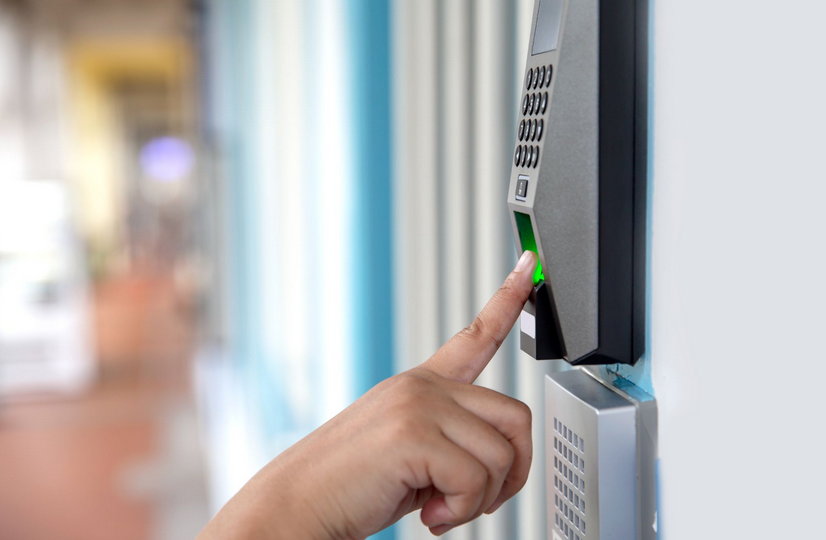
Unauthorized entries are no longer solely limited to a person kicking a door open; as a result of modern-day threats such as shoulder surfing or another person gaining access to your login credentials.
A single unauthorized entry could have catastrophic results:
- Loss of a company's physical property or intellectual property
- Access to restricted personnel and/or customer information
- Safety issues for staff members
- Regulatory compliance fines for business in regulated industries
- Business interruptions and liability coverage issues to address
The objective of the security and cybersecurity industries is to raise awareness that unauthorized entry continues to be among the greatest operational or security threat(s) faced by organizations.
Current systems based on a traditional key-and-lock method lack the level of visibility and control needed at the places of employment, especially when compared with the capabilities of a modern-day establishment.
How Modern Access Control Systems Work
The purpose of access control is to manage who has permission to enter different parts of a building, when they are allowed to enter, and under what circumstances they are allowed to enter.
Access control systems that have been around for a while relied heavily on the use of physical keys. However, modern access control systems can provide the same level of security by using the following methods:
- Keycard
- Mobile credential
- PIN code
- Biometric
- Facial recognition
- Cloud-based authority management
Each time someone attempts to enter a workstation or area, the access control will compare the individual's identity against the authorization list. If the individual is authorized, then the door will open allowing access; if not, there are several options that may occur including denying access, sending an alert, or activating other security processes.
Most current access control systems have current logs of all access events so that a business can monitor all access events as they occur.
Preventing Unauthorized Entry Through Role-Based Permissions
Role-based permissions are a highly effective way that access control systems prevent unauthorized access.
Employees only receive access to the areas necessary for them to do their jobs. Some examples of this would be:
- HR employees have access to personnel offices
- IT employees have access to server rooms
- Warehouse employees have access to inventory areas
- Visitors have access only to reception areas
This way of restricting access provides the least amount of exposure possible to sensitive areas.
Expert recommendations for best practices across many different industries are increasingly to migrate to using RBAC because of the decreased risk of insider threat, as well as increased security oversight.
As opposed to providing universal access to everyone throughout an organization, organizations can use much more detailed controls based on the employment category, the work schedule/shift, and their role within the organization.
Real-Time Monitoring Stops Threats Faster
The use of modern access control systems is no longer limited to granting someone access to a building. Nowadays, access control systems are integrated into a real-time security environment.
Access control systems are capable of detecting all types of suspicious activities, including:
- Repeated access attempts that have failed
- Attempts to enter outside of normal business hours
- Instances of tailgating
- Forced entry to a door
- Unauthorized sharing of access credentials
Once an access control system identifies questionable activity, the security team or facility manager will receive an alert within seconds.
Several access control systems, such as Coram AI's platform, illustrate the effectiveness of modern-day access control solutions that are capable of integrating access control with artificial intelligence (AI) video security and analytics. Rather than just recording entry events, integrated access control solutions can visually confirm who accessed a location, associate video evidence with access logs, and provide real-time alerts to suspected abnormal behavior.
This type of visibility greatly augments incident response time.
Eliminating Risks Associated With Lost Keys
Traditional physical keys create major security challenges:
- Keys can be lost
- Keys can be copied
- Former employees may still retain access
- Rekeying buildings is expensive and time-consuming
Access control systems provide a solution to these issues by using digital credential management to reduce the likelihood of problems arising for lost or stolen access credentials.
DCM allows an administrator to revoke access from an employee via remote means should they no longer be employed or have lost or had their access credentials stolen, without requiring that the employee’s physical lock be physically changed.
Access control systems that are managed via the cloud simplify access control management for an administrator by enabling the administrator to use a single dashboard to manage access permissions at multiple sites.
Biometric Authentication Enhances Security.
As biometric authentication in today’s workforce increases, credential-sharing and impersonation risks decrease.
Along with traditional badges and/or PINs, businesses now incorporate:
- Fingerprint
- Face recognition
- Iris recognition
- Palm authentication
Unauthorized persons may not have access because of these technologies.
Enterprise security technology is rapidly expanding, and top access control trends are biometric and touchless access control.
Facial recognition technology is an excellent solution for high-security environments needing more robust identity verification, but still allowing employees to have a seamless experience.
Managing Hybrid & Multi-Location Workplace
Today’s businesses are commonly running from numerous offices, warehouses & retail locations or campuses. Managing security at all these sites can be very challenging unless there’s some form of centralized control over all locations / sites.
Cloud-based access control systems solve this problem by allowing organizations to:
- Manage permissions remotely
- Monitor facilities in real time
- Standardize security policies
- Generate centralized audit logs
- Respond to incidents faster
Security managers are able to manage their locations, adjust access rights, or even review activity even though they are not there in-person.
The flexibility of this capability is essential in the contemporary environment characterized by hybrid work situations.
How to Secure Against Tailgating and Piggybacking
The most significant gap in workplace security is the poorly defined login policy of an employee who allows an unauthorized individual to enter a confidential area by remaining connected to the employee in some way.
Standard security is defined by the missed detection of unauthorized access through tailgating, i.e., the use of an UNAUTHORIZED person joining an employee's access to enter a secure area.
Modern AI-enhanced access systems can identify:
- Multiple people entering on one credential
- Doors being held open too long
- Unusual traffic patterns
- Unauthorized movement between zones
The combination of video analytics and access control provides organizations with the ability to visually confirm each entry/exit event.
This greatly reduces the risk of an organization experiencing unauthorized access without any detection.
Improving Compliance and Audit Readiness
There are numerous businesses that must adhere to very rigid regulations in regards to how they handle access to facilities and security.
These include healthcare organizations, banking and financial organizations; data centers; as well as critical infrastructure facilities; all of which will usually include:
- Detailed Access Logs
- Visitor Tracking
- Restricted Access Policies
- Security Audits
- Incident Reporting
Access control systems make compliance easier because of automated access control systems automatically create detailed records to document:
- Who was in a location
- When they entered that location
- What credential they entered with
- How long they were in the location
An audit trail is automatically created by your access control system, which is useful for regulatory compliance but many organizations find themselves being able to use that audit trail for operational accountability.
The Integration of Surveillance Systems Makes Security Smarter
Combining access control with video surveillance gives you incredibly more access control capabilities than having separate systems for each.
Instead of reviewing disconnected systems, security teams can:
- Match access events with video footage
- Verify identity visually
- Investigate incidents faster
- Search events using timestamps
- Detect suspicious behavior automatically
Unified security platforms are becoming a major trend in enterprise security because they improve situational awareness and reduce response times.
Organizations are increasingly moving away from siloed security systems toward integrated platforms that combine:
- Access control
- Video surveillance
- Visitor management
- AI analytics
- Emergency response tools
The Role of AI And Modern Access Control
The use of artificial intelligence in the workplace has changed how we secure our businesses; it has moved to a more proactive security model, rather than a reactive one.
AI-based solutions are able to:
- Detect anomalies in access behavior
- Identify unusual movement patterns
- Recognize suspicious entry attempts
- Generate alerts for security staff.
For example, if a person tries to implace the entry to an area where there are are no other security staff present and where there are no other personnel in that area, the AI will generate an alert for security personnel regarding the abnormal action of the user. Thereby providing security staff with an opportunity to stop or prevent what could be a significant security incident.
With this proactive approach to detecting incidents, organizations are able to possibly eliminate incidents before they happen.
Why Businesses Are Replacing Legacy Access Systems
Older access systems often struggle with:
- Limited scalability
- Poor integration
- Manual management
- Weak reporting capabilities
- Inconsistent security enforcement
Modern cloud-native systems offer:
- Remote management
- Real-time visibility
- AI-powered analytics
- Faster deployment
- Better scalability
- Better Cyber Security Of Access Control Systems.
As Organizations Are Modernizing Their Workplaces, Access Control Systems Are A Key Component Of A Comprehensive Security Approach To Business.
Frequently Asked Questions
What an access control system?
An Access Control System is made to restrict entry to specific buildings, rooms or restricted areas by verifying the identity of a user and their access rights through the use of credential verification methods such as a card reader, biometric reader or manual entering of pin number.
Why do Access Control Systems Prevent Unauthorized Entry?
Access Control Systems verify the identity of users before giving them access, restrict access based on their role or purpose, monitor the activities of all users accessing the account in real time, and issue notifications if there are unusual or suspicious activities.
Are Cloud Based Access Control Systems Secure?
Yes, they are considered secure today because they utilize encryption, they use several forms of authentication, and they centralize the management of all access control security.
Can Access Control Systems Integrate with Surveillance Cameras?
Yes, many current access control systems connect to video surveillance systems to allow users to confirm if the entry event occurred and are also used to verify incidents after they have occurred.
Who benefits from access control systems?
Healthcare, education, financial institutions, manufacturers, logistics, retailers, to corporate offices and to organizations with critical infrastructure will all have benefits from using modern access control solutions.
Conclusion
A security breach could only be defined by physical means but unlawful access to a workspace creates a corporate liability which compromises an organization's security, daily operations, compliance and data security systems.
Modern day Access Control Systems allow organizations to control, monitor and limit unauthorized access by utilizing intelligent identity verification/bio-metrics; real time monitoring; cloud based management systems; artificial intelligence (AI) analysis of the data; and the utilization of digital video images.
As more organizations connect with each other over time and security threats continue to evolve, many companies will need more sophisticated technologies for accessing their properties than just locks and security badges. By implementing modern day access control solutions, organizations can derive many benefits including increased levels of security awareness throughout the organization, improved response time to security incidents, and overall greater operational efficiency within their facilities.


