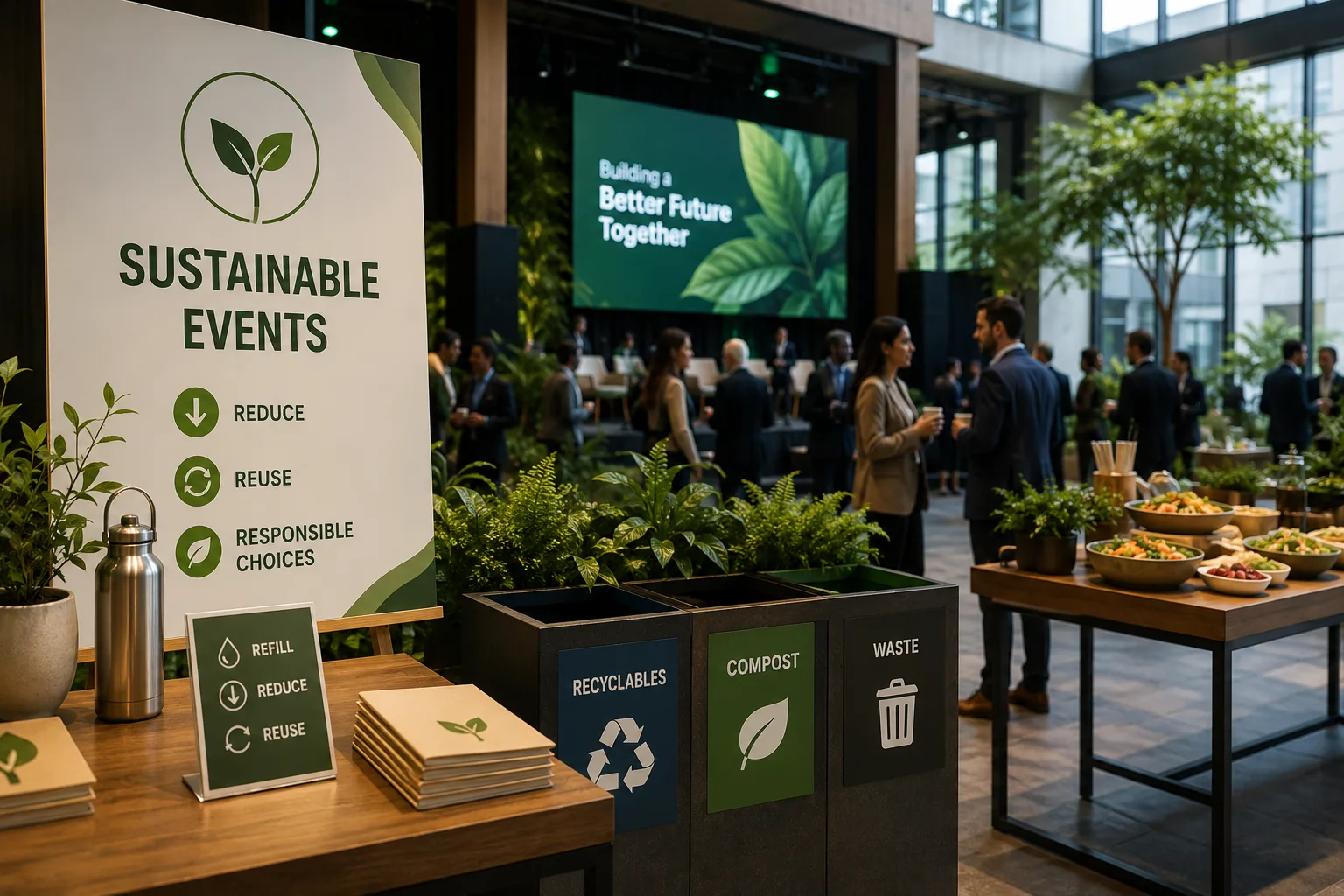
The success of corporate events was traditionally gauged by standard criteria such as attendance numbers, production quality, ability to generate leads, and coffee availability before lunch time. All of these factors continue to be important, but the requirements have changed. Event planners now need to pay more attention to the way events are organized, the way resources are consumed, and what is left after the event. As a result, sustainability is no longer just a practical issue, but rather an issue of reputation. A sustainable event is an indicator that speaks volumes about a brand's commitment to thinking ahead, caring about consequences, and ability to live up to its values.
Sustainability Is Now a Reputation Signal
Brand reputation is rarely built through big declarations alone. More often, it’s shaped by small, visible decisions that add up over time. Events are full of those decisions. What materials are used? Is catering local and seasonal? Are single-use plastics everywhere? Is there a plan for waste, transport, and energy use? Guests notice more than many organisers assume.
Audiences Notice the Details
Sustainability is incorporated into the guest experience regardless of whether you bring it up from the stage or not. If your guests observe that there are water refill stations, not branded plastic water bottles, a digital agenda, not piles of printed materials, or sustainable menus, then this is what will make them notice your operations right away. This makes sense since people nowadays associate operations with the nature of the business. If your company claims to be future-oriented, yet hosts wasteful events, it contradicts your image. At the same time, when your company implements practical sustainable strategies, it becomes more reliable in the eyes of your guests.
Reputation Is Built in the Room and Online
Events no longer end when the last guest leaves. Attendees post photos, speakers share impressions, and internal teams talk about what the event represented. If sustainability has been embedded well, it gives people something positive to say beyond “great venue” or “good panel.” That kind of word-of-mouth is subtle but powerful. It shapes how people describe your brand when you’re not in the room. Business owners who contact Miller Tanner Associates often learn about the value of weaving eco-friendly practices into their overall engagement strategy. Integrating these values ensures that positive post-event discussions continue naturally across professional networks.
The Strongest Reputation Gains Come From Credibility
There’s a catch, though. Sustainability only helps brand reputation when it feels genuine. If it looks performative, the effect can reverse quickly. A reusable name badge system means more than a vague promise to “go green.” A carefully planned transport strategy says more than a slide filled with lofty environmental language. In other words, execution matters more than messaging.
That’s one reason many organisations now work with specialists in sustainable corporate event management services who can build sustainability into sourcing, logistics, attendee communications, and post-event reporting rather than treating it as a decorative extra. When the process is structured from the beginning, the result is more coherent—and far more believable to the people experiencing it.
Sustainable Choices Reduce Friction, Too
There is even a practical aspect to reputation that is sometimes neglected. Event planning, when done sustainably, will enhance the experience of the event. Improved circulation, proper transport planning, less clutter, proper estimates on the amount of catering, and improved usage of materials will all lead to a more organized and smoother experience of the event. The reputation of the brand benefits from this as well. Although attendees will not be able to pinpoint the reason for their more positive perception of the event, they will have one.
What Sustainable Events Look Like in Practice
Sustainability in events does not require a dramatic reinvention. In most cases, it comes from a series of thoughtful design and operational choices.
The Most Visible Changes
Some of the most reputation-enhancing decisions are also the easiest for attendees to understand:
- Digital ticketing, agendas, and event materials
- Reusable or recyclable signage and set elements
- Locally sourced catering with realistic portion planning
- Clear waste sorting stations and reduced single-use packaging
These choices work because they are tangible. They don’t ask the audience to trust a claim; they let people see the effort for themselves.
The Less Visible Choices Matter Just as Much
Behind the scenes, however, the largest effect usually happens through procurement, venue choice, freight management, and logistics management. Selecting venues which have sustainability policies in place, consolidating shipments, reusing construction materials, and quantifying waste streams are some ways to help minimize your event’s environmental impact.
You won’t be able to see that process, but you will make a good impression. Why? It’s because sustainability is becoming due diligence. The clients, partners, and procurement people are asking harder questions than ever before. If your event plan can pass that test, your brand looks more grown-up.
Why the Reputation Gains Are Real
The reputational benefit of sustainable events isn’t just about looking responsible. It affects how different audiences feel about working with you.
Clients and Partners See Lower Risk
A brand that manages events responsibly often appears better governed overall. That perception matters in B2B relationships, where buyers are assessing not just creativity or cost, but reliability, ethics, and long-term fit. Sustainable practices can signal discipline, transparency, and strategic thinking—all traits that strengthen confidence.
Employees Feel Greater Pride
Internal events are part of employer branding whether companies acknowledge it or not. Employees notice when a business invests in values-led experiences instead of wasteful showmanship. That can increase pride, especially among younger professionals who expect environmental awareness to show up in everyday business decisions, not only in annual reports. And pride travels. Employees talk about company events with peers, post about them online, and carry those impressions into recruitment conversations.
The Story Becomes Stronger
As far as communications go, sustainability means a better story. Not due to the fact that "sustainability" is a buzzword, but the fact that actions will always sound more exciting than positioning. The company that reorganized its annual event to decrease waste, favor local suppliers, and optimize participant transportation will have a better story to tell than the one proclaiming its love for the environment. Specificity wins trust. Trust makes a reputation.
How to Make Sustainability Credible, Not Cosmetic
The right way to go about it is to begin by being truthful. Every event will have an impact, and it is better to be honest rather than try to cover up. Be focused on improvements that matter, prioritization, and good communication.vSet realistic goals. Do your measuring. Explain your choices and constraints. People are usually more than willing to appreciate improvement even if it is not perfect but looks like a genuine attempt.vAnother thing that will make your efforts more effective is avoiding the temptation to treat sustainability as a final stage consideration. When the discussion starts at the point when the venue is chosen, menus are arranged, and production strategy is decided upon, all major decisions are already taken.
A Better Event Can Be a Better Brand Signal
Corporate events are public expressions of how a business thinks. They reveal priorities, standards, and attention to detail in a way few marketing assets can. That’s exactly why sustainable events carry reputational value. Done well, they show that a brand is not just saying the right things. It is making smart, visible, operational choices that reflect responsibility and modern leadership. In a crowded market, that kind of consistency stands out. And increasingly, people remember it.