Table of Content
- Kiara Miller
- Aug 24,2026
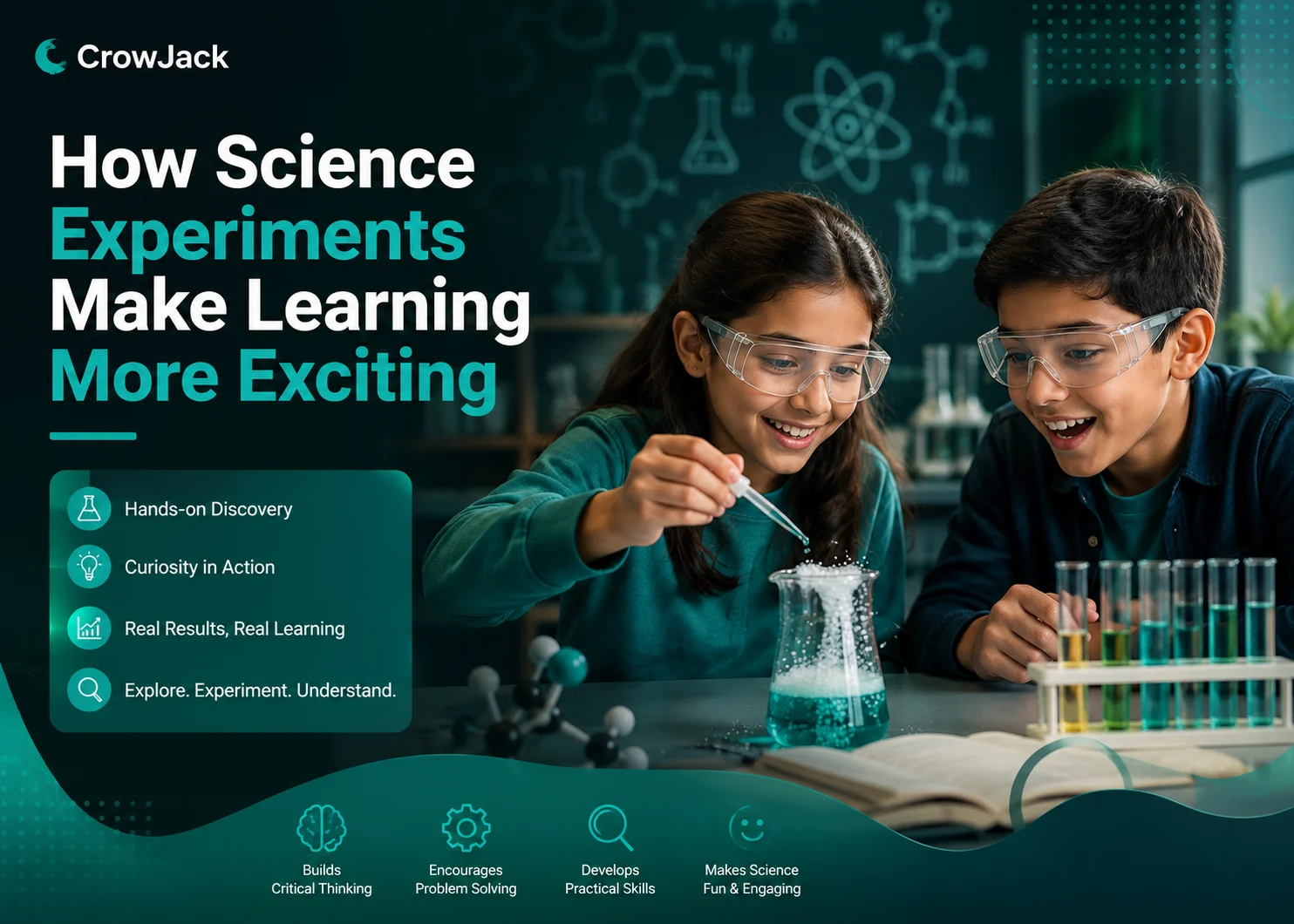
When you hear the word “science”, you probably associate it with something that’s overly complex, confusing, packed with formulas, puzzling vocabulary words, and diagrams. Even though that’s partially true, it offers so much more than that!
There’s a side of it that, unfortunately, isn’t talked about enough, which can be pretty thrilling, and that can mostly be uncovered when the time comes to perform some experiments. There’s something so special and authentic about seeing a certain reaction occurring, testing an idea, or concluding that something that you predicted didn’t come true, after all.
You get to participate in something actively, and that’s what makes it so extraordinary. It’s like you’re a detective that’s about to unveil an intriguing mystery.
One of the absolute best things about hands-on experiments is that they naturally get kids asking a ton of questions. Instead of just sitting there being told that one material conducts heat better than another, students get to jump in and prove it themselves.
Rather than forcing them to memorize how temperature shifts during a reaction, they can measure those changes firsthand and look at the real-time results. This completely flips the script on the student's role in the classroom.
They are no longer just passive buckets soaking up facts from a textbook or a lecture. Instead, they transform into actual investigators who get to make bold predictions, gather clues, and piece together what the evidence really means.
That genuine spark of discovery makes even the most intimidating, complicated science topics feel way more approachable.
Modern science classrooms are a far cry from what they used to be. They aren’t solely restricted to rulers, test tubes, and such. These days, students can make use of digital tools and sensors that enable them to properly gather measurements and notice how changes occur. Namely, they can utilize Pasco, which represents a tool that provides educational technology and a data-collection tool that’s designed to make experiments more interactive. For instance, PASCO’s wireless sensors can be connected to cellphones, computers, etc., to show live data.
How amazing is that? This level of immediacy takes things to the next level. Just imagine watching a graph change during an experiment, instead of waiting until the very end to enter measurements manually.
This just goes to show that students can instantly see relationships between variables and learn more about the patterns that they see on the screen. The bottom line is that technology isn’t here to replace the experiment but to better comprehend the evidence.
A lot of science concepts are tough to wrap your head around because they are just so abstract. A student can read chapters upon chapters about temperature, motion, energy, or chemical reactions, but actually watching those concepts come to life right in front of their eyes makes everything click so much faster.
For instance, letting kids measure the temperature of different materials as they heat up gives them something real and concrete to analyze. Instead of just staring at a static number in a textbook, they are watching their very own measurements jump around on a screen.
This is exactly why tech-driven experiments are such a game-changer in the classroom. Companies like PASCO offer smart sensors and data-collection tools that let students plug directly into science and STEM concepts while gathering and breaking down data in real time.
Their gear covers a massive range of subjects, including physics, chemistry, biology, engineering, environmental science, and even early-elementary science.
Back in the day, when students were in traditional classrooms, they were normally faced with only one answer on a worksheet, which made them pretty afraid of making mistakes. That’s because they would feel like a failure.
Thankfully, the situation is radically different with experiments. If you have a prediction that isn’t correct, that doesn’t instantly mean that you are doing something wrong. In science, even so-called wrong results can be very helpful because they stimulate researchers to think twice about their assumptions and, at the same time, delve deeper.
And when it comes to students, they’ll know that they shouldn’t be ashamed of their approach, because, at the end of the day, it is part of the process. Something like this will give them a healthier approach toward learning.
It’s more than obvious that science experiments are intended to “jazz things up” a little bit and convert abstract ideas into experiences that can actually be questioned, measured, and discussed, which is something that students appreciate a lot.
Science experiments make learning more engaging by allowing students to observe concepts in action, collect real-time data, test predictions, and discover results for themselves.
Hands-on experiments help students connect classroom concepts with practical experiences, making difficult or abstract scientific ideas easier to understand.
Yes. Unexpected or incorrect results can encourage students to reconsider their assumptions, investigate further, and develop a healthier approach to mistakes.
Technology can provide sensors and data-collection tools that allow students to see measurements and changes in real time, helping them understand relationships between variables.
Interactive experiments can support subjects such as physics, chemistry, biology, engineering, environmental science, and elementary science.
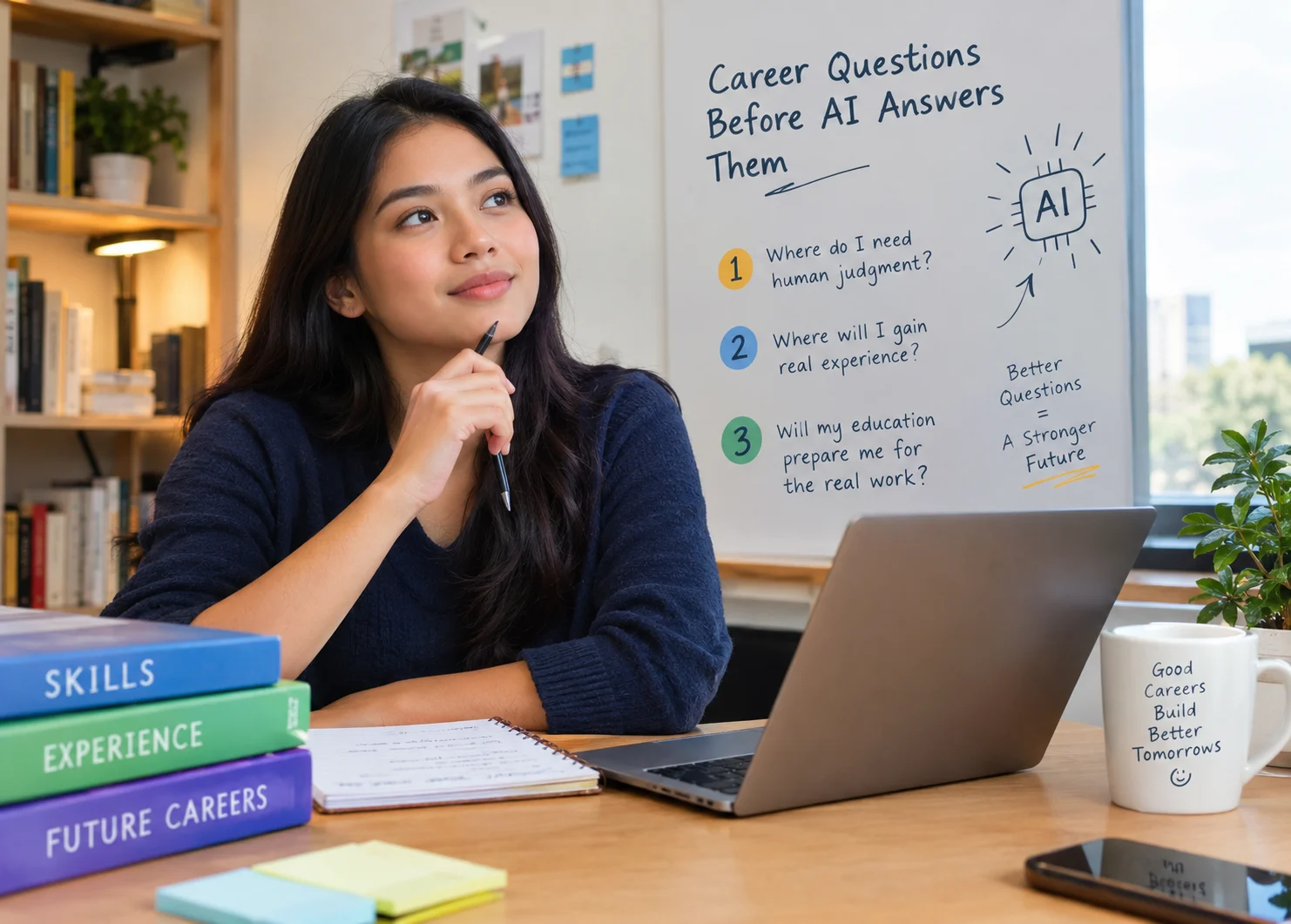
AI is changing how people work, learn, and build careers, making traditional career planning more complicated than ever. Instead of only asking whether a job is safe from automation, students and professionals need to consider where human judgment, practical experience, and meaningful skills remain essential. This article explores three important career questions to answer before AI answers them for you. From identifying uniquely human responsibilities to gaining real-world experience and choosing education that prepares you for actual work, these questions can help you build a career that remains adaptable in an AI-driven workplace.
Read MoreGet into details now? View all posts